


Israeli authorities increasingly believe the Omani co-pilot accused of trying to crash a flydubai passenger jet acted alone, even as U.S. President Donald Trump continues to suggest Iran may have been behind the attack.
Asked whether he believed Iran was responsible, Trump said, “I do. I personally do.” He has previously suggested a possible Iranian connection based on information he said he was hearing but has not publicly presented evidence. Israeli investigators, meanwhile, have yet to establish an Iranian or other organizational link to the suspect, Hamam al-Hammami.
Asked whether he believed Iran was responsible, Trump said, 'I do. I personally do'
(Credit: X)


The comments came hours after Israeli authorities cleared for publication that investigators from the Shin Bet domestic security agency had traveled to the United Arab Emirates and were participating in al-Hammami’s interrogation.
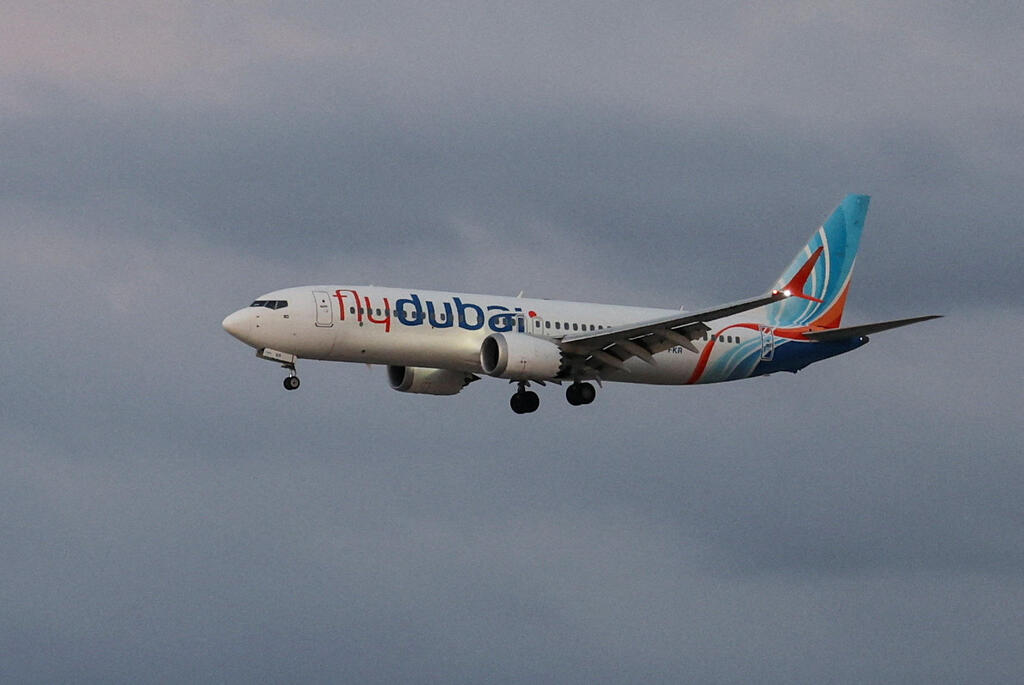
Al-Hammami is accused of attacking the captain of flydubai Flight FZ1073 with an emergency ax and attempting to seize control of the Dubai-to-Tel Aviv flight on Sept. 30. Passengers intervened after the wounded captain managed to open the cockpit door, and the aircraft eventually landed safely in Tabuk, Saudi Arabia. The UAE has described the incident as a terrorist attack.
The attack has intensified scrutiny of Israel’s system for securing foreign airlines and screening crews flying into the country. New questions have also emerged over potential conflicts of interest involving senior figures responsible for aviation security at the Transportation Ministry.
After Haaretz reported that Avraham “Avri” Cohen, head of the ministry’s Security, Emergency and Cyber Division, had held a second job in private security for eight years without final authorization, another senior figure in the ministry’s aviation security apparatus has come under scrutiny.
Dvir Rubinstein, one of the founders and the current director of the ministry’s Aviation Security Operations Center, known by its Hebrew acronym MAMLAT, is not a civil servant. He provides services to the Transportation Ministry as an outside contractor while also operating a private company that provides consulting and training services to airlines, including flydubai and Emirates.
That arrangement means Rubinstein has received private payment from flydubai while holding a central role in the Israeli system responsible for dealing with security matters involving foreign airlines, including flydubai.
MAMLAT serves as the Transportation Ministry’s operational center for aviation security and occupies a key position in the mechanism through which Israel approves and oversees security arrangements for foreign airlines operating flights to the country. It works regularly with airlines and government agencies in Israel and abroad.
As part of his role, Rubinstein is responsible for security approvals and permits required by airlines and flights seeking to enter Israel, both in advance and in real time. That makes him one of the principal officials maintaining direct contact with foreign airlines and handling security issues connected to their operations in Israel.
The arrangement has created a situation in which an official responsible through MAMLAT for security matters involving foreign airlines also maintains private business relationships with airlines falling within his professional sphere of responsibility.
The Transportation Ministry said Rubinstein’s outside activities were properly authorized and conducted outside the hours in which he provides services to the ministry. The ministry has not yet responded specifically to questions about his private work for airlines that fall within his professional responsibilities or the implications of those relationships for his MAMLAT role.
A long-running battle over responsibility
The attempted takeover of the flydubai flight has exposed what officials and previous government reviews have described as a broader structural problem in Israel’s security system for foreign aviation rather than an isolated failure.
At the center of the dispute is a position that has become increasingly entrenched among Transportation Ministry professionals: The ministry’s Security, Emergency and Cyber Division does not have the intelligence capabilities, resources or tools needed to assume responsibility for the security of foreign flights entering Israel.
Those concerns predate the current government.
During the tenure of former transportation minister Merav Michaeli and former ministry director-general Michal Frank, ministry professionals formally raised the issue. Frank held at least three dedicated meetings with the National Security Council in which she warned that the Transportation Ministry was not equipped to bear the responsibility.
The National Security Council continued to oppose changing the arrangement, however, and the interagency dispute persisted. Government decisions intended to clarify the division of responsibilities and establish a central coordinating body were not implemented for two years.
As government agencies argued over jurisdiction, aviation and cybersecurity were identified as among the most exposed areas in the security system, according to officials familiar with the discussions.
The organizational problems also extended inside the Transportation Ministry’s security division.
Questions arose over Cohen’s outside employment in private security while he headed the division responsible for protecting national transportation infrastructure. An arrangement allowing him to undertake the outside work had encountered resistance under Michaeli and raised questions about potential conflicts of interest and priorities. It emerged Monday that the approval process had never been finalized.

Transportation Minister Miri Regev
(Photo: Alex Kolomoisky)
The concerns over foreign aviation security were raised again after Transportation Minister Miri Regev and ministry Director-General Moshe Ben Zaken took office.
Professional officials told Ben Zaken that the security division could not adequately carry out the mission and warned that the situation represented a genuine security risk. The issue was nevertheless put on hold, according to people familiar with the matter.
One official familiar with the discussions said Ben Zaken had been warned repeatedly but took no action, describing the ministry’s handling of the issue as part of a deep management failure.
Warnings but no dedicated meeting
A review of Regev’s publicly available calendars from 2023 through 2025 also raises questions about the priority given to the issue.
The calendars were analyzed as part of the “Minister Meter” project by Shakuf, an Israeli nonprofit investigative news organization focused on government transparency.
They show extensive attention to aviation matters, including efforts to persuade foreign airlines to resume service to Israel, responses to flight cancellations, aviation agreements and meetings with the Civil Aviation Authority.
But the calendars contain no dedicated meeting specifically addressing the screening of foreign flight crews or the broader security gap surrounding foreign airlines.
That absence stands out because the state comptroller had already warned about weaknesses in the system.
In May 2024, State Comptroller Matanyahu Englman’s office published the public portions of a classified audit examining international civil aviation security. The review covered foreign and private aircraft entering Israeli airspace as well as Israeli aviation abroad and flights departing Israel.
The comptroller recommended that the National Security Council work with the Transportation and Finance ministries, the Civil Aviation Authority, Shin Bet and police to conduct a comprehensive review of the entire civil aviation security system. It also called for a reassessment of government and security Cabinet decisions governing aviation security, some dating to the 1970s, and for clearer responsibility and allocation of resources.
Regev’s calendars show that she continued to meet directly with Civil Aviation Authority officials in 2025. Meetings were recorded Jan. 30, on consecutive days June 11 and 12 with Ben Zaken participating and in a June 27 conference call involving the heads of the Shin Bet and Civil Aviation Authority.
Despite those meetings, no dedicated discussion on the foreign-flight security gap was recorded, even though Cohen submitted several explicit requests for urgent meetings with Regev and Ben Zaken to discuss the deficiencies.
The public calendars provide only a partial picture. The data examined covers 2023 through 2025 and does not include Regev’s schedule in 2026. As is common with ministers’ public calendars, sensitive security consultations, routine briefings and informal conversations may also not appear explicitly or may be listed under broader headings.
Ministry priorities under scrutiny
The calendars also provide a broader picture of how Regev allocated her time during the three-year period.
From 2023 through 2025, she held 160 meetings with municipal leaders from 40 cities and local councils. According to the Shakuf analysis, most were associated with or supportive of Regev’s Likud party.
By contrast, the calendars show no meeting during that period with Tel Aviv-Jaffa Mayor Ron Huldai, a prominent critic of Prime Minister Benjamin Netanyahu’s government.
Those findings do not by themselves establish why particular meetings were or were not held, and the publicly released calendars may not capture every interaction.
The renewed scrutiny comes as investigators across several countries try to determine how al-Hammami was allowed into the cockpit of a Tel Aviv-bound aircraft despite reported warning signs in his background. The Associated Press reported that he had previously been flagged in Oman over extremist views and barred from flying there. No terrorist organization has claimed responsibility for the attack, and publicly available evidence has not established Iranian involvement.
The case has therefore opened two parallel investigations for Israel: one into whether al-Hammami acted entirely on his own or had outside support and another into how the security system designed to protect foreign flights bound for Israel allowed him to reach the cockpit in the first place.
First published: 00:22, 10.06.26