


Israeli Shin Bet security officials have arrived in the United Arab Emirates and are taking part in the interrogation of the Omani co-pilot accused of trying to crash a flydubai passenger jet bound for Tel Aviv, as investigators widen their inquiry into his travels, possible contacts and motive.
Five days after the attack aboard flydubai Flight FZ1073, investigators are examining whether Hamam al-Hammami acted alone or had been recruited or directed by a terrorist organization. The current assessment is that he acted independently, according to Israeli officials familiar with the investigation. UAE authorities have formally described the incident as an attempted terrorist attack.
Profile on terrorist hijacker Hamam al-Hammami
(Video: CNN)


Al-Hammami has told investigators that he was motivated by a desire to take revenge on Israel over its actions in the Gaza Strip, according to information from the investigation obtained by ynet.
Investigators have also ruled out the involvement of the flight attendants in the attempted hijacking and crash, according to the findings so far. The cabin crew were extremely frightened during the incident, although some Israeli passengers initially suspected that crew members might have been cooperating with the co-pilot.
The suspicions arose in part from passengers' accounts that some crew members demanded that they release al-Hammami after he had been overpowered and restrained. There is no indication, however, that any flight attendant participated in the attack.
Investigators examine travel to hostile countries
Israeli officials say al-Hammami told interrogators that his primary plan was to crash the aircraft at Ben Gurion Airport, Israel's main international airport near Tel Aviv. If he could not reach Israel, investigators believe he had a backup plan to crash the plane into a U.S. military installation in Jordan.
The alleged plot was not conceived shortly before last week's flight. Israeli officials say al-Hammami had been planning an attack for months and had initially intended to carry it out in July, but abandoned that attempt because of a personal connection with one of the crew members aboard that flight. Investigators say he had flown to Israel as early as June and was preparing himself to become a "martyr." Other reporting citing officials briefed on the investigation has also said he had previously intended to attack an Israel-bound flight but called off the plan.
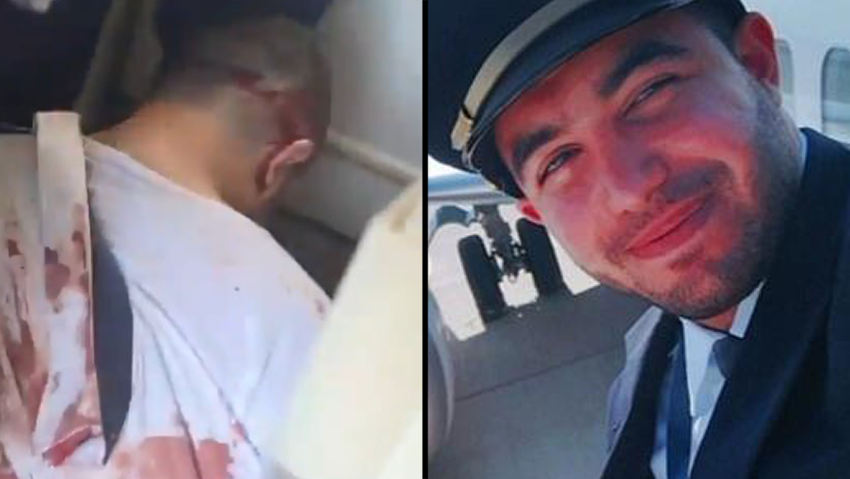
Terrorist hijacker Hamam al-Hammami
At a meeting of the Security Cabinet, a Mossad representative told ministers that investigators had established that al-Hammami had visited several countries Israel considers hostile or enemy states in recent years, not only Syria, as previously reported.
Apart from an extended stay in Syria, the visits were brief. Investigators are examining whether he met anyone during those trips who may have recruited, directed or otherwise influenced him.
For now, however, investigators have found no evidence that al-Hammami was acting on behalf of a terrorist group or foreign government, and the working assessment remains that he acted alone. International investigations are also examining his background and movements in countries where he previously lived or studied.
Authorities in Australia and New Zealand are investigating his time in those countries about a decade ago. Australian authorities have confirmed that a joint counterterrorism team involving federal police, Victoria Police and the Australian Security Intelligence Organisation is examining his links to the country. He held an Australian student visa and studied there between 2015 and 2017, according to Australian authorities.
Captain's struggle thwarted alleged plot
The alleged plan was ultimately thwarted by the actions of Indian captain Smit Machchhar, Israeli passengers who helped overpower al-Hammami and off-duty pilots who stabilized and later landed the aircraft.
The Sept. 30 flight was traveling from Dubai to Tel Aviv with 174 passengers, most of them Israelis, when al-Hammami attacked Machchhar inside the cockpit with an emergency crash axe, according to UAE authorities and Israeli officials.
Investigators believe al-Hammami intended to beat Machchhar unconscious, seize the controls and crash the aircraft.
Despite being seriously wounded, Machchhar fought back and managed to open the cockpit door, allowing others to enter and overpower the co-pilot. A reserve flydubai pilot traveling aboard the aircraft later took control and landed it safely at Tabuk in northwestern Saudi Arabia.
The aircraft plunged nearly 14,000 feet in less than 30 seconds during the struggle.
According to an investigation by the Italian newspaper Corriere della Sera, al-Hammami disconnected the autopilot, took control of the aircraft, shut down the engines in flight and pushed the controls forward, causing the plane to lose about 16,000 feet in less than a minute.
After al-Hammami was subdued and the aircraft stabilized, the replacement pilots initially sought permission to land in Jordan, according to the Israeli account. Jordanian authorities refused once they learned that a suspected hijacking was underway, and the aircraft ultimately diverted to Saudi Arabia.
Al-Hammami was detained after the landing and later transferred from Saudi Arabia to the UAE, where he remains under investigation.
‘That’s why I chose flydubai’
The investigation has increasingly focused on evidence that the attack was planned before al-Hammami joined flydubai.
Channel 13 reported that al-Hammami told investigators: “I searched and checked which company flies to Tel Aviv, and that’s why I chose flydubai. I tried to get accepted by all the airlines. I planned the operation even before I was hired by the company.”
Two Israeli officials with knowledge of the investigation have separately said he told UAE interrogators that he had planned the attack before joining the airline.
The disclosure has intensified scrutiny of how al-Hammami was hired and how he was cleared to operate flights to Israel.
Al-Hammami had previously worked for Oman Air and was reportedly removed from flying duties after concerns arose about extremist views. Yet no international warning appears to have prevented him from subsequently obtaining a cockpit position with flydubai.
The case has also raised questions in Israel because al-Hammami is a citizen of Oman, which does not have formal diplomatic relations with Israel. Israeli officials have said pilots from countries without such relations were not supposed to operate flights to Israel, but it remains unclear how that restriction was applied and why al-Hammami was permitted to serve on the route.
Security failures under scrutiny
The attack has exposed broader gaps in the security system governing foreign airlines flying to Israel, including questions over which Israeli agency was responsible for receiving and vetting foreign crew lists.
Prime Minister Benjamin Netanyahu on Sunday acknowledged that there had been a security "loophole" and ordered National Security Council chief Shmuel Ben Ezra to appoint an examiner to conduct what his office described as a thorough review of all security aspects of foreign civil aviation to Israel.
The review comes amid scrutiny of longstanding warnings about fragmented responsibility for foreign aviation security. The state comptroller warned in 2024 of deficiencies in the system and recommended a broader government review of the division of responsibility among agencies. Recent reporting has found continued uncertainty over whether the Transportation Ministry or Israel's intelligence and security agencies were responsible for screening foreign crews.
Netanyahu's review will be internal, however. The person appointed to lead it will not have independent investigative or enforcement powers.
The National Security Council, now headed by Ben Ezra, has itself been involved in efforts to address aviation security arrangements, raising questions over how quickly the review will identify the failures that allowed al-Hammami into the cockpit of an Israel-bound aircraft and whether any resulting recommendations will close the gaps exposed by the attack.