

Iran said Saturday it was reimposing strict controls over transit through the Strait of Hormuz, warning that the key shipping lane would remain effectively closed as long as a U.S. blockade of Iranian ports continues.
The move reverses a brief reopening announced a day earlier and adds fresh uncertainty to global energy markets, as well as to fragile diplomatic efforts to end the conflict.
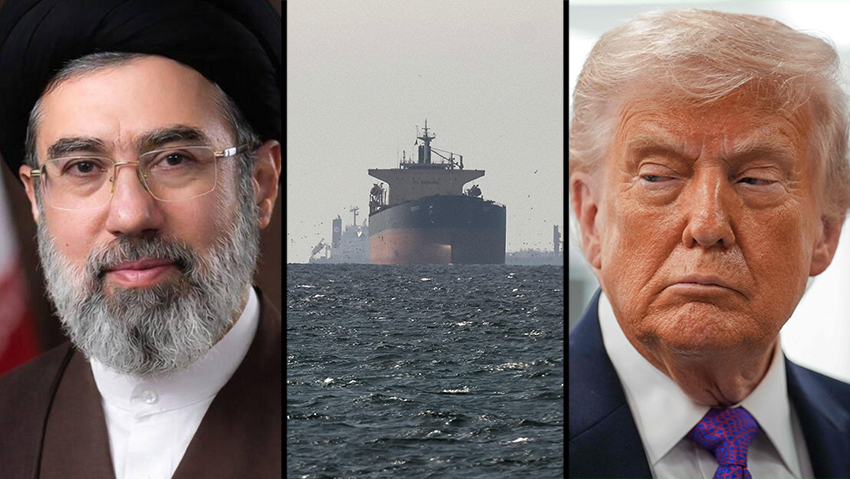
Iran’s joint military command said “control of the Strait of Hormuz has returned to its previous state” under full military supervision. Officials said only vessels authorized by Iran — and in some cases required to follow designated routes and conditions — would be allowed to pass.
Maritime security sources and Western officials reported multiple security incidents in and around the strait.
Britain’s United Kingdom Maritime Trade Operations agency, or UKMTO, said a tanker was fired upon by two gunboats linked to Iran’s Revolutionary Guard about 20 nautical miles northeast of Oman. The vessel’s captain said the boats opened fire without issuing a radio warning. No injuries were reported and the tanker remained operational.
In a separate incident, UKMTO said a container ship was struck by an unknown projectile roughly 25 nautical miles northeast of Oman, damaging several containers but causing no reported casualties or environmental impact.
UKMTO also reported a third incident in which a cruise ship’s captain observed a nearby splash about 3 nautical miles east of Oman, though no damage was reported.
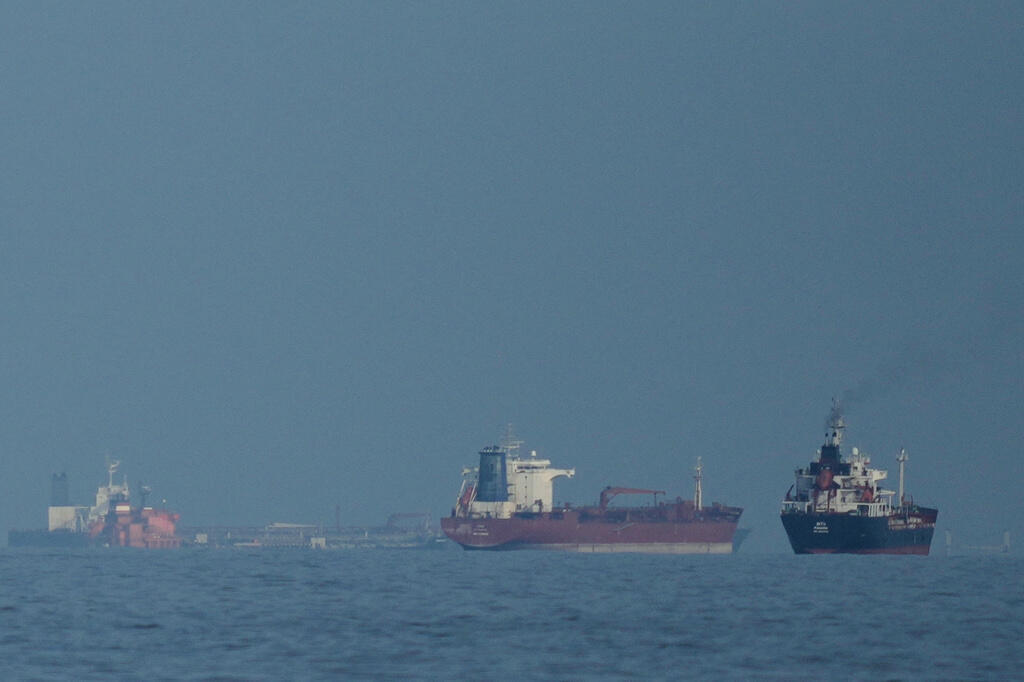
Reuters and other maritime sources said at least two commercial vessels came under fire while attempting to transit the strait. Vessel tracking data and industry monitors reported that ships — including at least one Indian-flagged supertanker carrying Iraqi oil — were forced to turn back.
The Wall Street Journal reported that about 20 ships waiting to pass through the waterway reversed course following Iran’s announcement.
The escalation came hours after early signs of resumed traffic, with tracking data showing a convoy of eight tankers moving through the strait — the first significant transit since the war began seven weeks ago.
(Photo: Altaf Qadri / AP)
Iran said it had previously allowed limited passage under understandings reached in negotiations but accused the United States of violating those arrangements and engaging in “piracy” through its blockade.
Iranian First Vice President Mohammad Reza Aref said Tehran would secure its rights either through negotiations or “on the battlefield,” according to Iranian media.
A message attributed to Mojtaba Khamenei, son of Supreme Leader Ayatollah Ali Khamenei, said Iran’s navy was ready to inflict “new bitter defeats” on its enemies.
The developments come as a U.S.-Iran ceasefire is set to expire Wednesday. President Donald Trump said the blockade on Iranian ports would remain in place and warned that military action could resume if no broader agreement is reached.
Iran rejected U.S. claims of progress, including on its nuclear program. Deputy Foreign Minister Saeed Khatibzadeh said Tehran would not hand over enriched uranium and signaled that no new round of direct talks had been scheduled.
Despite the escalation, mediators — including Pakistan — say efforts are continuing to secure a deal, with discussions potentially resuming in Islamabad in the coming days.
First published: 11:59, 04.18.26