

Iran accused Qatar on Saturday of holding three of its fighter pilots captive after their aircraft crashed in the Gulf state during the war in March, claiming authorities in Doha have prevented them from contacting their families or Iranian officials.
Iran’s military first announced the pilots’ disappearance earlier this month, saying their aircraft went down on March 2 after being hit during a mission “against an enemy military base” in Qatar. At the time, Tehran said their fate was unknown.
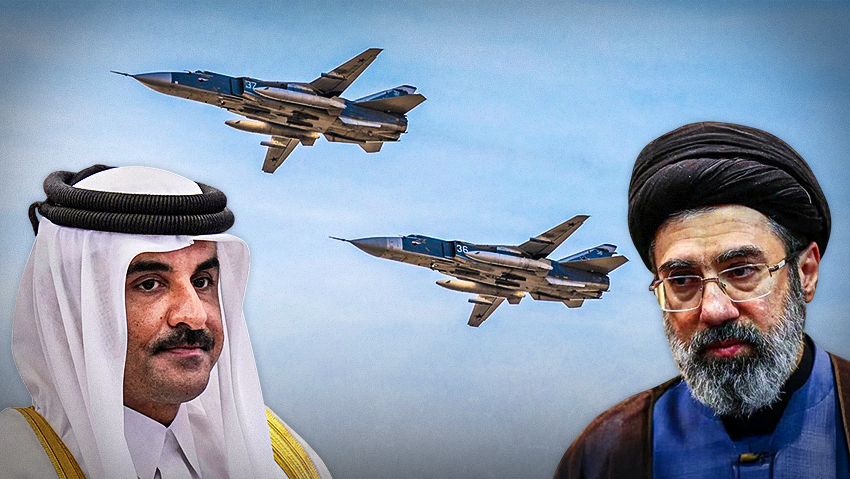
On Saturday, however, Baqer Zadeh, head of the missing persons committee at Iran’s Armed Forces General Staff, said the three men were alive and had been held by Qatari forces for roughly six months.
Zadeh identified them as Javad Salehi, Abd al-Majid Dashtian and Omran Behroushian.
He said their Su-24 fighter jets were shot down while carrying out strikes, though he did not specify how many aircraft were involved.
“The Qatari government has so far prevented them from meeting, being interviewed or communicating with their families and with the officials handling the matter,” he said.
Iran’s Tasnim news agency published a copy of a letter Tehran sent to the International Committee of the Red Cross asking it to assist in securing the pilots’ release.
Qatar has not yet responded to the allegations.
The new accusation comes amid continued tensions in the Persian Gulf and an intensifying war of words between senior Iranian officials and U.S. President Donald Trump.
At a rally in New York on Friday, Trump said that “after we defeat Iran” he intended to declare the Strait of Hormuz, the strategic waterway through which Iran has disrupted tanker traffic since the war began, “American territory.”
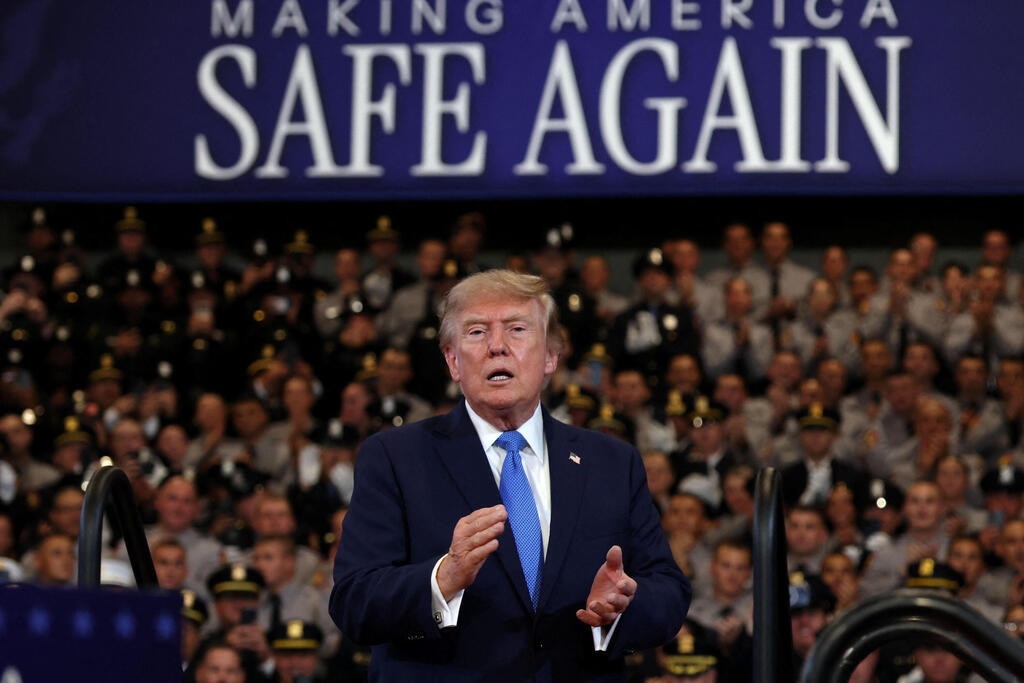
(Photo: Samuel Corum / GETTY IMAGES NORTH AMERICA / AFP)
Iranian officials quickly rejected the threat and insisted the strait would remain under Tehran’s control.
“This strait will open and close only under Iran’s control, and as long as you refuse to accept the reality of defeat and continue wallowing in illusions, Iran will continue enforcing the blockade,” Deputy Foreign Minister Kazem Gharibabadi wrote Saturday on X.
“The Strait of Hormuz cannot be taken over with a tweet or an aircraft carrier, by issuing an order or delivering an election speech,” he added.
Iranian Foreign Minister Abbas Araghchi, meanwhile, said Tehran considers the war itself to have ended under the memorandum of understanding signed in June, after the expiration of a 60-day period.
He argued, however, that the 60-day ceasefire stipulated in that arrangement never formally began and therefore cannot now be extended.
“We had an ‘end of the war,’ and now there is a new situation,” Araghchi told Iranian media.
He also reiterated that even if Iran and Oman reach an agreement over the future movement of ships through Hormuz under close Iranian supervision, that would be separate from the actual reopening of the strait.
Tehran has linked that step to a set of new demands from Washington, including compensation and the withdrawal of U.S. forces from the region.
Although Trump has repeatedly said Hormuz is under American control as part of the U.S. blockade on Iranian ports, traffic through the strait remains largely paralyzed by the threat of Iranian drone and missile attacks.
The United Arab Emirates said Saturday that one of its vessels, belonging to Abu Dhabi National Oil Company, or ADNOC, had been attacked while attempting to cross Hormuz on Friday.
Abu Dhabi said there were no casualties, though it did not specify the extent of the damage. The UAE blamed Iran for the attack, the third reported strike this week against ADNOC vessels after two others on Thursday.
Shipping intelligence firm Kpler said only two vessels crossed Hormuz on Friday, neither carrying oil, though other ships may have passed with their tracking systems switched off.
Even accounting for possible unreported crossings, the figure is believed to be far below the prewar average of about 130 vessels per day.
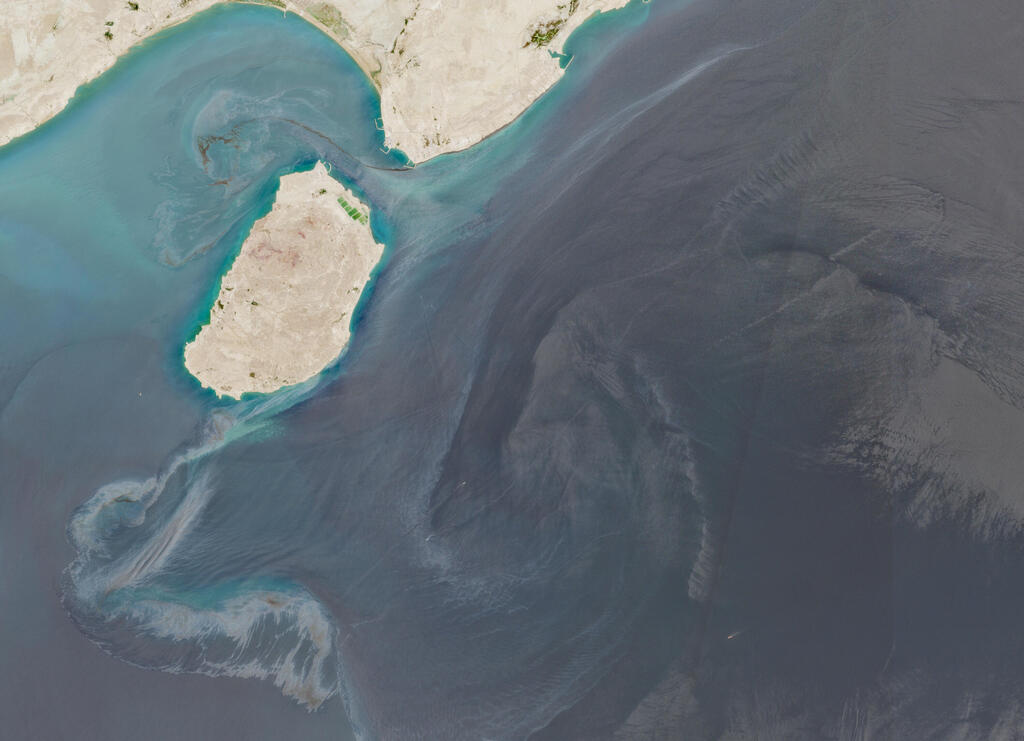
Satellite image from August 10 showing an oil slick near Qeshm Island in the Strait of Hormuz
(Photo: European Union/Copernicus Sentinel-2/Handout via REUTERS)
The paralysis of Hormuz has driven oil prices sharply higher and given Iran significant leverage over the global economy, increasing pressure on Trump to end the war.
Iranian officials have repeatedly described control of the strait as a strategic asset comparable in importance to the country’s nuclear program and have resisted demands to relinquish it.
For weeks, the U.S. administration’s main negotiating objective has appeared to be reopening Hormuz, easing fuel prices and reducing economic pressure ahead of the November midterm elections.
The Wall Street Journal reported that Trump has privately expressed willingness to end the war and “declare victory” without a new nuclear agreement, provided the strait reopens. His administration has already accepted a degree of Iranian involvement in regulating traffic through Hormuz.
Vice President JD Vance said Thursday that reopening the strait was the administration’s “No. 1 objective,” describing preventing Iran from obtaining a nuclear weapon as “objective No. 2.”
Trump, however, struck a somewhat different tone Friday, telling Americans they may have to accept higher oil prices while Washington maintains economic pressure on Tehran.
Paying “a little more for your gasoline,” he said, was a price worth paying to ensure that “a very evil country” could not obtain nuclear weapons.
The average price of a gallon of gasoline in the United States is currently $4.08, up 29% from the same period last year.
“What we’re doing is a great service for the world, not just for ourselves,” Trump said. “We’re really doing a great job.”
He also appeared to address reports of deteriorating morale aboard the USS Abraham Lincoln, which has been operating in the Middle East after about 260 days at sea, saying its deployment “really wasn’t long enough.”
The administration is preparing to send the USS George Washington to the region to replace it.