

Prime Minister Benjamin Netanyahu spoke with U.S. President Donald Trump on Wednesday night and asked him to delay a possible strike on Iran, the New York Times reported Thursday evening, citing an unnamed U.S. official. The report did not specify Netanyahu’s reasons for the request, and his office declined to comment.
Over the past few days, Netanyahu has also spoken several times with U.S. Secretary of State Marco Rubio. On Wednesday, he held a direct conversation with Trump—shortly before the president unexpectedly declared that “the killing of protesters in Iran has stopped.”
Gallery
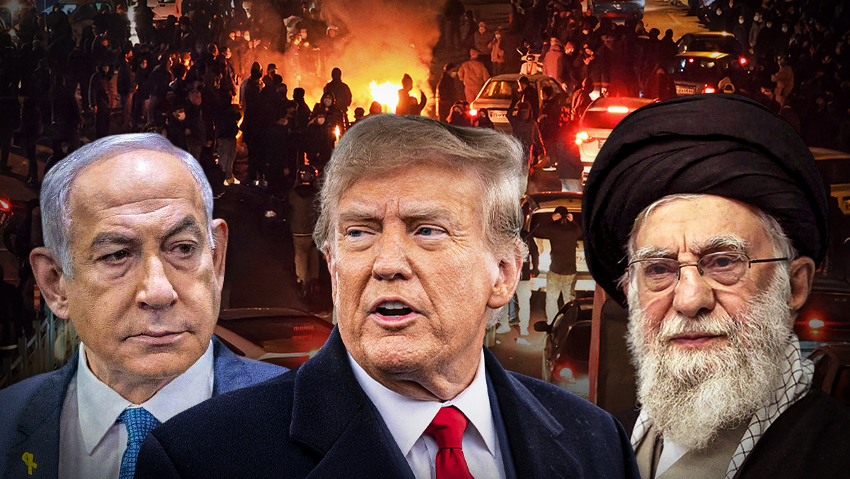
Netanyahu, Trump, Khameini
(Photos: lev radin/Shutterstock, AP, Haim Goldberg/Flash 90, Anonymous/Getty Images)
In a phone interview with NBC on Thursday evening, Trump again appeared to boast about the effectiveness of his threats, suggesting—though not confirming—that he may have stepped back from immediate military action. “We saved a lot of lives yesterday,” Trump told NBC, apparently referencing his warning that the U.S. would respond harshly if Iran executed detained protesters. Iran has since announced it would not carry out one such execution. However, when asked directly whether he had decided against striking Iran, Trump replied: “I’m not going to tell you.”
White House Press Secretary Karoline Leavitt said Thursday that “the president was informed that 800 executions scheduled for yesterday in Iran were postponed.” She added that “the president and his team are closely monitoring the situation,” emphasized that “all options are on the table,” and repeated Trump’s warning to Tehran: “If the killing continues, there will be serious consequences.” Leavitt confirmed the Netanyahu-Trump call but said no further details would be disclosed “without authorization.”
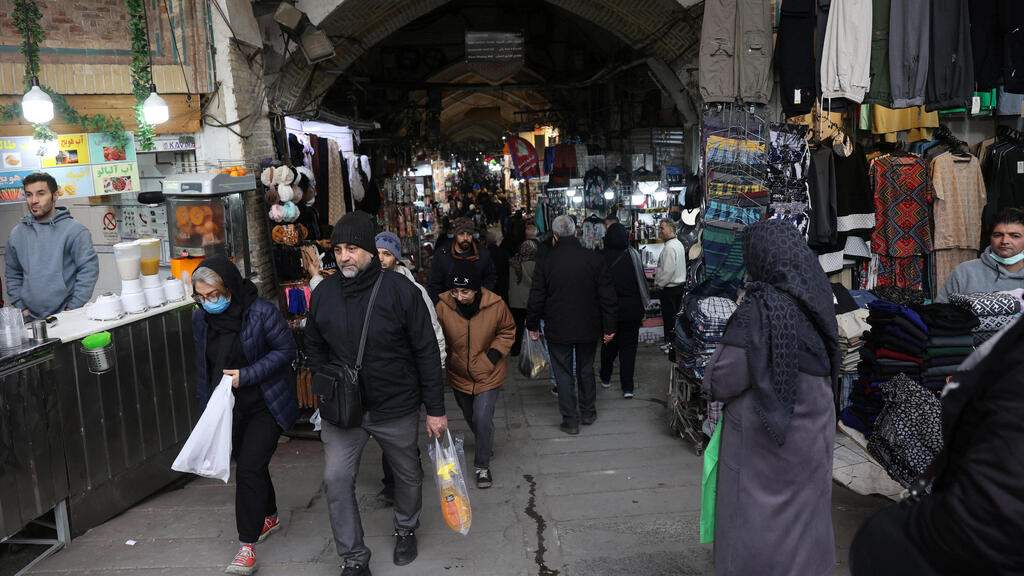
Thursday in Tehran
(Photo: Majid Asgaripour/WANA (West Asia News Agency) via Reuters)
Earlier in the day, Iran’s ambassador to Pakistan claimed the U.S. had informed Tehran the night before that it had no intention of launching a strike. A senior Saudi official later told AFP that Saudi Arabia, Qatar, and Oman had “convinced Trump to give Iran a chance,” warning that an attack would have “serious consequences for the region.”
CNN reported Thursday evening that Egypt had also participated in recent diplomatic efforts. Over the past three days, Cairo, alongside Riyadh, Doha and Muscat, had lobbied Trump to avoid military action and its potential fallout. “It is important that Washington hears this message from its regional partners, especially key Gulf allies who play a central role in Trump’s foreign policy,” a Gulf official told CNN.
According to the report, those four countries also warned Iran that any retaliation against American facilities in the Gulf would “seriously affect” Tehran’s relations with its neighbors. “The talks focused on lowering tensions and rhetoric, and on preventing military actions that could ignite broad regional instability,” the source said, adding that the diplomatic push had helped defuse the crisis. Still, Trump refused to clarify whether military action had been ruled out.
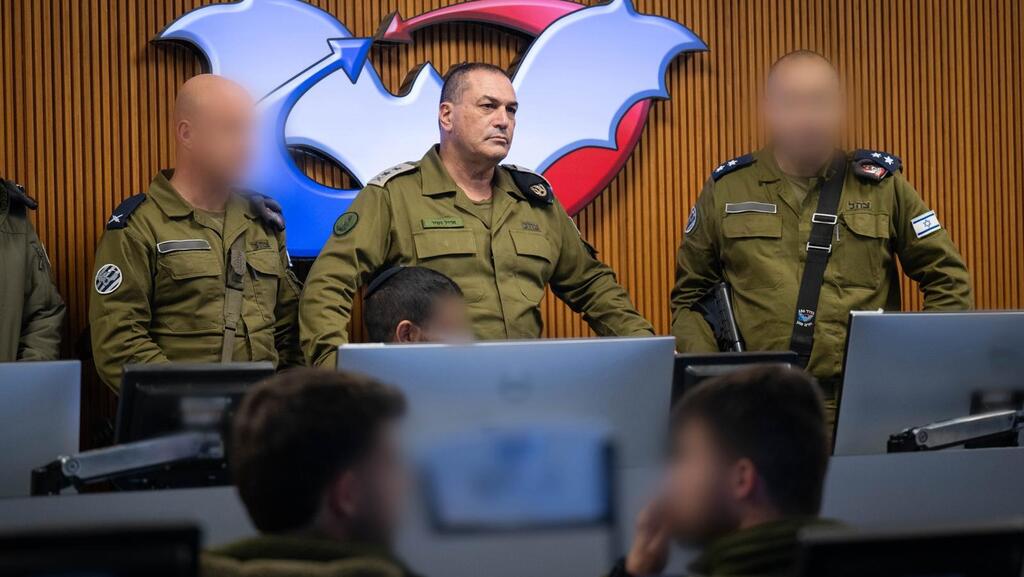
IDF Chief of Staff Eyal Zamir visited the Arrow Battalion of the Air Defense Command,
(Photo: IDF Spokesperson's Unit)
Tensions remain high in Israel and across the Middle East amid fears that an Iranian response to any U.S. strike would target Israel. On Thursday evening, IDF Chief of Staff Eyal Zamir visited the Arrow Battalion of the Air Defense Command, along with the unit’s commander and other senior officers. Zamir held a situational assessment and oversaw a surprise drill simulating a missile attack on Israel.
"During the visit, the Chief of the General Staff reviewed operational readiness and participated in an exercise with battery commanders simulating a missile attack scenario against the State of Israel," the IDF said in a statement.
Zamir "spoke with the commanders and troops and emphasized the importance of strengthening operational readiness and immediate preparedness across a range of scenarios within the aerial defense arrays. The IDF remains prepared to defend the civilians of the State of Israel and will act decisively to thwart threats across all arenas," the statement also said.
During the visit, Zamir stated: “ “It is important that every civilian in Israel knows that the IDF is constantly prepared to defend the State. We adjust our readiness in accordance with a responsible and measured situational assessment. The Air Force, together with the rest of the IDF, is the protective shield for our people and the key to our security.”
Earlier Thursday, NBC News reported that Trump had told his national security team he wanted any military action in Iran to deliver a “quick and decisive blow” rather than spark a prolonged conflict. Citing one official, two individuals familiar with the discussions, and a person close to the White House, the report said, “If he does something, he wants it to be definitive.” However, three sources said Trump’s advisers had yet to convince him that a strike would cause Iran’s regime to collapse swiftly.
There are also concerns that the U.S. currently lacks sufficient regional assets to defend against an aggressive Iranian response, which officials say is likely if an attack proceeds. Any major strike would take time to prepare. Israeli officials are closely watching developments in Iran and are careful not to appear as pushing for war.
Quiet on the streets of Tehran as riots appear supressed
(Video: Reuters)


Meanwhile, according to the Associated Press, Iran has largely succeeded in suppressing the protests, which erupted last month. After the reported deaths of thousands, residents of Tehran said that in recent mornings they had seen no signs of bonfires or debris in the streets, as was common at the height of the unrest. Gunfire, once heard nightly, has reportedly subsided.
Internet access remains blocked across Iran—now more than 168 consecutive hours—but some testimony is still emerging. Some Iranians have reported they were able to place international phone calls.
Reuters also reported a partial return to normalcy in Tehran and published footage showing busy streets. A local resident, Abolfazl, told the outlet that “Trump talks a lot” and claimed Iranians would not be intimidated: “He wants us to kneel—he’s wrong. We will stand up to him with all our strength,” he said, appearing to support the regime. Another resident, Mohammad Khari, said daily life was resuming, but the economy remains dire: “People are shopping a little more, but the cost of living is still hard, especially for basic goods.”