

U.S. President Donald Trump has informed Tehran he does not intend to launch a military strike against Iran, Iranian Ambassador to Pakistan Reza Amiri-Moghaddam told Al Jazeera on Thursday.
The statement came as governments worldwide wait for Trump’s decision on a possible strike on Iran in response to the Islamic Republic’s deadly crackdown, which media reports say has killed thousands of protesters.
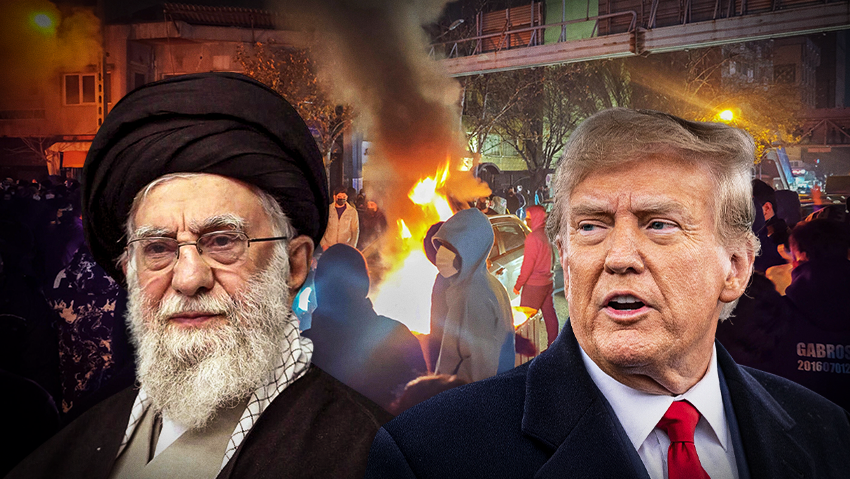
With assessments circulating that the U.S. military could indeed launch an attack, countries around the globe are making fevered preparations, including moving troops out of bases in the Gulf and urging their citizens to leave Iranian territory.
The United States has also begun relocating forces from Al Udeid Air Base in Qatar, the largest American base in the Middle East, which hosts some 10,000 troops. That base was struck by Iranian missiles last year in retaliation for a U.S. attack on Iranian nuclear facilities during the 12–day war against Israel in June.
Iran’s Islamic Revolutionary Guard Corps on Tuesday announced “high alert readiness to respond to an attack,” and ground forces commander Mohammad Karami said Wednesday, “We must make the enemy understand that Iran’s forces are strong and ready to respond decisively to any misstep. Security extends from the border to the depths of the country. We will gouge out the eye that covets our land.”
Conflicting reports emerged in the past 24 hours about when a U.S. strike might occur and what form it might take. Amid the uncertainty, NBC News reported overnight that Trump told his National Security Council he wants any military action in Iran to deliver a “swift and decisive” blow to the regime, and not spark a prolonged war lasting weeks or months. “If he does something, he wants it to be definitive,” one source familiar with the discussions told NBC.
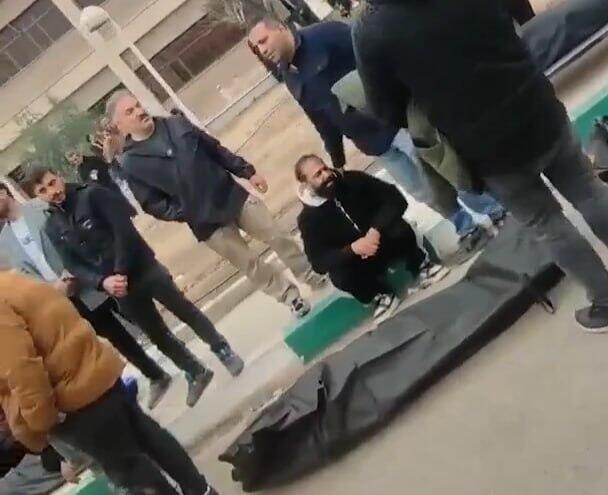
Families weeping over the bodies of relatives killed in the regime's crackdown on protests across Iran
Three officials who spoke to NBC said Trump’s advisers have not yet been able to guarantee that the Iranian regime would quickly collapse following a U.S. military strike. There are also concerns that the U.S. does not currently have all the necessary capabilities in the region to defend against an aggressive Iranian response, which senior administration officials expect.
Trump himself said Tuesday that the regime in Tehran might fall as a result of the protests, but he added that “any regime can fall.”
“Whether it falls or not — it’s going to be an interesting period,” Trump said.
Meanwhile, Iran closed its airspace overnight for about five hours. The Islamic Republic’s airspace was shut shortly after midnight and reopened around 5 a.m. local time.
US President Donald Trump addresses Iran protests
(Video: White House press corps)


On Wednesday night, in a statement that some commentators believed was a distraction, Trump said he had received an update from “very important sources” that the killing of protesters in Iran had stopped, and that Tehran was not planning executions, neither individual nor mass. Trump said the information he received was fairly definitive, but “we’re going to watch and see what the process is.” In his statement, Trump noted that Iran had intended to carry out a day of executions against protesters arrested during the unrest but ultimately refrained.
When reporters asked where the information came from, Trump said it was provided to the United States by very important sources “on the other side,” and added: “I hope it’s true. Who knows?”
When asked whether recent developments meant that the possibility of military action against Iran was off the table, he reiterated that there are currently no executions underway, without directly answering.
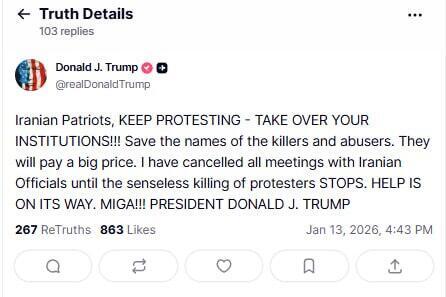
Trump's message to Iranian protesters
Trump, it should be remembered, already threatened in the early days of the protests to punish Iran if it harmed demonstrators. On Tuesday, he called on Iranians to continue protesting against the regime and promised them that “help is on its way.”
Before Trump’s claim that Tehran was not planning executions, international media reported the story of Erfan Soltani, a 26‑year‑old man arrested in Iran and, according to the U.S. State Department and human rights groups, in immediate danger of execution.
Soltani was detained last week at his home amid allegations that he took part in protests in Pardis, west of Tehran. His family said he was the first protester sentenced to death in the current wave of demonstrations. In an interview with CNN, a relative of Soltani pleaded with Trump to save his life. “I beg you, please do not let Erfan be executed,” she said.

Erfan Soltani
According to reports, Soltani’s execution was supposed to take place on Wednesday, but after Trump’s statement, Iran denied on Thursday morning that Soltani, who has become one of the symbols of the nationwide protests, has been sentenced to death.
In a statement, Iran’s judiciary said he is held in Rajai Shahr Prison on the outskirts of Tehran. He is accused of spreading propaganda against the regime and engaging in actions that harm the national security of the Islamic Republic. “He has not been sentenced to death,” the judiciary added, “and if convicted, the penalty — according to law — will be imprisonment. The death penalty does not apply to these offenses.”
Iran Human Rights, a Norway-based human rights organization that relies on information from within the Islamic Republic, reported on Tuesday evening that the number of people killed in the protests that broke out last month has reached at least 3,428 according to its data.
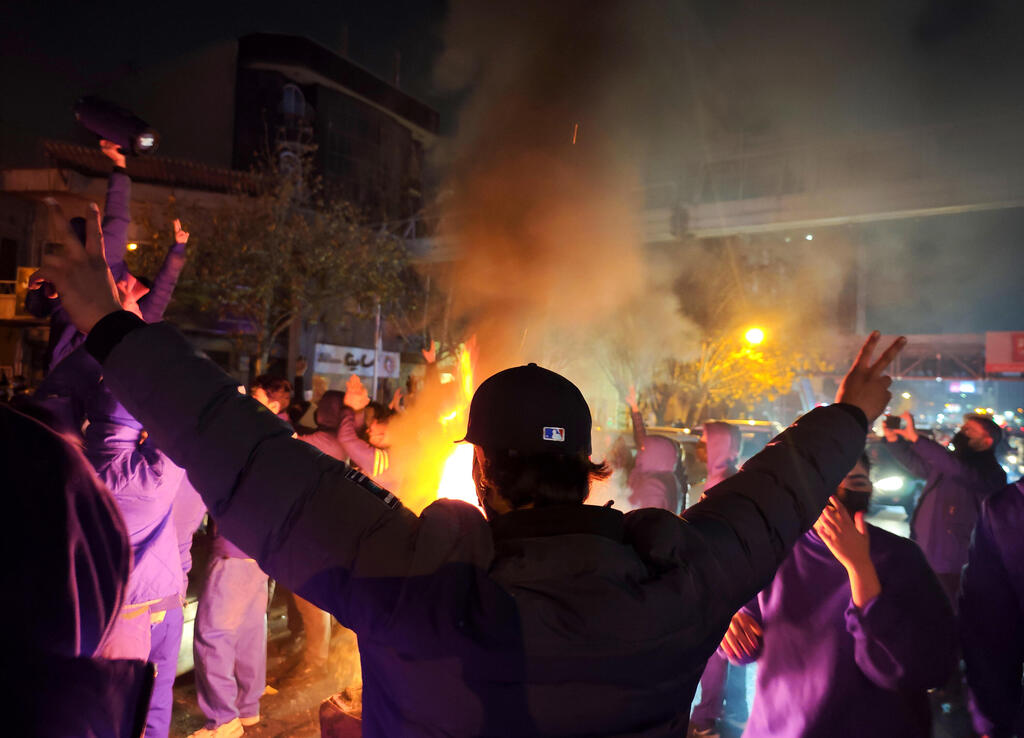
Demonstrators gather around a fire during anti-government protests in Tehran, Iran, Jan. 8, 2026
(Photo: Anonymous/Getty Images)
In recent days, international media outlets have published a range of casualty estimates from 2,000 to as many as 12,000, and the exact death toll remains unclear. An Iranian official confirmed on Monday that 3,000 people had died, but even that figure appeared far from definitive. According to Iran Human Rights, more than 10,000 protesters have been detained since the demonstrations began.
The wave of protests in Iran began on Dec. 28 as a spontaneous demonstration by merchants in Tehran’s bazaar, driven by rampant inflation and a sharp decline in the value of the rial. These economic hardships have compounded the difficulties faced by citizens already enduring more than two decades of Western sanctions over Iran’s nuclear program, making it harder for many to afford food and basic goods.
The protests gradually gained momentum and, as with previous uprisings, such as the 2022 “Hijab Protests” sparked by the death of Mahsa Amini in the custody of Tehran’s morality police, and the 2019 protests triggered by steep fuel price hikes, they quickly morphed into a broader movement against the regime itself and widespread repression of civil and human rights under strict enforcement of Islamic law.
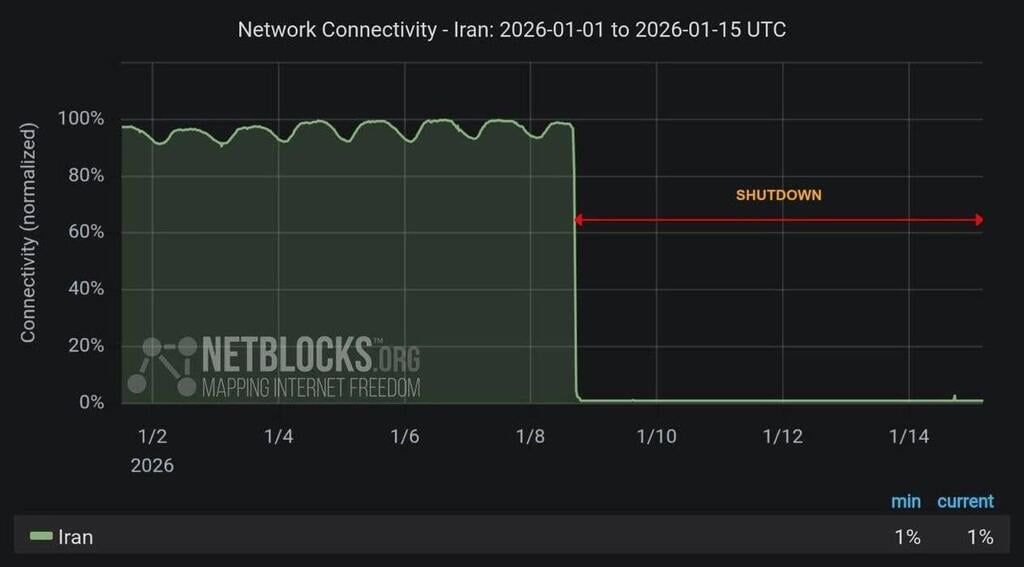
Internet blackout in Iran
Last Thursday, following a call from exiled Crown Prince Reza Pahlavi, the number of demonstrators taking to the streets surged. In an effort to suppress the protests and disrupt coordination among organizers, the Iranian regime decided to cut internet access across the country. A week has passed since the shutdown, which remains in effect. The Associated Press reported Wednesday that protests across Iran are now waning, after reports of thousands of deaths, mass arrests and the nationwide internet blackout.
Despite this, Iranian officials continued to issue defiant messages on Wednesday. “We do not see security for Iran in negotiating with America, given what happened in Venezuela," Ali Akbar Velayati, senior adviser to Supreme Leader Ayatollah Ali Khamenei, said. "Trump and Netanyahu are experiencing political bankruptcy, their political and international standing is declining, and their statements lack credibility. Iran and the resistance front are much stronger than before.”
Turkey backs Tehran, says it will not tolerate use of violence against Iran
Iran’s defense minister, Aziz Nasirzadeh, reiterated claims that the United States and Israel are behind the protests in Iran. “We have precise information that the United States, Israel and some of their allies have established headquarters for terrorists," he said.
"According to our monitoring, the United States and Israel supported arms smuggling and provided financial and logistical aid to separatists. Iran tracked joint meetings in one of the regional countries aimed at creating chaos in Iran. The payments for the enemy’s mercenaries: 500 million tomans for assassinations, 200 million tomans for burning a car and 80 million tomans for burning police stations. The enemy’s plan is to incite chaos through deliberate killing of the Iranian people.”
In an effort to garner regional support, Iranian Foreign Minister Abbas Araghchi held talks with senior officials in the region, including Turkish Foreign Minister Hakan Fidan. “We are a friendly nation and neighbors of Iran,” Fidan said. “What is happening there concerns us. We hope that the disputes between the U.S. and Iran will be resolved through negotiation, and we oppose any military solution. We will not tolerate the possibility of violence being used against Iran.”
Fidan also addressed the situation in Gaza and the Israeli-Palestinian conflict, saying that Israel “still poses a threat to regional stability.”