

The increasingly open confrontation between Israel and Turkey has raised a question that until recently belonged largely to hypothetical war games: What happens if two of the Middle East’s strongest militaries begin shooting at each other, given that Turkey is a member of NATO?
The answer is less dramatic than the phrase “NATO versus Israel” suggests. A direct Israeli attack on Turkish territory could give Ankara a strong basis to seek collective defense under NATO’s Article 5. But a clash between Israeli and Turkish forces in Syria would be considerably more complicated, and would not automatically oblige NATO’s other members to attack Israel.
Gallery
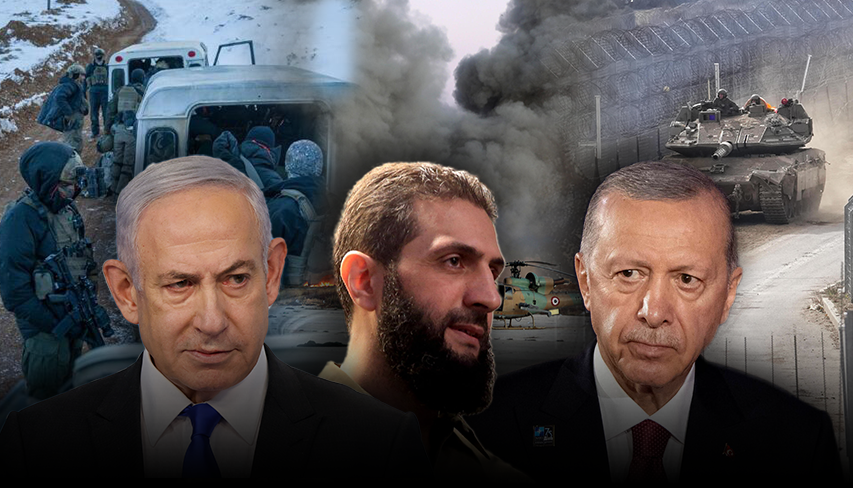
(Photo: Haj Suleiman/Getty Images, IDF Spokesperson’s Unit, Abdulaziz Ketaz/AFP, Marc Israel Sellem, AP Photo/Alex Brandon, Andrew Harnik/Getty Images North America/AFP)
The question has become more relevant as Israel and Turkey increasingly collide over Syria. Israel struck the Abu al-Duhur air base in northwestern Syria on August 18 after a Turkish delegation visited the facility, saying it was acting to prevent a Turkish military deployment there. Turkey condemned the strike, while the Syrian government denied that a permanent Turkish base was planned.
The dispute reflects a broader struggle over Syria’s future. Turkey is one of President Ahmed al-Sharaa’s most important regional backers and is helping rebuild Syrian military capabilities, while Israel is determined to prevent military infrastructure it considers threatening from taking shape near its borders. That creates an obvious danger: Israeli aircraft could eventually strike a site where Turkish soldiers, equipment or aircraft are present.
What Article 5 actually covers
Article 5 of the North Atlantic Treaty says an armed attack against one NATO member is considered an attack against them all. Turkey, which joined the alliance in 1952, is explicitly protected.
But geography is crucial. Article 6 specifies that the collective-defense guarantee covers Turkish territory, as well as allied forces, vessels and aircraft in defined areas that include the Mediterranean. Turkish ground forces deployed inside Syria do not fit as neatly within that geographical framework because Syria itself is outside NATO territory.
An Israeli strike in Syria that killed Turkish soldiers could therefore cause an enormous crisis without automatically being treated in the same way as an attack on Ankara, Istanbul or a Turkish military base inside Turkey.
A confrontation at sea or in the air could present a different legal question. The treaty expressly refers to allied vessels and aircraft in the Mediterranean, meaning an attack on a Turkish warship or military aircraft there could provide Ankara with a stronger argument for seeking Article 5 protection.
Article 5 does not mean NATO automatically attacks Israel
Even if Article 5 were invoked, NATO would not simply declare war on Israel.
Each member is required to assist the ally that has been attacked, but the treaty allows every country to decide what action it considers necessary. That assistance can include military force, but does not have to. NATO members could instead provide intelligence, air defenses, surveillance, logistics or forces to protect Turkish territory.
That distinction becomes especially important in the case of Israel because NATO decisions are political as well as military, and the United States would sit at the center of any response.
The US would be caught between two crucial partners
Washington has exceptionally important relationships with both sides.
Turkey is a treaty ally, one of NATO’s most militarily significant members and an increasingly important U.S. partner in shaping the future of Syria. President Donald Trump has also maintained a close working relationship with Erdoğan, whose government has become an important regional interlocutor for Washington.
Israel, however, remains one of the United States’ closest strategic and military partners outside NATO. Trump has maintained close ties with Netanyahu even as disagreements over Syria, Iran and other regional issues have become increasingly visible.
The contradiction is already affecting U.S. policy. In July, Netanyahu asked Trump to rein in Erdoğan’s increasingly hostile rhetoric toward Israel and urged him not to approve weapons sales that could help modernize the Turkish air force. Trump, meanwhile, has cultivated ties with both leaders.
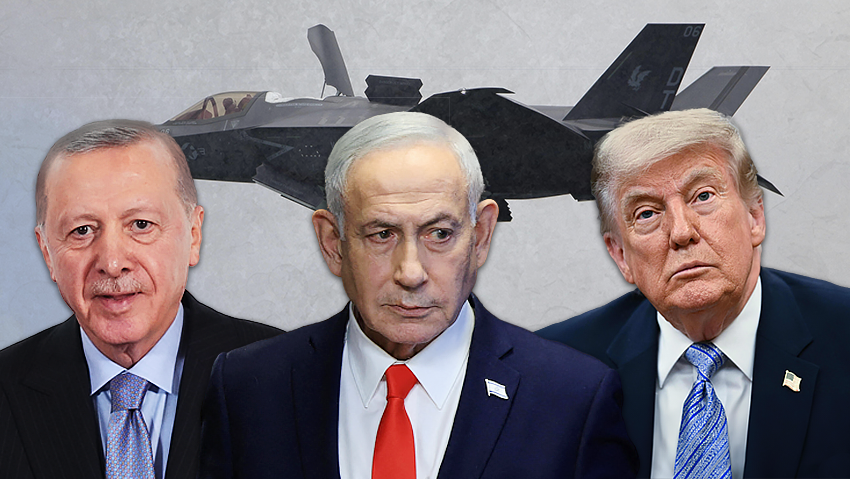
(Photo: Kent NISHIMURA / AFP, REUTERS/RONEN ZVULUN, AP Photo/Evan Vucci, Pool, File, AP Photo/Suhaimi Abdullah file)
Washington is also directly involved in trying to prevent Syria from becoming the arena for an Israeli-Turkish confrontation. The Trump administration has brokered arrangements involving Israel and Syria and has repeatedly pressed for de-escalation. U.S. officials reacted sharply to the latest Israeli strike in Syria precisely because they feared that an incident involving Turkish forces could spiral into something much larger.
This makes an American-backed NATO attack on Israel one of the least likely outcomes of an initial confrontation. Washington would have strong reasons to defend Turkish territory if it came under attack, but equally strong reasons to prevent a situation in which U.S. forces or other NATO militaries were ordered to fight Israel.
The much more likely American response would be intense pressure on both governments to stop the escalation, combined with defensive support for Turkey if necessary.
Turkey would probably turn first to Article 4
Before Article 5, Ankara would have another NATO mechanism available: Article 4.
It allows a member to request consultations whenever it believes its territorial integrity, political independence or security is threatened. Turkey has used it repeatedly during crises involving Syria.
That history offers a useful guide to how an Israel-Turkey crisis might unfold. Rather than immediately entering a war, NATO could reinforce Turkish air defenses, increase intelligence and surveillance operations, deploy additional aircraft or naval forces and send a political warning that attacks on Turkish territory would cross a much more serious threshold.
Such measures could give Ankara meaningful alliance backing without requiring NATO aircraft to attack Israel.
Where the real danger begins
The greatest risk is therefore not that an Israeli strike in Syria suddenly triggers a NATO war. It is that a limited incident starts an escalation neither side originally intended.
Israeli aircraft could hit Turkish personnel or equipment in Syria. Ankara could retaliate against Israeli military assets. Israel could respond again. Turkey could seek NATO consultations, while Washington attempts to impose a ceasefire before the confrontation moves beyond Syrian territory.
The calculation changes dramatically if Israel strikes Turkey itself. Turkish territory is explicitly covered by NATO’s collective-defense guarantee, giving Ankara a much clearer basis for invoking Article 5. NATO members would then have to decide what assistance they were prepared to provide.
How the confrontation began would matter as well. NATO is a defensive alliance. Turkey could not necessarily initiate hostilities elsewhere and assume that every Israeli response would automatically amount to an Article 5 attack. Allies would examine where the fighting occurred, who initiated it and whether the incident fell within the treaty.
Could NATO actually fight Israel?
In theory, yes. If Israel carried out an armed attack covered by the treaty, NATO members could decide that military force was necessary to help defend Turkey.
In practice, a full NATO war against Israel would remain an extraordinary scenario, not least because the United States would have powerful strategic interests on both sides.
That may ultimately be the most important safeguard. Washington would be caught between a formal treaty commitment to Turkey and a decades-old strategic relationship with Israel, giving it an overwhelming incentive to stop a confrontation before either side forced it to choose.
The real danger is therefore not an automatic NATO attack after the first exchange of fire. It is an escalation that gradually removes the diplomatic exits: from a clash in Syria, to Turkish retaliation, to an Israeli counterstrike, and eventually to an attack on Turkish territory that places NATO’s collective-defense commitment directly on the table.
At that point, what began as another confrontation over Syria would no longer be only an Israeli-Turkish crisis.