

With 20 surviving hostages and the bodies of four others returned to Israel on Monday evening, Maj. Gen. (Res.) Nitzan Alon, head of the IDF's Hostages and Missing Persons Command, said the return marks “a cornerstone for important processes” and “part of a process of healing, rehabilitation, and renewal of Israeli society.”
Alon spoke as the country continued to await the return of the remaining 24 deceased hostages still held in Gaza. “I hope that what we have done over the past two years—what so many have done, first and foremost the soldiers in the field and their commanders, and the price that was paid—will truly enable this progress,” he said.
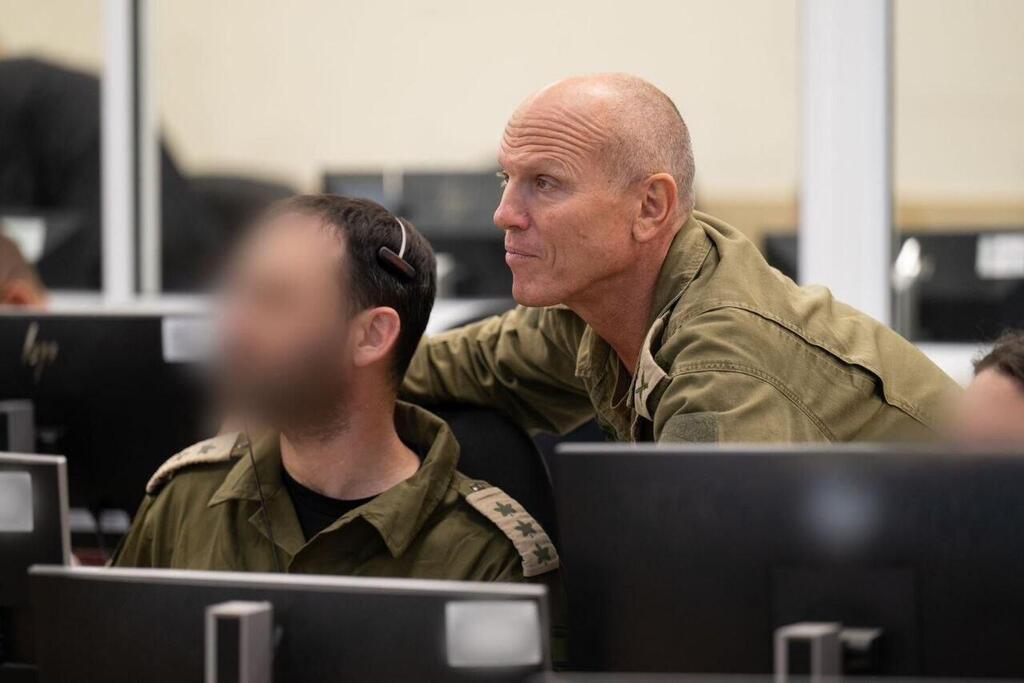
Maj. Gen. (Res.) Nitzan Alon
He recalled that on the night between Oct. 7 and 8, 2023, immediately after Hamas’ assault on southern Israel, the command post began operating amid what he described as “chaos, with thousands of people whose whereabouts were unknown.” Through “painstaking, systematic work,” he said, the team “labored day and night to understand what had happened to the hostages and to define the mission of protecting their lives.”
“It pains us deeply for every person we could not save,” Alon said. “Many here are emotionally scarred, carrying feelings of responsibility and sometimes guilt. But it is important to see things in balance. Amid the events of battle and the intensity of war, there is also reason to be proud of this important work.”
He described the day of the return as one filled with both relief and grief. “Today is a mixture of joy and sorrow—tears of happiness for those returning, and concern and grief because this entire event is a difficult and tragic one,” he said. “As I’ve said, regarding the mission of bringing back the fallen, we are grateful that many have been returned today, and we know there are still others we must continue to bring home in the coming days.”
The Hostages and Missing Persons Command, created shortly after the Oct. 7, 2023 Hamas attack, has led Israel’s efforts to locate and recover the hostages. From its operations center, the command coordinates between military units in the field and international mediators to ensure that agreements related to the hostages’ release are carried out.
Since its establishment, dozens of teams and hundreds of reservists have worked within the command to produce as accurate an intelligence picture as possible regarding the condition of the hostages, to accompany their families, and to share verified information with them with honesty and sensitivity, according to the IDF. The IDF said the command also directs operational activity during the fighting in the Gaza Strip to protect the hostages’ lives.
“The IDF will continue to act through every possible means until the last hostage returns home and the national mission is complete,” the army said in a statement.
Alon, who was called up from the reserves on Oct. 8, 2023, by then–IDF Chief of Staff Lt. Gen. Herzi Halevi, left his private-sector position to establish and lead the command. For two years he has focused exclusively on the mission, serving continuously in the reserves. In the chaotic early days, when hundreds of Israelis were missing or believed abducted and almost no information was available, Alon built a core team of intelligence, operations, and personnel experts that eventually grew to around 500 members.
“Alon is a very intelligent person, with the ability to analyze complex situations and solve difficult problems,” Halevi told Ynet. “Alongside his composure, he always demonstrated humanity and sensitivity toward the families, and insisted on telling the truth—even when it was painful and not what people wanted to hear.”
“In the past two years, his abilities have not always been recognized as they should have been,” Halevi added. “That was for non-professional reasons. Yet he continued the mission with dedication and humility, without ego. In the most difficult cabinet discussions, he spoke the truth, not necessarily what ministers wanted to hear.”