

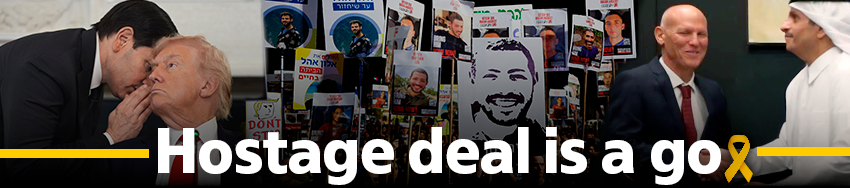

During the negotiations in Sharm el-Sheikh, one figure stood out: Maj. Gen. (res.) Nitzan Alon, head of the IDF’s Hostage and Missing Persons Directorate and commander of the intelligence effort focused on captives and MIAs. In rare images released from the summit, Alon is seen shaking hands with Qatari Prime Minister Mohammed Al Thani, smiling as if to signal a long and painful mission had finally reached its successful end—all the hostages were coming home.
Alon was there from day one. On October 8, 2023, just one day after the Hamas-led attack on southern Israel, then-IDF Chief of Staff Herzi Halevi called him back to service and tasked him with establishing the Hostage Directorate. He left his position in the private sector and served in reserve duty for two full years, focusing solely on the return of the hostages.
Gallery

Maj. Gen. (res.) Nitzan Alon (left) shaking hands with Qatari Prime Minister Mohammed Al Thani
Those who worked alongside Alon described the mission as a relentless, round-the-clock effort, seven days a week. Within the command, he was regarded as a dominant yet composed presence. “A unique individual, extremely intelligent, and a quiet leader,” one colleague recalled. “He’s a sophisticated and patient man. Rarely raises his voice or loses his temper. He’s determined, and most of all, shrewd in knowing how to persuade the right people at the right time—when to push hard, and when to lower his head, breathe deeply, let things settle and then press forward with full force.”
Over the course of the war, Alon earned the deep respect of the hostages’ families, the military and even the government. His status derived not only from his role, but from the force of his personality and the trust he inspired across the board. Still, he often clashed with political leadership—a dynamic those around him describe as principled.
“He argued his case clearly and sharply in every expanded Cabinet and war Cabinet meeting,” said a senior defense official who worked alongside him. “He never hid his views or recommendations. At the same time, he respected the authority of the political echelon. He knew his place, but he spoke his mind and challenged decisions when necessary.”
Challenging Netanyahu
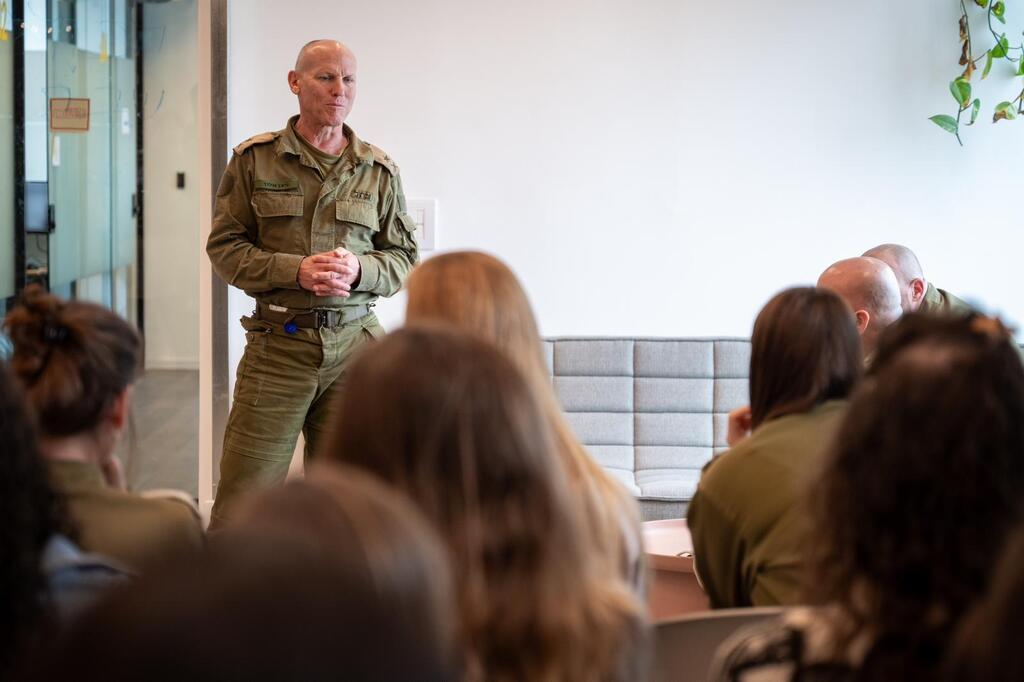
Despite the widespread admiration for Alon, his relationship with Prime Minister Benjamin Netanyahu was more complicated. While Netanyahu recognized Alon’s capabilities and valued his expertise, he reportedly bristled at some of the critical remarks attributed to him throughout the war.
(Photo: IDF)
One of the most widely reported statements came in May 2024, when Alon was quoted as saying, “We’re desperate. With this government makeup, there won’t be a deal.” According to the same report, Alon also said, “The deal I’m pushing for would bring all the hostages home, but Hamas insists it include an end to the war.” In another quote, he was reported as telling the prime minister, “We can resume fighting at any moment.”
Alon denied the quotes, and the IDF maintained that his words had been taken out of context. Nevertheless, Netanyahu took a public swipe at him during a Knesset speech: “Anyone who says he’s giving up, who’s not willing or able to withstand the pressure, should go back to waving a black flag (a reference to ongoing anti-government protests)—or better yet, raise a white one.”
Throughout the war, Alon and many others involved in the negotiations held firm to the belief that the release of all hostages could not happen without agreeing to end the war. In hindsight, they were right—the current deal reflects exactly that position, one Alon had insisted on from the beginning.
“He always spoke his mind with honesty and courage,” said a colleague from the negotiation team. “He’s sharp and highly persuasive, and that clearly challenged Netanyahu. But there’s a reason he stayed on the team until the very last day, while others walked away. Nitzan understood the political constraints Netanyahu was under, and he understood his motives. But because he was in uniform, he didn’t get involved in politics. He focused solely on where things stood and how to move the negotiations forward.”
"One family begged: 'Don’t resign'"
Another official who worked closely with Alon offered a more personal perspective: “Negotiation isn’t his world—he fell into this role. Nitzan commanded Sayeret Matkal and led the 1994 rescue operation of Nachshon Wachsman. He’s a soldier through and through. When he was first appointed and began building the Hostage Directorate, its initial task was intelligence gathering. In the early days, there were hundreds of missing persons, and no one knew who had been kidnapped and who hadn’t.”
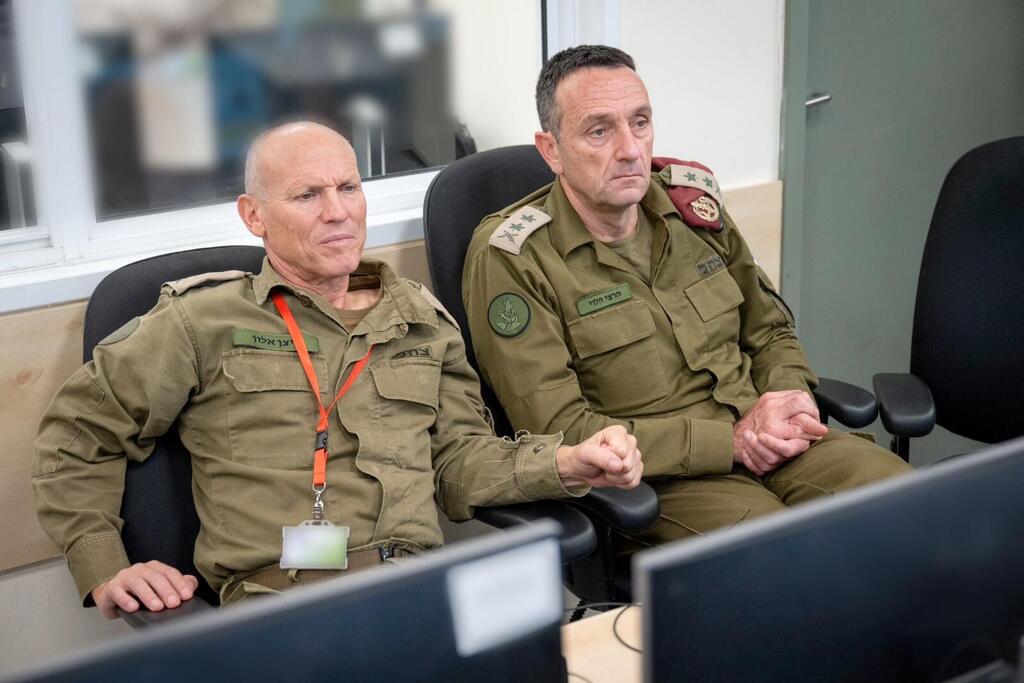
Alon and former IDF chief of staff Herzi Halevi
(Photo: IDF)
“He and his team had to analyze Hamas videos, search for faces and names, cross-reference eyewitness accounts, send people to the Shura base to help identify bodies and piece together the basic picture: who had been abducted, murdered or was still missing.”
The initial role of the command was to build that picture—and they did it exceptionally well. Only later did Alon take on the lead role in coordinating negotiations. “At first, the task was considered secondary,” the source explained. “The main focus was the ground maneuver in Gaza. In those early weeks, the prevailing attitude was ‘no’ to negotiations. Everyone was busy preparing for a massive incursion with five divisions. Then Nitzan brought in several people from the Mossad, including retired department head Dror Michman and Maj. Gen. (res.) Yoav ‘Poli’ Mordechai.”
In hindsight, the source admitted, “Some of the appointments—especially those with connections to Qatar—didn’t work out particularly well. There wasn’t a precise selection process. But to Alon’s credit, these were people with strong intelligence backgrounds who approached him and offered their help. He said, ‘Please, go ahead.’”
In the early rounds of hostage releases, it was Mossad Director David Barnea who led the negotiations, with Alon playing a supporting role. Over time, as Netanyahu sidelined both Barnea and then-Shin Bet chief Ronen Bar, Alon remained—and his influence grew.
“People ask why he stayed in the role even during long periods when there were no negotiations,” one insider said. “The answer is that he was also responsible for ensuring IDF operations didn’t endanger the hostages. More than once, he warned against specific military plans. Sometimes he was heeded, sometimes not.”
According to media reports, 42 hostages were killed during IDF operations since the war began. Alon seriously considered resigning more than once—but in the end, he stayed. One reason was the sense of mission he felt. Another was his bond with the families.
“One family said to him, ‘The only person we trust is Nitzan Alon. He gave us accurate, honest information. He never played political games. We begged him not to resign.’”
"He stayed for the families even when he agreed with Netanyahu on nothing”
Another official familiar with Alon’s thinking said, “He thought seriously about stepping down, and the families were terrified. He was the only figure they really trusted. He told them the truth—the good and the bad. He told them when the hostages were in danger. All the families loved him. He kept in constant contact with them. And yes, recordings leaked where he expressed criticism of the leadership. He was open and honest with the families—many of whom trusted him far more than they did Gal Hirsch.”
A separate source said Alon ultimately remained in his position because of his commitment to the families. “It was duty, mission—and even after his wings were clipped, he stayed. His presence at the talks in Sharm was highly unusual. In recent months, he hadn’t been included in many of the official delegations. He and his team had been marginalized. But he clung to the role and didn’t walk away.”
A former senior defense official who worked closely with Alon pointed to another reason: “Nitzan arrived at the military headquarters on October 7 in uniform, stepping into a void. Military Intelligence was in chaos. He and Herzi are close friends from their Sayeret Matkal days. Nitzan brought with him the skills he developed in special operations and intelligence—he created something out of total disarray.”
“With his own hands, before anyone even understood the scale of the abductions, he built the Hostage Directorate. He recruited hundreds of intelligence officers, created entire systems from scratch. That’s why he didn’t leave. He disagreed with Netanyahu on almost everything. He’s a reservist, not afraid to say the prime minister’s priorities were off. Many would have broken or quit—but he understood no one else could do what he was doing, and you don’t change leadership in the middle of a war.”
“He built a system based on trust with the families. There are dozens of families in Israel who only trust the intelligence officers working under Nitzan Alon. He was also central to every operational plan—nothing moved without his input or his warnings about the risk to hostages. Even Chief of Staff Eyal Zamir’s caution ahead of the Gideon B operation was based on Nitzan’s assessments.”
One story encapsulates the emotional bond Alon had with the families. Gil Dikman, cousin of Carmel Gat—who was murdered in captivity—shared the following on Facebook:

Alon joins a yoga session with hostage families
“Two weeks after Carmel was killed, my sister Shay and her friends organized a yoga event in her memory. It was the first time they did it without the hope that she would return. In the back row sat a quiet man, practicing silently and with focus. It was Maj. Gen. (res.) Nitzan Alon, head of the IDF’s intelligence effort on the hostages. He stood alone, many times, against those who sabotaged deals and were willing to sacrifice the hostages. He always told the truth—to the leaders and to us. He never gave up, even when everything seemed lost. He didn’t shy away—he came to us, in our darkest moment, and asked for forgiveness.”
Dikman continued: “This week, a very different photo of him was published. No yoga practitioners around him—but Arab leaders. And the event wasn’t a memorial; it was the signing of a deal to end the war and bring the hostages home. When Nitzan smiled, you knew. That was it. You could cry—from relief, from emotion, and from pain.”
Gal Ganot contributed to this report.