


Ambassador Ron Prosor condemned Sophie von der Tann, ARD’s Tel Aviv correspondent, for sharing a New York Times article by Holocaust historian Prof. Omer Bartov titled “I’m a Genocide Scholar. I Know It When I See It,” accompanied by the inscription “Never Again,” which linked the Gaza war to lessons from the Holocaust. The article sparked international backlash for what critics called a distorted comparison.
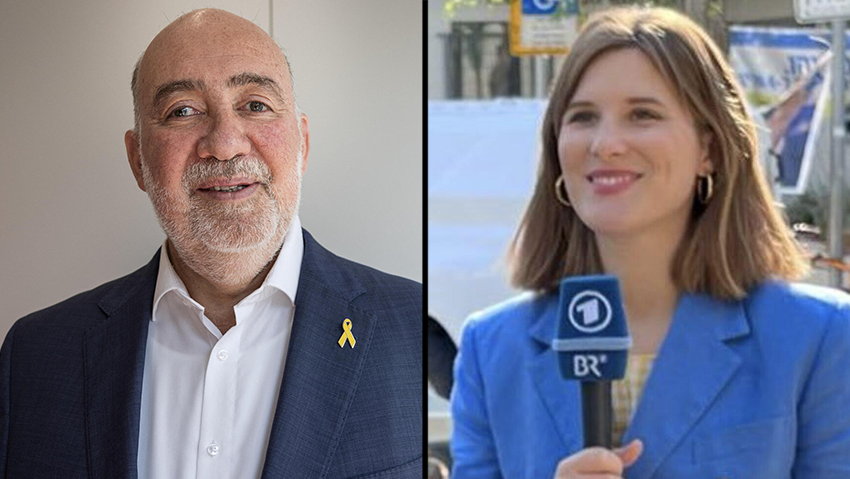
Israeli Ambassador to Germany Ron Prosor, ARD Tel Aviv correspondent Sophie von der Tann
(Photo: REUTERS/Nadja Wohlleben)
“If Sophie von der Tann would rather become an activist, she should switch jobs,” Prosor wrote on X (formerly Twitter), calling the use of “Never Again” in this context “distorting and trivializing history.”
Bartov, a professor at Brown University, is known for his long-standing criticism of Israeli policy and efforts to draw parallels between the Holocaust and the Palestinian narrative. In a January interview with Der Spiegel, he accused Israel of practicing ethnic cleansing and said its current actions evoke “some of the darkest chapters in history.” Prosor previously called Bartov “a self-hating Jew” and accused him of politically weaponizing Holocaust memory.
Get the Ynetnews app on your smartphone: Google Play: https://bit.ly/4eJ37pE | Apple App Store: https://bit.ly/3ZL7iNv
Von der Tann, who has reported for ARD from Tel Aviv since 2021 and speaks both Hebrew and Arabic, is respected in Germany for her empathetic coverage of the region. However, in Israel, frustration has grown over what many perceive as one-sided reporting. In a recent interview with Süddeutsche Zeitung, von der Tann said she spends her days immersed in Gaza’s suffering and returns to Tel Aviv “with the images still in my head”—without mentioning the Hamas-led massacre of October 7 or the hundreds of murdered and kidnapped Israelis.
“Whether it’s a lack of historical awareness or simple lack of judgment: Viewers can expect more from their ARD correspondent,” said Prosor, adding sarcastically: “If that’s too boring, there’s good news: It’s never been easier to switch from journalism to activism! Anti-Israel NGOs are booming and are now urgently seeking dedicated staff – Sophie von der Tann’s post is a real letter of recommendation.”
Israeli officials say the incident reflects a broader pattern. According to the Israeli Embassy in Berlin, von der Tann’s reporting challenges the standards of objectivity, balance and historical responsibility expected of Germany’s public media. The message from Jerusalem is clear: when it comes to reporting on the Jewish state, there are lines that must not be blurred.
ARD said in a statement: “We reject the accusation of one-sided reporting made in the ynet article. ARD correspondents for Israel and the Palestinian territories cover what is happening on all sides. The accusation that Sophie von der Tann does not mention ‘the Hamas-led massacre of October 7 or the hundreds of murdered and kidnapped Israelis’ in her interview with Süddeutsche Zeitung is false. She refers to the terror attack on October 7 and the suffering of the Israeli hostages multiple times.”