


“There’s been a hit. Why aren’t you answering?” That was the last message Elior Elimelech sent in the family group chat on Sunday, March 1, at 1:46 p.m., to his mother Sarah and sister Ronit. Minutes earlier, he still believed they were in a shelter, as usual. Two and a half weeks after the missile strike in Beit Shemesh, he and his brother Tomer recount the devastating loss — but vow to go on: “We’ll keep playing. Joy will be heard, even when it’s hard.”
Amid the destruction, dust and the sound of bulldozers still clearing debris, they reconstruct the deadly barrage that killed nine people, including their mother and sister. Just a few steps away stands a small housing unit where their brother lived, about five meters from the impact site.
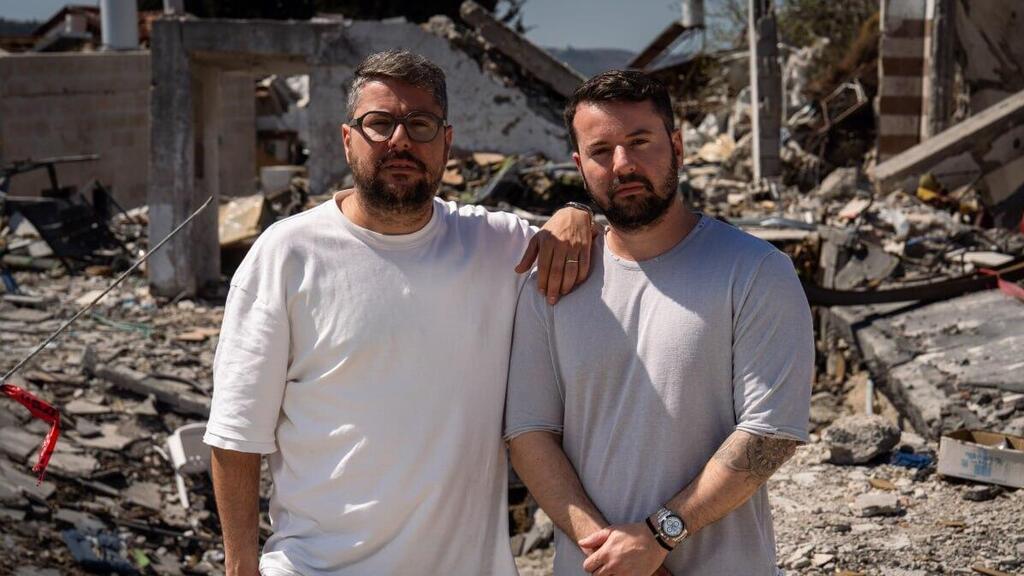
The main house, where their mother Sarah lived, was almost completely destroyed, but the unit remains standing. On one wall hangs a glass plaque reading “A psalm of thanksgiving.” It did not shatter. “That’s a sign — we don’t need more than that,” the brothers say.
That morning, less than a day after the war began, they were on a nearby street, on their way to the house. “We had planned to have lunch at our mom’s,” Elior recalls. “Then the siren started, and during it there was an explosion. That’s why Mom and Ronit didn’t make it to the safe room. Ronit’s children, from what I understand, ran straight to the shelter. After the blast we could barely move forward. There was heavy smoke, everything had collapsed.”
For several minutes, they stood stunned. “You hear the boom and don’t understand what’s happening. With all the destruction and confusion, I don’t remember everything,” Elior says. “After a few minutes they pulled my father and my brother, who is disabled, out of the house. Only in the evening did they let us get close again.”
Information about casualties began circulating shortly after the explosion, but did not reach them. “We started looking for them,” Elior says. “Everyone already knew — friends, rescue teams. They probably identified them but didn’t want to tell us. I kept asking where they were. A week and a half earlier, my mother had injured her leg and had trouble walking. Still, she cared for my brother and my father, who is dependent. She always held the household together.”

Mother Sarah Elimelech, of blessed memory, and sister Ronit, of blessed memory
(Photo: from Facebook)
They speak about Ronit with emotion. “Ronit volunteered with United Hatzalah for her son, who is on the autism spectrum. It was his dream that she would become a medic. She invested, took courses, advanced. During the siren she had her medical bag and orange vest on. She went out with it, thinking she would help others after the siren. They found her equipment in the rubble, burned.”
“She was a rare woman,” Elior adds. “A mother of three, a single parent who relied a lot on our mother. She raised her children with devotion and volunteered with other organizations. A week before the disaster she distributed Purim gift packages at a hospital, at her own expense. A woman of endless giving. I don’t know where she found the strength.”
Their mother Sarah, Tomer says, was the family’s anchor. “She brought everyone together. Always giving, always abundant. You’d arrive and the table would be full. On Fridays she cooked as if for 100 people, while also working and caring for my father and my disabled brother. She fulfilled her dream with that house, built just a year ago — and only got to enjoy it briefly.”
Drone footage from the missile impact site in Beit Shemesh
(Video: United Hatzalah drone unit)


Alongside the loss, Elior also speaks of what he calls miracles. “My brother, who uses a wheelchair, was in his unit at the time, inside the safe room. His window is about five meters from the impact. Only a cabinet with Torah books fell on him. Firefighters said it was a miracle the room held. They rescued him through another window so he wouldn’t see Mom and Ronit.”
“Our father was home,” Elior adds. “After a shower he couldn’t find his shoes and told Mom, ‘You go, I’ll come after.’ That’s how he parted from her. He stayed in the house and was saved by a miracle, with only a small scratch on his hand.”
But their final moments with their mother and sister stay with them. “On Saturday there was a siren. I called, and we did a video call,” Elior recalls. “We laughed. Ronit asked what to buy my kids for Purim. And Mom said, ‘Elior, dear, there’s a siren, we’re going to the shelter.’ Those were her last words.”
Tomer recalls their final message to him: “On Saturday night, Mom and Ronit both ended the call the same way: ‘Take care of yourselves, bye.’ That will stay with me.” On Sunday, they exchanged a few more messages. “Ronit wrote she was in a shelter at a supermarket with Mom. Mom wrote, ‘We’ll have a Purim meal,’ and a few hours later, ‘Hopefully we’ll manage.’”
Music has remained a constant presence. Both brothers work as DJs. “As a kid I worked as a waiter, saw DJs and knew that was my dream,” Elior says. “I started working in clubs at 15. I’m turning 40 next month. Tomer joined a few years later.”
The decision to return to performing was not simple. “During the mourning period, you don’t know where you are,” they say. “We asked a rabbi. He said, ‘Continue, it’s your work.’”
“Music has always been our therapy,” Tomer adds. “There was a couple who insisted, and a few days after we got up from mourning, I went to play at their wedding.”
Elior concludes: “Mom was the happiest person I knew. We are joyful people who love music. We decided to continue — for Mom and Ronit.” Tomer adds: “Despite everything, the people of Israel live. We were embraced by people we don’t know. We are one people.”
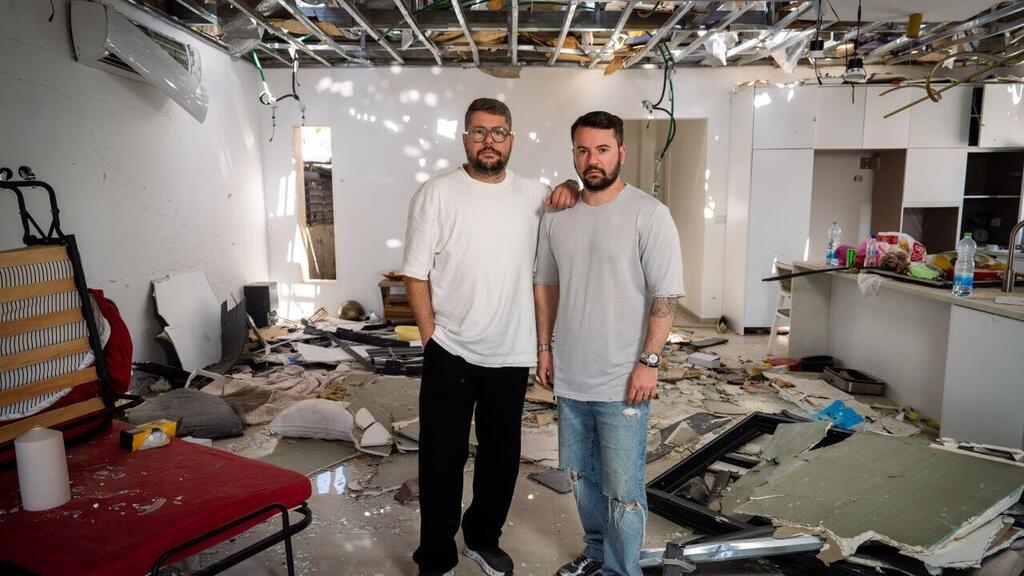
(Photo: Shalev Shalom)
Since the disaster, they have also sought to deliver a clear message. “I used to dismiss the guidelines,” Elior admits. “In the previous war I would stay in place during a siren. After this, everyone who comes to the mourning tent says the same: we used to dismiss it, now we run to shelter. People need to understand — it saves lives.”
They now promise to support Ronit’s children, who have lost their mother. “We won’t leave them. We’ll always be there for them. It’s a promise we made to Mom and Ronit at the funeral.”
To help rebuild the family’s life, a crowdfunding campaign has been launched. “Our father, who requires constant care, has been left without a home and without the central support in his life. Amid the immense pain, we are trying to gather the pieces and rebuild a stable reality for him and for Ronit’s children, and we are asking the public for assistance.”