

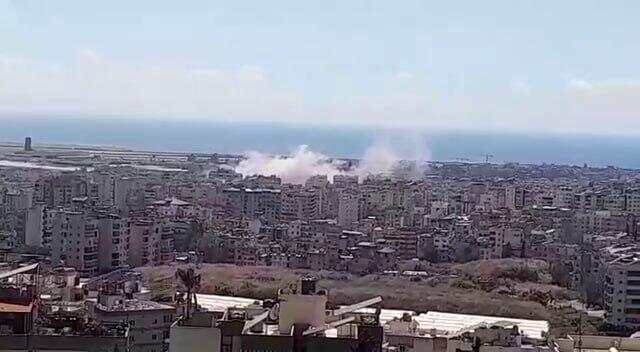
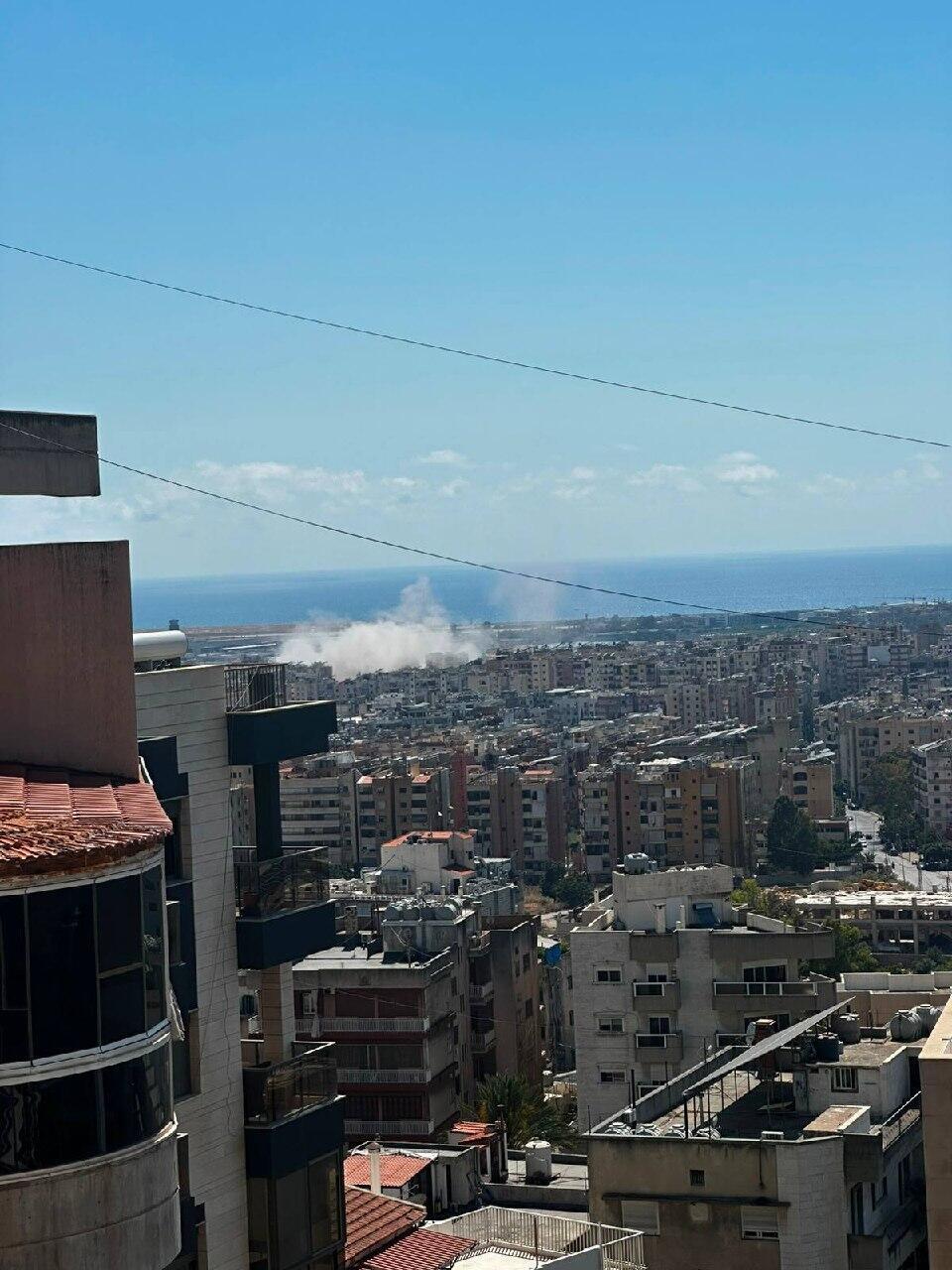
For the first time since ceasefire understandings with Lebanon were announced, the IDF struck a Hezbollah headquarters in Beirut’s Dahieh district on Sunday, after rocket fire from Lebanon into northern Israel.
Prime Minister Benjamin Netanyahu and Defense Minister Israel Katz said in a joint statement: “In accordance with the directive of Prime Minister Netanyahu and Defense Minister Katz, the IDF struck terrorist headquarters in the Dahieh district of Beirut in response to Hezbollah fire toward Israeli territory.”
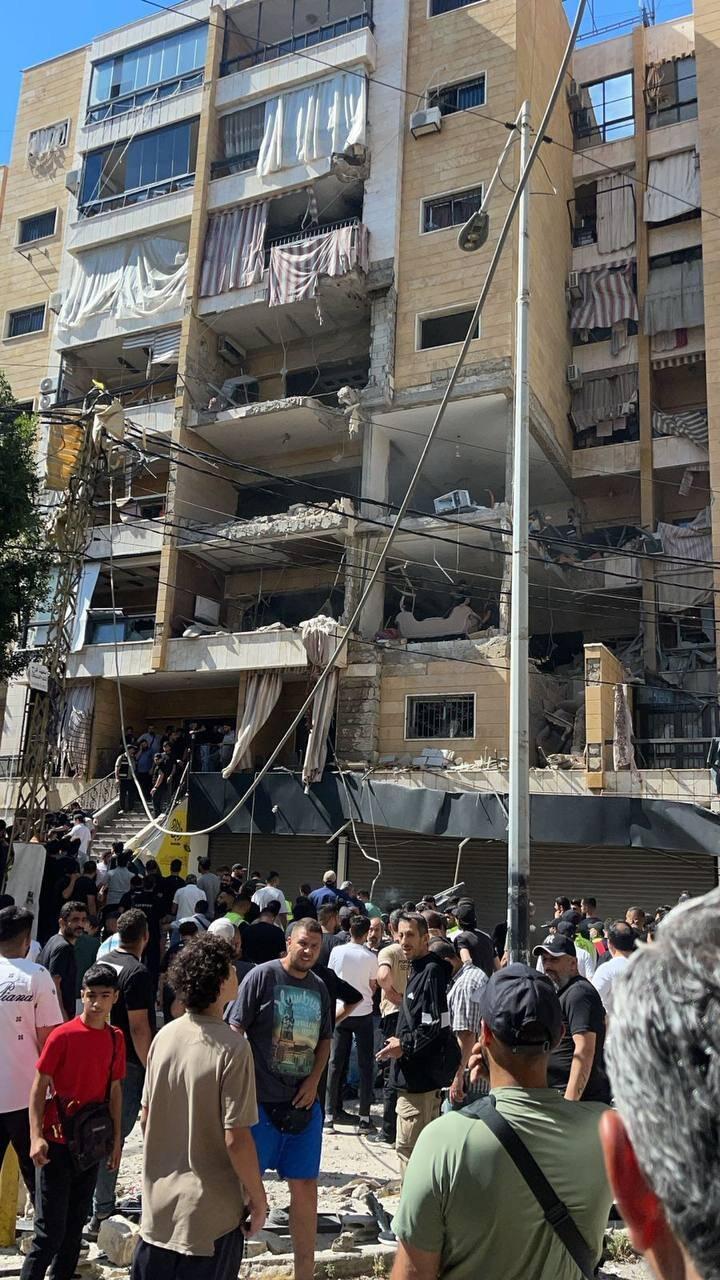
Israel notified the U.S. administration before carrying out the strike, which Israeli officials said was in line with understandings between Jerusalem and Washington that the IDF would strike Beirut if fire was directed at Israeli communities. The question now is how Iran will respond after it had previously threatened to fire at northern Israel if the IDF struck Dahieh.
The IDF said it struck “infrastructure belonging to the Hezbollah terrorist organization in Dahieh.” Lebanese media reported “many casualties” in the strikes.
As far as is known, the Hezbollah headquarters hit in Beirut was empty, making the operation largely symbolic. The goal was to damage buildings rather than eliminate operatives, against the backdrop of U.S. President Donald Trump’s opposition to an attack that could cause mass casualties.
In comments aired after the strike, Trump told NBC News’ “Meet the Press” that he was not demanding that Lebanon be part of a short-term deal with Iran. He also said he would not unfreeze Iranian assets or lift sanctions before a peace deal is reached. Trump said he would consider such steps only after an agreement is completed. “Comes after,” he said. “Yeah. If they behave, if they do a good job, we start talking. Yeah.”
Iranian parliament National Security and Foreign Policy Committee spokesperson Ebrahim Rezaei wrote on X: “We will give a decisive and painful response to the Zionist regime’s attack on Dahieh. Look to the skies of the occupied territories tonight”
Initial details indicate that two aircraft dropped 10 munitions on one of the headquarters, located inside a building. IDF Chief of Staff Lt. Gen. Eyal Zamir approved the strike plans for Dahieh while in the Gaza Strip.
The strikes came after long weeks in which the IDF had refrained from attacking the Hezbollah stronghold. Previous Israeli airstrikes had been targeted killings, rather than attacks on Hezbollah headquarters. Hezbollah has three main centers of activity: southern Lebanon, the Baalbek area in eastern Lebanon and Beirut. Senior IDF officials have recently demanded action in Dahieh to hit Hezbollah in its most sensitive areas.
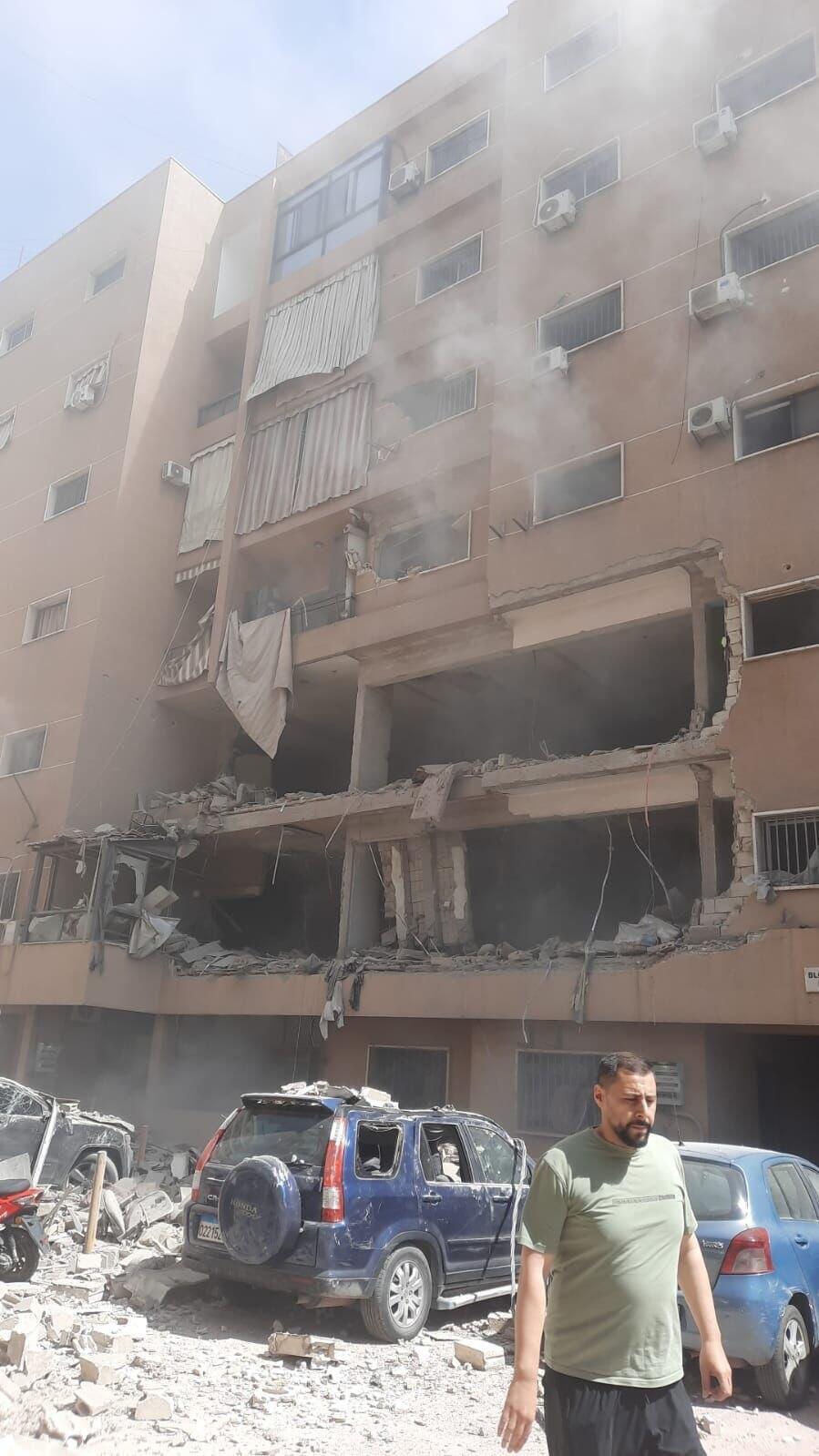
The IDF had sought to advance the Dahieh strikes and presented the plan to the Security Cabinet, aiming to apply additional pressure on Hezbollah. The military is focused on three main principles: maintaining a security zone in southern Lebanon, demilitarizing the area and restoring the freedom of action it had after Operation Northern Arrows.
Following the strikes in Dahieh, the IDF told authorities along Israel’s northern border that there was no change in defensive policy. “At this stage, schools will disperse as planned. If there is any change, we will update accordingly,” the statement said.
“Finally, it is happening,” Metula Council head David Azoulay said. “This strike should have taken place long ago, but better late than never. I hope Israel is now setting a new equation in which all of Lebanon will burn the moment there is fire toward Israel, no matter whether the fire is toward Metula, Shtula, Nahariya, Haifa or Tel Aviv. The goal must be defined: disarming Hezbollah and bringing quiet to the northern border.”
Earlier Sunday, for the first time since Washington announced details last week on the “implementation of the ceasefire” in Lebanon, Hezbollah, which rejected the understandings, fired rockets into Israeli territory.
Sirens sounded around 7:50 a.m. in Metula and Misgav Am, both near the Lebanese border, and about 40 minutes later in Ramot Naftali and Yiftah. After the second wave of sirens, the IDF said two launches that crossed from Lebanon into Israeli territory were intercepted.
It was the first time in four days that rockets were fired into Israel since the U.S.-mediated ceasefire. The Cabinet convened over the weekend to approve it, but after Hezbollah refused, Netanyahu said there would be no vote for the time being. Finance Minister Bezalel Smotrich was the only government minister to comment Sunday morning on the launches, posting in response: “Dahieh!”
Government ministers expressed opposition Thursday during a security Cabinet discussion to the ceasefire with Lebanon, whose implementation details had been announced by the United States a day earlier after an Israeli-Lebanese meeting in Washington.
But no Cabinet vote was held to approve the agreement after Hezbollah Secretary-General Naim Qassem said he rejected the proposed ceasefire, one of whose conditions was an end to Hezbollah fire.
Earlier last week, reports emerged of a “profanity-filled call” in which Trump harshly criticized Netanyahu over the continued fighting in Lebanon. Trump himself wrote last Monday in a post on his social media platform: “No forces will enter Beirut, and all forces on their way have already been turned back.” The American president said he had held talks with Hezbollah through mediators, and that “they agreed that all fire would stop, that Israel would not attack them, and they would not attack Israel.”
An hour and a half after Trump’s post, Netanyahu responded. “I spoke with President Trump and told him that if Hezbollah does not stop attacking our cities and citizens, Israel will strike terrorist targets in Beirut,” Netanyahu said at the time, issuing an explicit threat against the Shiite terrorist organization. “This position remains in effect. At the same time, the IDF will continue operating as planned in southern Lebanon.”
Katz said last week that he and Netanyahu had led a move “intended to create an equation stating that Dahieh in Beirut will be treated like Israel’s northern communities, and if Israeli communities continue to be attacked, we will turn to attacking the Dahieh district in Beirut. The test will be simple and will become clear in the coming days.”
Last Monday, Netanyahu and Katz issued a statement saying they had ordered the IDF to strike Hezbollah targets in Beirut’s Dahieh district following the increase in Hezbollah fire. Lebanon reported at the time that residents were leaving the area over fears of an imminent Israeli strike, but the attack ultimately did not take place, in part because of the explicit ban Trump conveyed to Netanyahu. At the same time, Iran threatened to attack northern Israeli cities if the IDF struck Dahieh.
Since Trump announced a renewed ceasefire in Lebanon on April 16, the names of 17 soldiers and one civilian, a Defense Ministry contractor, have been cleared for publication after they were killed in southern Lebanon.
On Saturday night, the IDF cleared for publication the deaths of Capt. Shahar Gamla, 23, from Natur in the southern Golan Heights, deputy commander of a platoon in the Egoz Unit, and Sgt. Ohad Yaari, 21, from Rehovot, a soldier in the Givati Brigade’s Shaked Battalion. Gamla was seriously wounded by an explosive drone in Lebanon overnight Thursday and later died of his wounds. Yaari was killed by an accidental discharge in an incident now under Military Police investigation.