

Hundreds of U.S. special operations troops have deployed to the Middle East, joining a growing military buildup as President Donald Trump weighs a high-risk ground mission inside Iran, according to reports by The New York Times.
The forces, including Army Rangers and Navy SEALs, have not yet been assigned specific missions but could be used in several scenarios, including securing the Strait of Hormuz, targeting nuclear sites or taking part in a potential operation to seize Kharg Island, Iran’s main oil export hub.
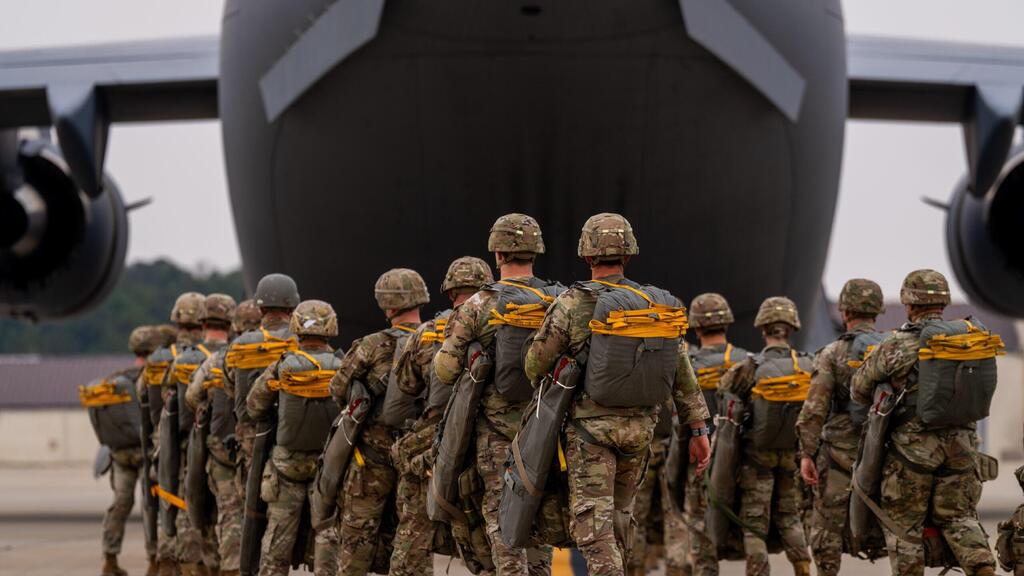
Their arrival adds to a rapidly expanding US presence in the region. More than 50,000 American troops are now deployed across the Middle East, about 10,000 above normal levels, including Marines, paratroopers and naval forces positioned within striking distance of Iran.
The deployment comes as the Trump administration considers a complex operation to locate and extract roughly 400 kilograms of enriched uranium from Iranian territory, a move aimed at preventing Tehran from advancing toward nuclear weapons capability.
According to The Wall Street Journal, Trump has not yet made a final decision and is weighing the risks to US forces against the strategic benefit of removing the material. He has also pushed advisers to pressure Iran to hand over the uranium as part of negotiations to end the war, while leaving open the option of seizing it by force.
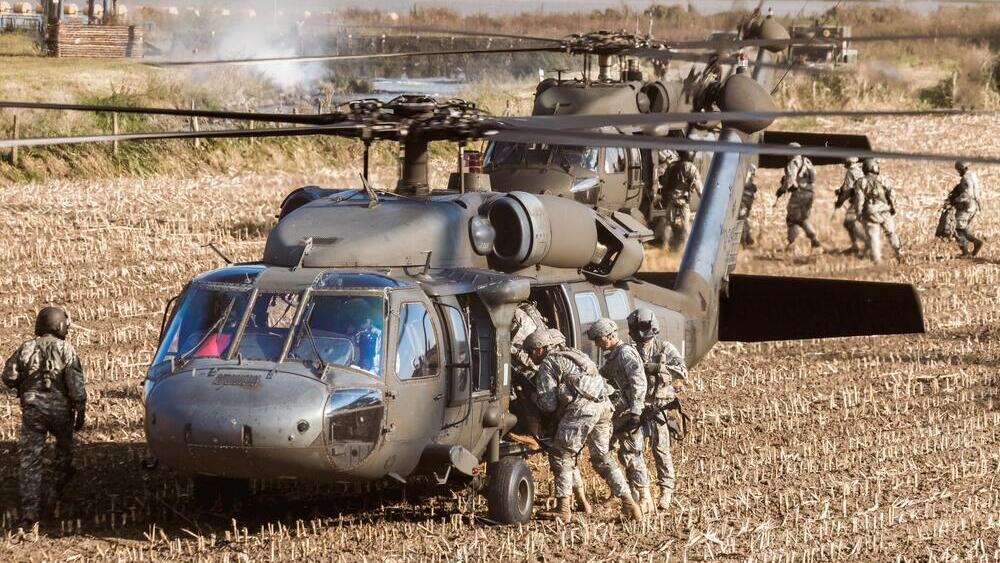
Military planners have outlined a demanding and potentially prolonged operation. US forces would likely need to enter Iranian territory under threat of missiles and drones, secure multiple perimeters around nuclear sites and deploy engineering teams to locate uranium buried in bombed facilities.
Archive
(Photo: VanderWolf Images/shutterstock)
Specialized units would then be tasked with extracting the radioactive material, believed to be stored in dozens of containers requiring careful handling. Officials say the operation could take days or even weeks and would likely require the construction of a temporary airstrip to move equipment and evacuate the material.
Former US Central Command chief Gen. Joseph Votel said such a mission would not be a quick “in-and-out” operation, underscoring the scale of the challenge.
The Pentagon is also preparing broader contingency plans. According to The Washington Post, discussions include possible ground operations lasting weeks, including raids along the Strait of Hormuz and a potential takeover of Kharg Island to disrupt Iranian capabilities and secure maritime routes.
Additional reinforcements are under consideration, including up to 10,000 more troops, as officials seek to expand Trump’s military options.
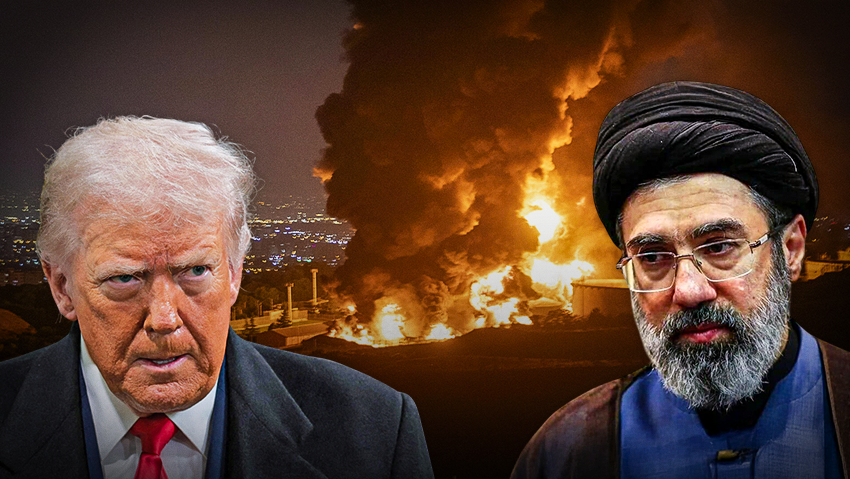
(Photo: Anna Moneymaker / AFP, Stringer / Getty Images)
The buildup follows earlier deployments of about 2,500 Marines and 2,500 sailors, as well as 2,000 troops from the US Army’s 82nd Airborne Division, whose exact positions have not been disclosed but are believed to be within operational range of Iran.
Before the escalation, US and Israeli assessments indicated Iran held more than 400 kilograms of uranium enriched to 60%, along with additional material enriched to lower levels that could be further processed into weapons-grade fuel.
International Atomic Energy Agency chief Rafael Grossi has said much of the material is believed to be stored at key nuclear facilities, including sites in Isfahan and Natanz that were targeted in earlier strikes.
Despite the military preparations, officials stress that diplomacy remains an option. Indirect talks between Washington and Tehran are being mediated by Pakistan, Turkey and Egypt, while Trump said direct discussions are also underway.
White House press secretary Karoline Leavitt said the Pentagon is tasked with preparing a full range of options, emphasizing that no final decision has been made.
The presence of elite ground forces alongside conventional units highlights the administration’s readiness to escalate if negotiations fail, as Trump weighs whether to pursue one of the most complex military operations of his presidency.