

Egyptian President Abdel Fattah el-Sisi launched a scathing public attack on Prime Minister Benjamin Netanyahu and senior Hamas official Khalil al-Hayya during a press appearance Tuesday with Vietnam’s President Luong Cuong.
Sisi accused Israel of conducting “a war of starvation and annihilation in Gaza” aimed at “eliminating the Palestinian problem,” and called on global public opinion to “wake up,” describing the current situation in the Strip as “chaotic, like a marketplace.”
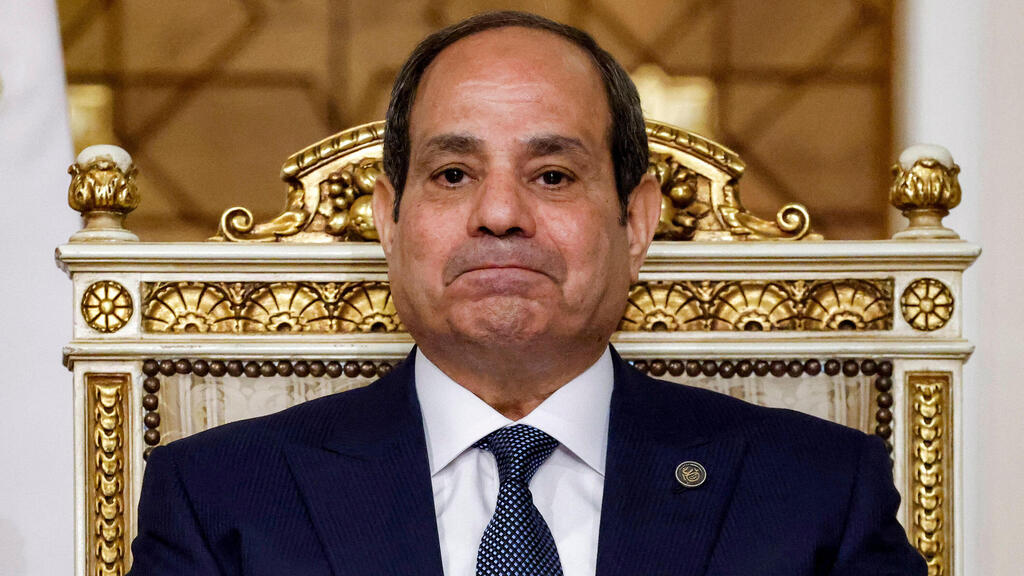
Turning his criticism toward Hamas, Sisi lashed out at al-Hayya—though without naming him directly—over accusations that Egypt was complicit in the blockade on Gaza.
“Claims that Egypt is participating in the siege and starving Gaza’s residents are a big lie,” he said. “There are 5,000 trucks ready to enter Gaza from the Egyptian side, but Israel controls the border crossings and decides when they go in.”
Sisi’s most recent reported conversation with a world leader occurred four days ago, when he phoned Dutch Prime Minister Dick Schoof to apologize after an Egyptian student locked the gates of Egypt’s embassy in The Hague, preventing diplomatic staff from leaving the building.
The student told local TV crews he did it to protest Egypt’s closure of the Rafah border crossing with Gaza. The incident prompted a lengthy conversation between the two leaders, during which Sisi reportedly explained Egypt’s contributions to the 2 million Palestinians in Gaza.
While food shipments must still pass through Israeli checks at the Kerem Shalom border crossing, Sisi said Egypt has recently resorted to airdropping aid from helicopters. He emphasized Egypt’s commitment to Gaza and repeated that “all land crossings are under Israeli supervision.”
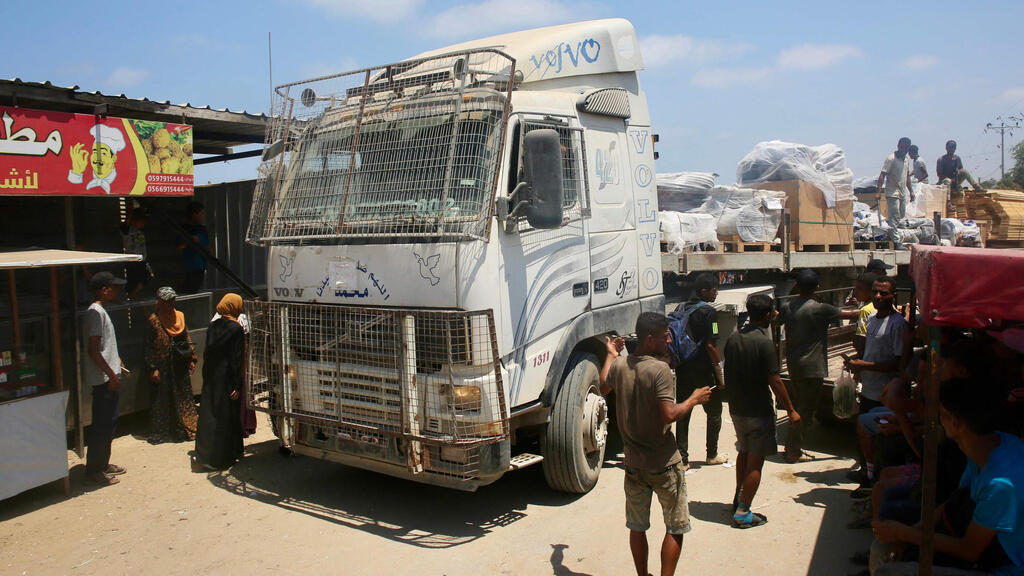
Humanitarian aid in Gaza
(Photo: AFP)
On Tuesday, tensions erupted between Egypt’s leadership and Hamas officials based in Qatar. Al-Hayya, Hamas’ lead negotiator, publicly blamed Egypt for the widespread hunger in Gaza and the deepening humanitarian crisis. Cairo responded by dispatching Diaa Rashwan, head of the State Information Service, to deliver a sharply worded statement.
Rashwan said such remarks “provoke outrage and tension in Cairo,” adding that “relations with Hamas are far from ideal.” Speaking on behalf of the Egyptian government, he warned: “This is a grave mistake by Hamas. Statements like this are bound to affect the negotiations.”
Despite Egypt’s historical centrality in regional diplomacy, Sisi’s recent public engagements with world leaders have been notably scarce. Observers say Egypt is gradually being pushed to the sidelines of ceasefire talks, while Qatar has taken the lead. Cairo harbors deep mistrust toward the Gulf nation’s leadership and offers little respect for its diplomatic efforts.
Social media criticism of Egypt’s Gaza policy has also intensified. In a country where press freedom is tightly controlled by state intelligence and dissent is often met with job loss or imprisonment, online platforms have emerged as a rare outlet for public scrutiny.
Get the Ynetnews app on your smartphone: Google Play: https://bit.ly/4eJ37pE | Apple App Store: https://bit.ly/3ZL7iNv
Ayman Sakher, a prominent Egyptian dissident now living in exile in Europe, went viral for calling Sisi a “coward.” In a video posted online, Sakher—speaking with his face uncovered—said, “If Sisi wanted to act like a real leader, he’d board a truck loaded with food and medicine, cross into Gaza, and appear before the press there.” Opposition media outlets have run caricatures showing Sisi in an Israeli uniform saluting “Commander Netanyahu.”
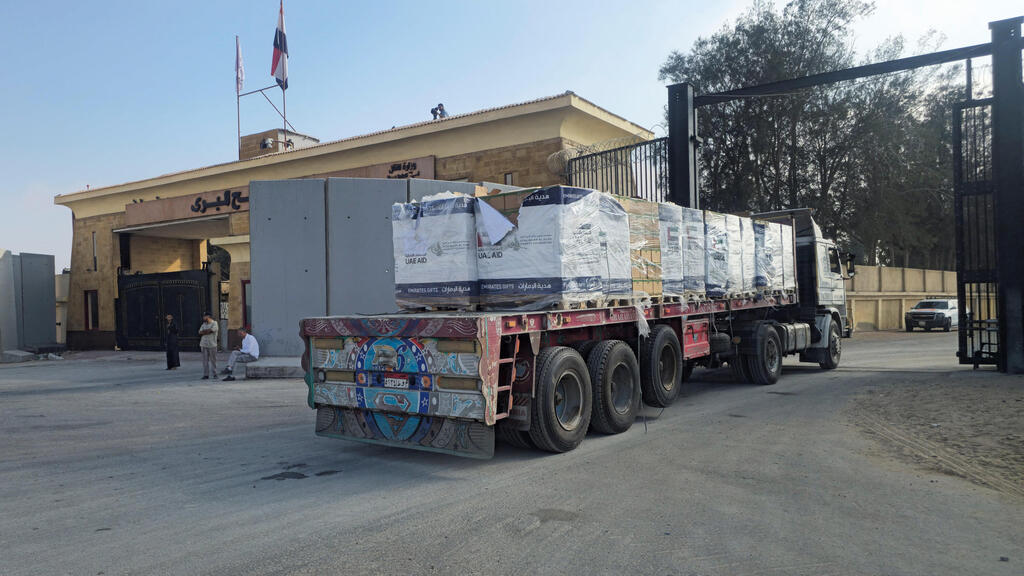
Rafah crossing from Egypt to Gaza
(Photo: REUTERS/Stringer)
The warm rapport once shared between Sisi and Netanyahu has since evaporated. In the not-so-distant past, the two leaders held frequent late-night calls, discussing not only Gaza but also developments in Lebanon, Syria, Jordan and within Egypt itself. Their relationship was built on mutual respect, with Sisi reportedly impressed by Netanyahu’s depth of knowledge of the Arab world and classified regional matters.
But the geopolitical tides have shifted. Three major developments have damaged Cairo’s position in recent months. First, Egypt has seen an exodus of foreign investment, with large corporations from Europe, the U.S. and Gulf states withdrawing operations. At the same time, prominent Egyptian figures have quietly relocated to the Gulf, transferring their businesses and bank accounts with them.
Second, Saudi Arabia finalized its acquisition of the Tiran and Sanafir islands near the border with Eilat and Aqaba. Sisi offered a subdued explanation, saying the islands were simply “returned” to Riyadh. The kingdom also purchased a coastal strip in southern Egypt for the development of a new tourism hub, while the Emirate of Abu Dhabi bought an entire neighborhood on the outskirts of Cairo.
Then came the blow from the Houthis: attacks in the Red Sea have paralyzed shipping through the Suez Canal, slashing Egypt’s vital revenue streams by millions of dollars almost overnight. Now in his second term, Sisi continues to enjoy glowing coverage from Egypt’s state-run media. But opposition voices increasingly question his record. “Where are the achievements you promised?” critics ask.
“Where is Egypt heading?” With a population of over 110 million, the Arab world’s most populous country faces mounting challenges—from food insecurity to education gaps and widespread illiteracy.
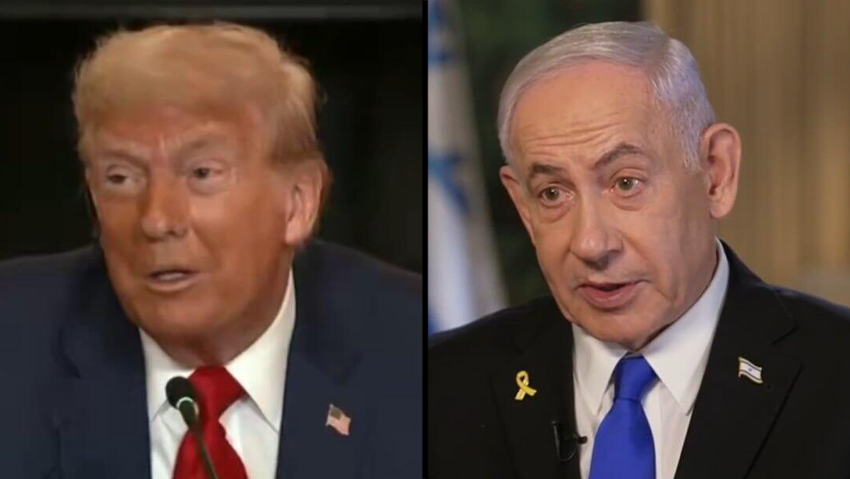
U.S. President Donald Trump, Prime Minister Benjamin Netanyahu
(Photo: C-SPAN, Fox News)
Meanwhile, reports continue to surface about massive arms purchases authorized by Sisi’s government. From submarines to heavy and light weaponry, observers question how impoverished Egypt can afford such deals. The military buildup is concentrated in bases across the Sinai Peninsula, raising concern in Israel and elsewhere.
Egypt’s dwindling influence has also been felt in the U.S. While President Donald Trump has publicly embraced Jordan’s King Abdullah II as a “friend” deserving of protection and aid, he’s taken a more mocking tone toward Sisi, reportedly referring to him as “the general.”
Despite phone calls, diplomatic outreach and even canceling a planned White House visit, Sisi has struggled to gain favor in Trump’s administration. The U.S. now looks to Riyadh, not Cairo, as its primary regional partner.
In the eyes of Washington, Sisi is increasingly seen as “a man of the old guard, unwilling to adapt.” As a result, Cairo has lost its long-held standing as the Arab world’s diplomatic heavyweight.