


A proposed change to the European Union's next major research funding program has raised fears in Israel that the country could be excluded from Horizon Europe, potentially cutting Israeli universities, scientists and technology companies off from billions of euros in grants and decades of international research cooperation.
The new provision, included in draft rules for Horizon Europe's 2028–2034 funding cycle, would make participation by non-EU countries conditional on adherence to European values, including respect for human rights, international law, gender equality and, specifically, the United Nations' 1948 Convention on the Prevention and Punishment of the Crime of Genocide.
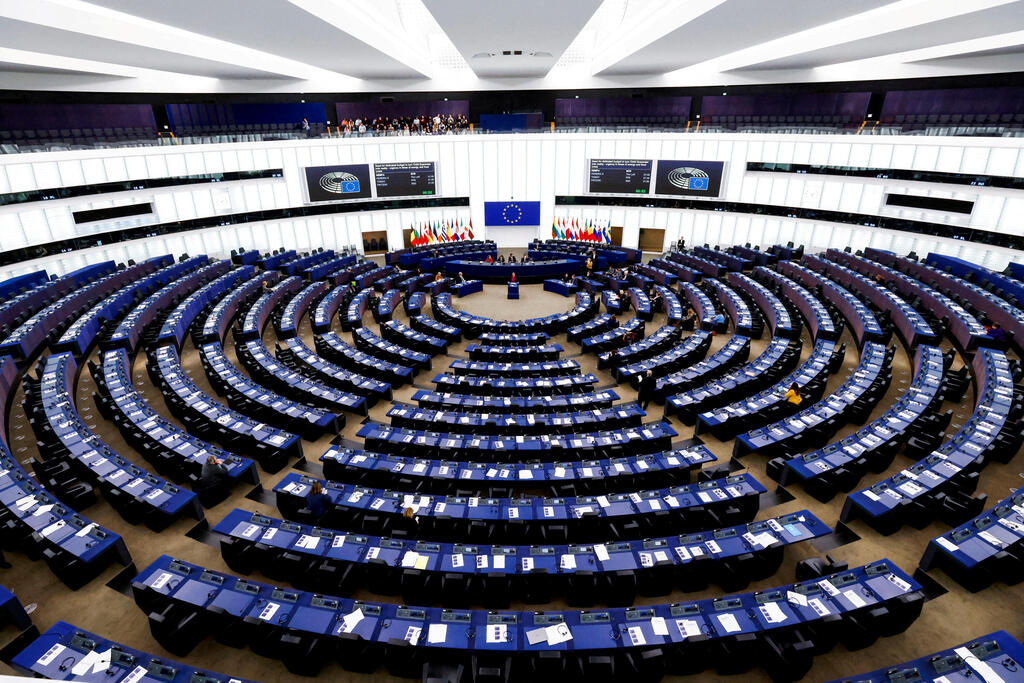
Israeli officials believe the wording may have been designed to prevent Israel from participating in the program, despite its involvement in European research frameworks for approximately 30 years. The clause was not included in previous versions of the program's rules.
The European Parliament is expected to vote on the draft rules by the end of November. Israel's Foreign Ministry and its embassies across Europe are working with pro-Israel members of the European Parliament to have the provision amended or removed before the vote.
According to Israeli assessments, the amendments were introduced by lawmakers hostile to Israel, possibly from the parliament's Socialists and Democrats group. Lawmakers considered friendly to Israel have pledged to work against the proposed restrictions.
The concern comes amid a broader rise in attempts to exclude Israeli institutions from European academic cooperation. In June, Israel's Committee of University Heads published a report documenting a 150% increase in attempts to exclude Israel from Horizon Europe, warning that the academic boycott movement was becoming a strategic threat to Israeli science.
The report also identified the negotiations over the 2028 program as a critical challenge. An earlier attempt to suspend Israel's participation was blocked last year, although EU officials demanded improvements in humanitarian conditions in Gaza.
Billions in grants and decades of scientific cooperation at risk
Horizon Europe is the most important international research funding framework in which Israeli scientists participate. Its significance extends far beyond direct grants, providing access to European research networks, joint projects, laboratories and collaborations with leading scientists across the continent and beyond.
The current Horizon Europe program, covering 2021–2027, has a budget of approximately 95.5 billion euros. The European Commission has proposed increasing funding to 175 billion euros for the 2028–2034 cycle, although the final amount remains subject to negotiations among EU institutions.
Between 2014 and 2020, Israeli academic researchers received approximately 1.3 billion euros through European research programs, while Israeli research and development companies secured another 500 million euros, bringing the total to approximately 1.8 billion euros.

(Photo: shutterstock)
Losing access to such funding would have consequences far beyond university budgets. Israeli researchers depend on international partnerships to develop new technologies, compete for prestigious grants and participate in major scientific projects. Exclusion could also make it harder for Israeli institutions to recruit and retain leading scientists.
The proposed genocide-related condition is particularly sensitive because the legal question of whether Israel has committed genocide in Gaza remains unresolved.
The International Court of Justice in The Hague is examining South Africa's case accusing Israel of violating the Genocide Convention. The court has issued provisional measures but has not delivered a final judgment finding that Israel committed genocide. Several UN bodies, however, have accused Israel of genocide, while the court has separately concluded in an advisory opinion that Israel's continued presence in the occupied Palestinian territories is unlawful.
That distinction is central to Israeli concerns. Without a final judicial determination, officials fear that decisions about compliance with the new condition could become matters of political interpretation rather than established legal findings.
A senior Israeli official familiar with the issue warned that a majority in the European Parliament could decide to treat Israel as having committed genocide, citing, among other things, the number of children killed in Gaza. Such a political determination, the official said, could place Israel in an extremely difficult position.
A provision that may not formally apply to Israel
There is, however, an important qualification in the draft wording. As currently written, the proposed conditions apply to countries seeking to join the program, rather than necessarily to existing participants.
Israel is therefore expected to argue that the new requirements do not apply to its continued participation. Nevertheless, Israeli officials worry that opponents seeking to exclude the country could attempt to use the provision regardless of that distinction.
The human rights and gender equality requirements could also complicate potential participation by two other countries, Egypt and Pakistan, both of which are interested in joining the European research framework.
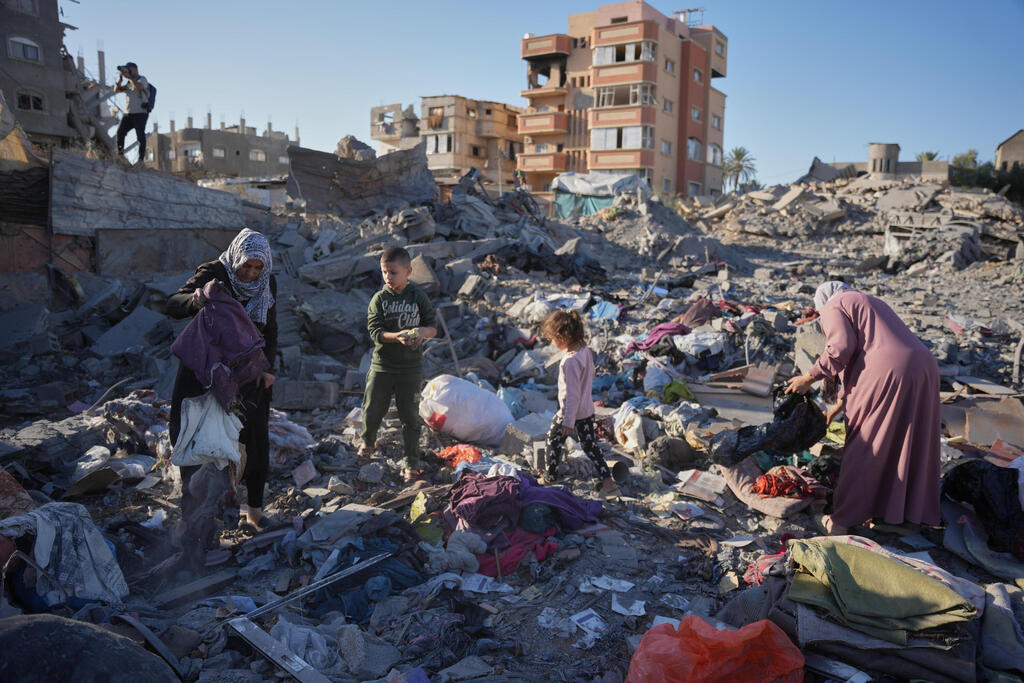
Gaza
(Photo: AP Photo/Abdel Kareem Hana)
For now, the proposed changes are far from becoming binding policy.
The European Parliament, which has 720 directly elected members representing the EU's 27 member states, is only one of the institutions involved in adopting European legislation. The European Commission, the EU's executive body, and the Council of the European Union, which represents member-state governments, also play essential roles in the legislative process.
A political official involved in the matter emphasized that even if the provision passes a vote in the European Parliament, its inclusion in the final rules is far from guaranteed.
"This is a very long process," the official said. "It is not solely about Israel. There are enormous sums of EU money involved, and what we are seeing now is very preliminary and represents the position of perhaps one of the three institutions. Negotiations between them will begin, with proposals going back and forth. It is far from final."
The Foreign Ministry is leading Israel's diplomatic effort and seeking to build sufficient support among European lawmakers to remove the contested language before it advances further.
‘The biggest achievement ever for BDS’
Israeli officials nevertheless warn that the consequences of exclusion could be devastating.
A senior official familiar with the issue said that if the proposed changes are adopted and ultimately result in Israel's removal from Horizon Europe, the damage to Israeli science could be severe.
"If this passes, it will be the greatest achievement ever for the BDS movement," the official said. "It could lead to a brain drain, because Israeli scientists will be unable to advance their careers without research grants."
The concern is that researchers denied access to European funding and collaborative projects could increasingly seek opportunities abroad, depriving Israeli universities and research institutions of experienced academics and promising young scientists.
Another senior Israeli official expressed greater optimism about the prospects of defeating the proposal but acknowledged that the political environment remains unstable.

Weizmann Institute of Science
(Photo: Avi Moalem)
"In my assessment, this is a threat that can be stopped," the official said. "There is a majority of lawmakers friendly to Israel. Theoretically, this should not be a problem, but all it takes is one incident in the territories or another war, and everything changes."
The timing is especially sensitive. Israel is preparing for the formation of a new government following the elections, and another major confrontation with European institutions could complicate efforts to improve relations after years of diplomatic friction.
An attempt to exclude Israel from Horizon Europe would also send a negative signal to a new Israeli government seeking to open a fresh chapter with European partners.
Security developments could further complicate the negotiations, particularly the possibility of renewed fighting with Iran in the coming days. Israeli officials fear such an escalation could alter the political calculations of European lawmakers even if the current diplomatic effort appears likely to succeed.
For Israeli researchers, the stakes are therefore both immediate and long-term. The dispute concerns more than access to grants: it could determine whether Israeli science remains integrated into one of the world's largest international research networks or faces growing isolation at a time when global collaboration is increasingly essential.