

Prime Minister Benjamin Netanyahu convened an emergency meeting Monday with key coalition leaders as tensions over the state budget and a controversial military draft exemption bill for ultra-Orthodox men threatened to unravel his government.
The meeting included Finance Minister Bezalel Smotrich, Shas party leader Aryeh Deri and United Torah Judaism chairman Moshe Gafni. The urgent talks follow the postponement of a planned first reading vote on the 2026 state budget, which had been scheduled for Monday evening but was delayed to Wednesday at the request of ultra-Orthodox parties.
Gallery
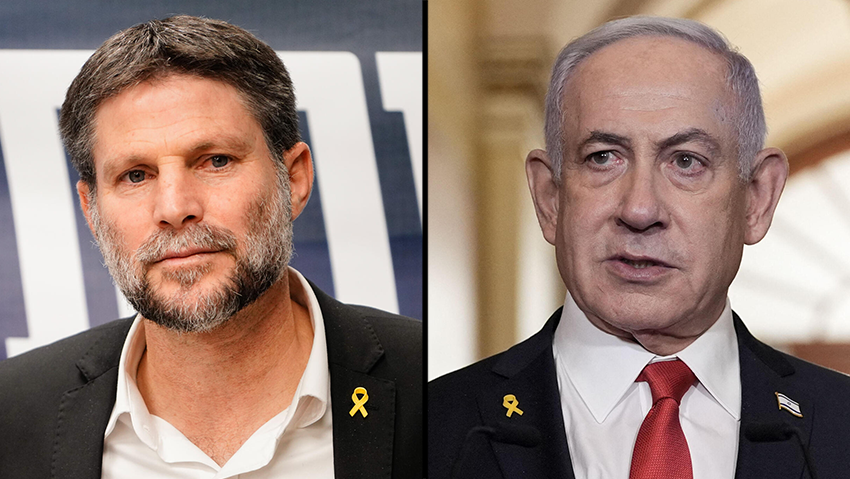
Finance Minister Bezalel Smotrich, Prime Minister Benjamin Netanyahu
(Photo: Shalev Shalom, Oliver CONTRERAS/AFP)
Lawmakers from Shas and United Torah Judaism insisted on meeting with Knesset legal advisers to review the draft law before allowing the budget to move forward. Their demand, linked to ongoing negotiations over the exemption bill, was relayed to Prime Minister Benjamin Netanyahu, who agreed to delay the vote.
According to sources close to Smotrich, the finance minister has expressed frustration with the ongoing linkage between the budget and the draft bill. “He is no longer willing to tie the budget to the conscription law,” one official said. “If they’re not willing to move forward, then they should introduce a bill to dissolve the Knesset and we’ll head to elections.”
Until the postponement was announced, it was believed that the ultra-Orthodox factions would support the budget’s first reading in exchange for assurances from Netanyahu, with later readings contingent on the draft law’s passage. Under an internal coalition agreement, the budget and accompanying economic arrangements law were not to proceed to Knesset committees until the exemption legislation was secured.
At the heart of the standoff are objections raised by Knesset legal adviser to the Foreign Affairs and Defense Committee, Miri Frenkel-Shor, who is demanding changes to ensure the law’s constitutionality. These include concerns over a clause that would allow a new “advisory committee” to reduce annual draft quotas if the IDF fails to create pathways compatible with ultra-Orthodox lifestyles. Frenkel-Shor has warned that such provisions effectively neutralize the draft targets.
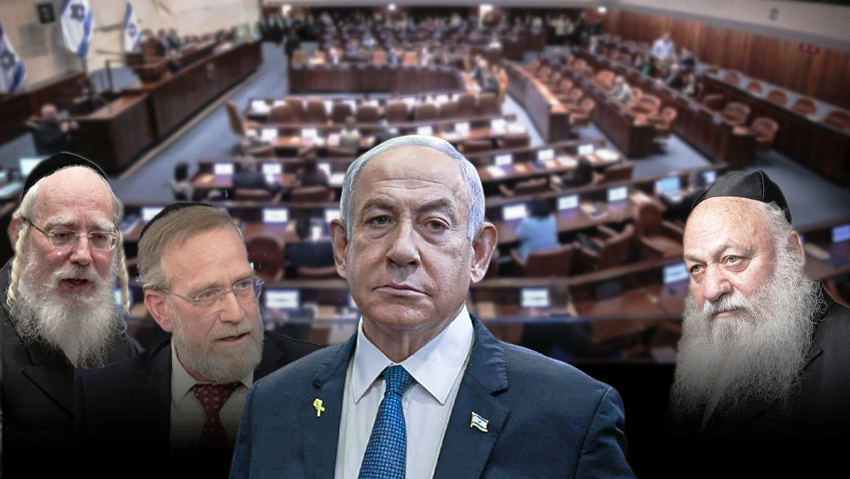
(Photo: Tal Shahar, Yoav Dudkevitch)
Ultra-Orthodox lawmakers, however, are pushing to keep the clause, arguing it is unrealistic to expect full compliance without sufficient Haredi-tailored tracks. They insist on having veto power over draft targets and have met with legal officials to bridge the gap, but describe the disagreements as “significant.” One United Torah Judaism lawmaker said Monday, “If we don’t vote, there’s no majority — Netanyahu needs to get involved.”
Frenkel-Shor is also calling for the law to be passed as a temporary measure rather than permanent legislation, while some coalition lawmakers prefer consulting with Knesset Legal Adviser Sagit Afik, who they see as more lenient.
Beyond the advisory committee issue, the legal counsel is demanding several key amendments for the law to gain institutional backing amid expected High Court scrutiny. These include tougher and immediate sanctions for draft evasion, a stronger oversight mechanism for yeshiva students, protections for the status of women in the IDF, removal of the advisory committee’s authority to reduce quotas, and framing the law as a time-limited trial rather than permanent statute.
Smotrich’s Religious Zionist Party called an emergency meeting over what it described as the “unilateral postponement” of the budget vote.
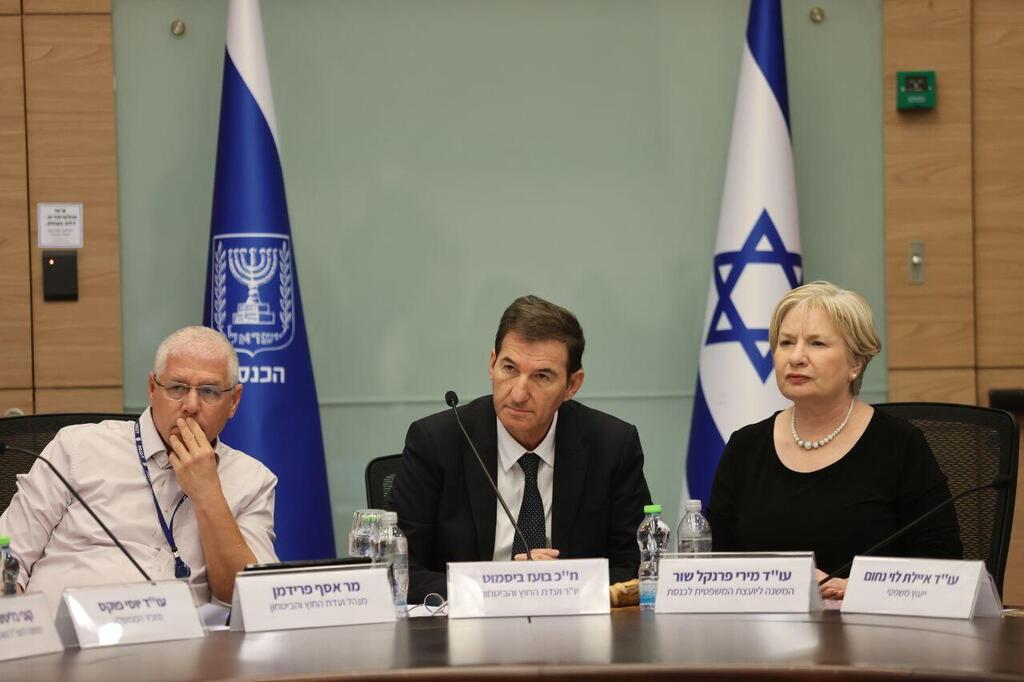
Knesset Foreign Affairs and Defense Committee Chairman Boaz Bismuth and legal adviser Miri Frenkel-Shor
(Photo: Alex Kolomoisky)
The current draft of the exemption law — informally named the “Bismuth Law” after Foreign Affairs and Defense Committee Chairman Boaz Bismuth — proposes an oversight committee led by a retired IDF general and including two retired colonels, one from the Planning Directorate and one from the Manpower Directorate. The panel would also include a retired lieutenant colonel from a Haredi background and a retired rabbinical court judge appointed by the IDF chief of staff with input from the chief rabbi.
Frenkel-Shor’s written opinion circulated to lawmakers stated that granting the committee the authority to lower draft targets due to insufficient IDF preparedness undermines the legislation’s goal of reducing inequality in mandatory military service. She warned that such a clause could constitute a “fundamental legal flaw.”
First published: 13:09, 01.26.26