

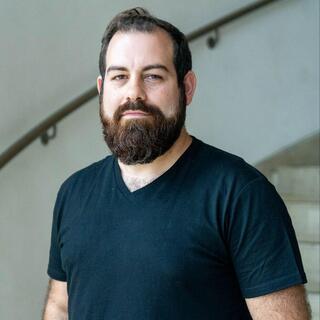
Israel Police has appealed a court decision allowing Prime Minister Benjamin Netanyahu’s adviser Yonatan Urich to resume work at the Prime Minister’s Office, as the Qatargate inquiry continues.
“His actions were taken against the interests of the Prime Minister’s Office and of the state,” the police wrote in the appeal.
Yonatan Urich at the hearing to extend his detention in Petah Tikva


"The evidence shows that the prime minister was not aware of Urich’s full dealings with Qatar. He was not presented with the evidence establishing the details and scope of these dealings and the security concerns they raise, and therefore his testimony does not impact the suspicions,” according to the police
The remarks came following Netanyahu’s testimony in the so-called Qatargate affair, disclosed by Judge Menachem Mizrahi, in which the prime minister said there was “nothing improper” in Urich’s work with Qatar, “which is not an enemy state.”
“We hold direct evidence, including testimony from a central figure involved in the offenses, indicating that the actions were carried out in clear contradiction to the interests of the Prime Minister’s Office, and therefore against the public interest in Israel,” the Israel Police added, in making its case.

Qatargate suspect Yonatan Urich enters a Petah Tickvah court
(Photo: Yair Sagi)
As part of the restrictive conditions imposed on Urich, he was barred from contacting the Prime Minister’s Office and other suspects in the case. Mizrahi said the restrictions exposed “a strange, unexplained, illogical discrimination.”
According to the judge, an investigator confirmed that another suspect, Eli Feldstein, faces no restrictions other than a travel ban. “Feldstein is allowed to contact all the other parties, including the prime minister,” Mizrahi wrote, “yet strangely enough, they request that Urich be barred from contacting the prime minister or others.”
Mizrahi also noted that, in a supplementary investigation document submitted by the prosecution, “there was no detail of any need or intention to take another testimony from the prime minister. Therefore, the conclusion is that there is no relevance to the condition barring contact between him and the suspect.”
He acknowledged that “there is indeed evidence rising to the level of reasonable suspicion that the suspect engaged in business dealings with a person alleged to be a Qatari foreign agent, Jay Footlick. However, the offense requires a clear mental element of intent to harm state security, and no evidence — not even at the level of reasonable suspicion — has been presented of such direct or indirect intent.”
Mizrahi added: “In fact, quite the opposite: the central thesis of the prosecution, repeated in all the classified reports, contradicts itself. The claim is that the suspect established contact with Qatar in order to provide it with favorable public relations, and that was his intent. By its nature, this contradicts the claim that he intended to harm state security.”