


The Erez border crossing affair is increasingly emerging as one of those episodes that make Israel look to the world like something of a banana republic. The defense establishment prepared, an opening date had already been announced on the international stage — and then the Prime Minister's Office said no decision had been made at all. The Americans are angry and pressing to move forward with President Trump's plan, while the Board of Peace claims Israel does not really want to disarm Hamas — and Jerusalem wants the terrorist organization to make the first move.
In recent weeks, the defense establishment had been making concrete preparations around the Erez crossing. The IDF Southern Command and the Crossings Authority worked on infrastructure along routes that trucks would be able to use and prepared the forces that would be needed to secure traffic in the area. Infrastructure was also prepared on the Israeli side of the crossing for the possibility of renewed operations. Israel welcomed a contribution from the German government and installed an advanced scanning device at the crossing that was intended to improve security inspections of goods.
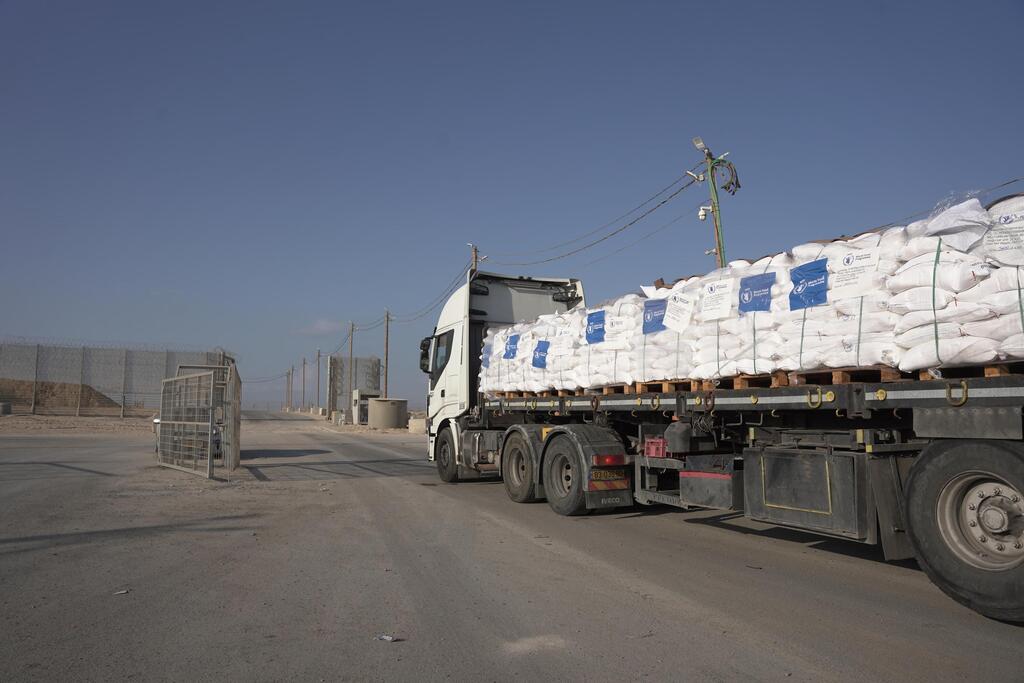
By contrast, the Prime Minister's Office said not only that there had been no decision but that political officials close to Netanyahu claimed that anyone saying such a decision had been made was simply not telling the truth. But when confronted with briefings and security documents explicitly stating that the National Security Council, headed by Shmuel Ben-Ezra, had approved the opening of the crossing, they continued to say that staff work had been conducted and discussions had taken place, but that the discussions were not about transferring goods. Rather, they involved "other things."
When pressed on what "other things" meant, the response became hesitant. Discussions concerning the Erez crossing had indeed taken place, but they dealt with entirely different possibilities: easing restrictions in the area, solutions to traffic congestion affecting residents of the Gaza border communities on Route 232, examining how the site could be used, advancing diplomatic interests with Germany and various operational issues.
Officials close to him said no decision to open the crossing had ever been made.
The possibility of inspecting goods does not necessarily indicate, according to those officials, a decision to allow goods to pass into Gaza. This was also connected to the scanning facility donated by Germany, which was intended to improve inspection capabilities at the crossing. In other words, according to the political officials' account, preparations related to goods and inspections may have been made — but that does not mean a decision was made to allow goods into the Strip.
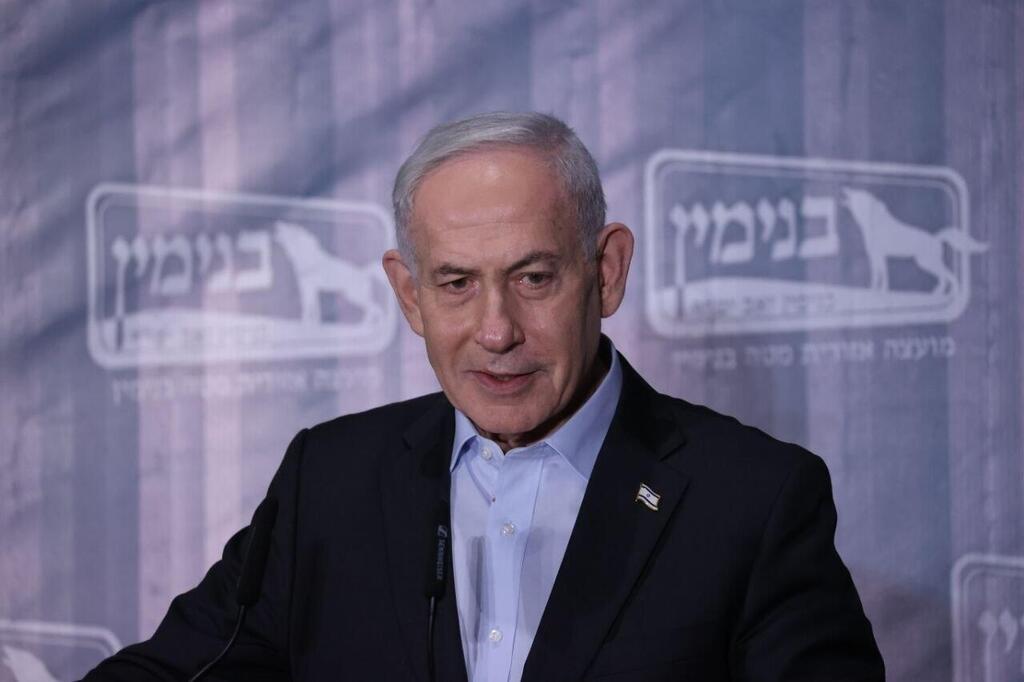
Officials close to him claimed that no decision to open the crossing had ever been made. Prime Minister Benjamin Netanyahu
(Photo: Alex Kolomoisky)
An official in Netanyahu's office said that ultimately, significant decisions such as opening the Erez crossing to goods must be made by the prime minister and defense minister and that at no point did they approve the entry of goods. But officials in the defense establishment scoff at that claim. The working assumption of everyone involved was that the crossing was going to open. The problem with the explanation from the political officials is that the preparations that have come to light do not look like a purely theoretical discussion.
The Southern Command and the Crossings Authority carried out work and preparations on the ground. Traffic routes were examined and approved, including those that trucks were expected to use, and the deployment of forces needed to secure the traffic was examined. Moreover, Israel conveyed something much more concrete to the international community. Noa Forman, Israel's deputy ambassador to the United Nations, said during a Security Council meeting that the target date for opening the Erez crossing was Sept. 1.
It is of course possible that the discrepancy resulted from poor coordination or from different parts of the system having different understandings of the purpose of the preparations. But if that is the picture, the problem is no less serious. The defense establishment is preparing for one thing, officials on the diplomatic front are presenting another and the political leadership says no such decision was ever made.
'Israel is preserving the status quo'
Behind the affair lies a larger story. The Americans have been pressing Israel for months to move on to the next stage of the process in Gaza. From the U.S. administration's perspective, opening Erez could be a relatively simple step, providing a more convenient route for the transfer of goods, but also — and above all — a tangible sign that Trump's plan is moving forward despite all the difficulties. The Board of Peace has also joined the effort.
From the perspective of the Americans and officials involved in the process, not every step has to be a strategic decision. Sometimes small steps — opening a crossing, easing movement, increasing the flow of goods — are what allow diplomatic momentum to be maintained. In Israel, however, the picture is different. The message from the political leadership is that there will be no more "gifts" and that Israel's condition for progress remains the disarmament of Hamas.

No more 'gifts' from Israel — until Hamas is disarmed
(Photo: REUTERS/Ramadan Abed)
That gap explains the sharp criticism voiced Wednesday by Nickolay Mladenov, the Board of Peace's High Representative for Gaza, at the Security Council. Mladenov effectively accused Israel of not changing the reality that led to Oct. 7 but rather preserving it. Officials in the Board of Peace even claimed that Israel's policy in practice is to leave Hamas in power — through tactical actions and declarations about dismantling it, but without taking steps that would actually bring about a fundamental change in the reality in the Strip. That is very harsh criticism.
In the eyes of Board of Peace officials, the decision not to move forward with steps such as opening Erez is part of the same problem. In their view, Israel is asking Hamas to disarm itself while at the same time refusing to take steps that Israel itself has committed to or is expected to take as part of the process.
That is also where the American frustration comes from. They understand Israel's sensitivities very well and the fact that elections are approaching. But from their perspective, the elections cannot justify freezing the process entirely.
Who is setting policy in Gaza?
There is also another side to the issue. Israeli intelligence continues to indicate that Hamas is not voluntarily disarming. According to Israeli assessments and reports that have accumulated in recent months, the terrorist organization continues to maintain military and civilian structures, recruit operatives and try to rebuild its strength. In other words, from the Israeli perspective, the American demand for progress cannot be separated from the question of whether Hamas itself is fulfilling its commitments.
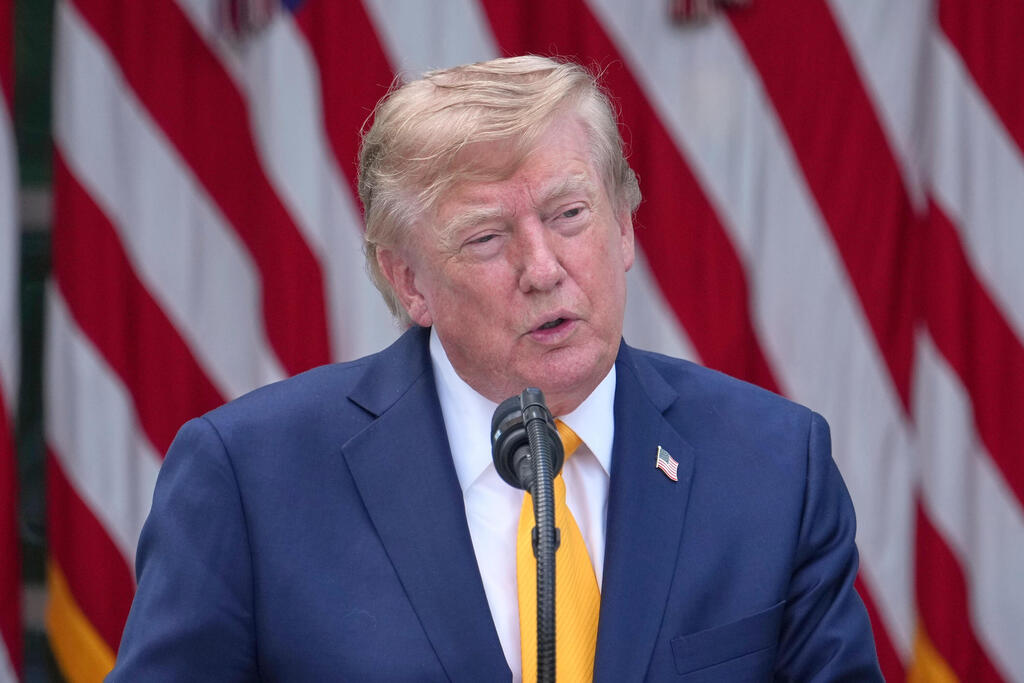
Will he pressure Netanyahu to open the crossing before the election? US President Donald Trump
(Photo: AP Photo/Alex Brandon)
The concern in Jerusalem is that if Israel eases restrictions, opens crossings and creates signs of normalization — without genuine Hamas disarmament — it will effectively strengthen the organization rather than dismantle it. That is the heart of the dispute. The Americans say: "Move forward so we can pressure Hamas"; the Israelis respond: "Let us see that Hamas is actually disarming before we give it gains."
That may be the biggest problem in the Erez crossing affair. It is not the dispute itself over whether to open the crossing, but how Israel looks to the world and to its ally, the United States. Israel can decide not to open it. It can also decide that opening a crossing for goods is currently contrary to its security interests.
But when the defense establishment prepares for an opening, when infrastructure is ready, when routes and forces are being examined, when an opening date is announced internationally — and at the same time the Prime Minister's Office says there was never any decision to open the crossing to goods — it creates the image of a system that is not speaking with one voice.
And this is happening at an especially sensitive time. The election season makes every move in Gaza explosive. Any easing can be portrayed as a concession and any halt can be portrayed as defiance toward the Americans. It is therefore possible that the political leadership preferred not to take political responsibility for opening the crossing at this particular moment. But if that was the reason, it does not answer the question of why the defense establishment had already gone so far in its preparations.
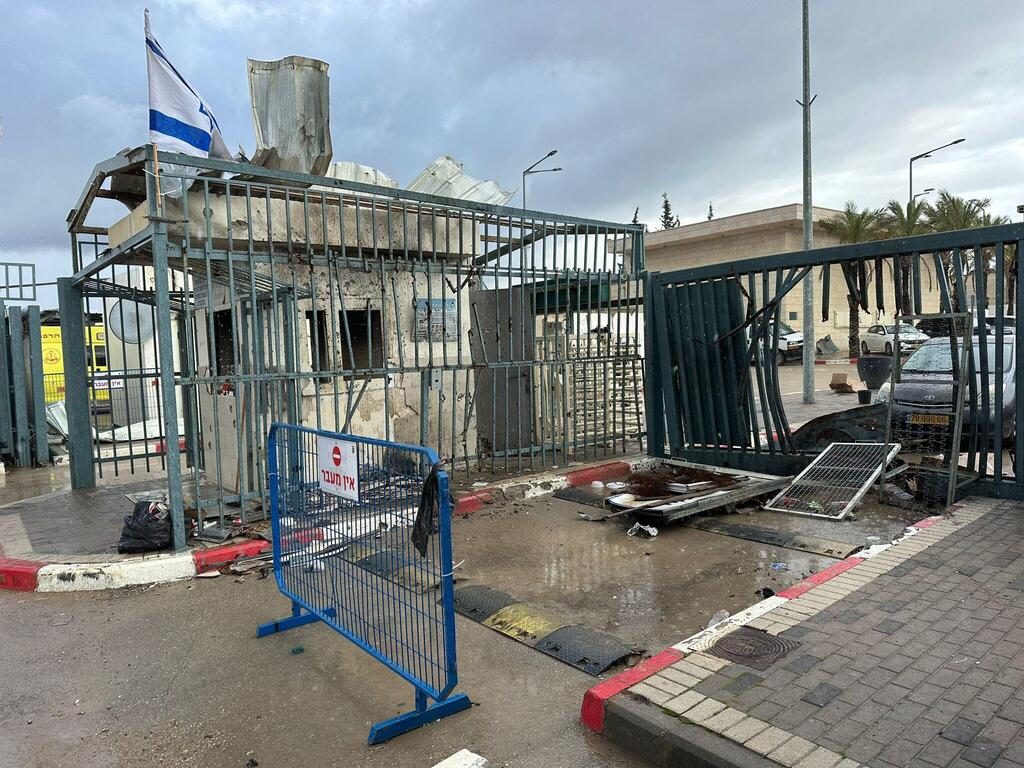
Erez crossing after Oct. 7
(Photo: Coordinator of Government Activities in the Territories)
The more important question is who is setting policy in Gaza. If the political leadership has determined that Hamas' disarmament is an overriding condition, that is a legitimate and clear decision. If the defense establishment believes other steps are needed to advance that goal, that too is a legitimate professional position. And if the Americans are demanding that Israel take steps as part of the process, Israel is entitled to disagree. But there needs to be a clear policy line connecting these three positions. In the Erez crossing affair, at least for now, that line appears blurred.
Anyone who spoke with the Americans and members of the Board of Peace in recent days saw a great deal of frustration. Officials in the Board of Peace said in this context: "Israel's strategy is to leave Hamas in place. To eliminate it through talk, declarations and meaningless tactical actions, but in practice to leave Hamas in power. That is what the actual policy suggests."
"From March through July of this year, when Hamas refused to sign onto the disarmament plan, Israel had freedom of action in Gaza," the officials continued. "It did not really take advantage of that to eliminate Hamas. Mladenov addressed the issue in his speech to the Security Council. Israel's policy is to preserve the status quo of the past 20 years. The policy is to leave Hamas in civilian and military control. They are not really destroying Hamas, nor are they allowing the Board of Peace to dismantle it."
The question now is what the Americans will do. It is reasonable to assume that they will not give up on opening the Erez crossing and will pressure Netanyahu to open it before the election.