

Saudi Arabia has warned Iran that continued attacks on the kingdom or its energy infrastructure could trigger retaliation, even as Riyadh says it prefers a diplomatic solution to the conflict with the United States, four sources familiar with the matter told Reuters.
The message was conveyed before Iranian President Masoud Pezeshkian delivered a speech Saturday apologizing to neighboring Gulf states for Tehran’s recent actions, an apparent effort to ease regional tensions after Iranian strikes hit civilian targets.
Two days earlier, Saudi Foreign Minister Prince Faisal bin Farhan spoke with Iranian Foreign Minister Abbas Araqchi and outlined Riyadh’s position, the sources said.
According to the sources, Prince Faisal said Saudi Arabia is open to mediation aimed at de-escalation and a negotiated settlement. He also stressed that neither Saudi Arabia nor other Gulf states had allowed the United States to use their airspace or territory to launch airstrikes on Iran.
However, he warned that if Iranian attacks on Saudi territory or energy infrastructure continue, Riyadh would be forced to allow U.S. forces to use bases in the kingdom for military operations and could retaliate against further strikes on critical energy facilities.
The sources said Saudi Arabia has remained in regular contact with Tehran through its ambassador since the U.S. and Israeli military campaign against Iran began on Feb. 28 following the collapse of talks over Iran’s nuclear program.
The Saudi and Iranian foreign ministries did not respond to requests for comment.
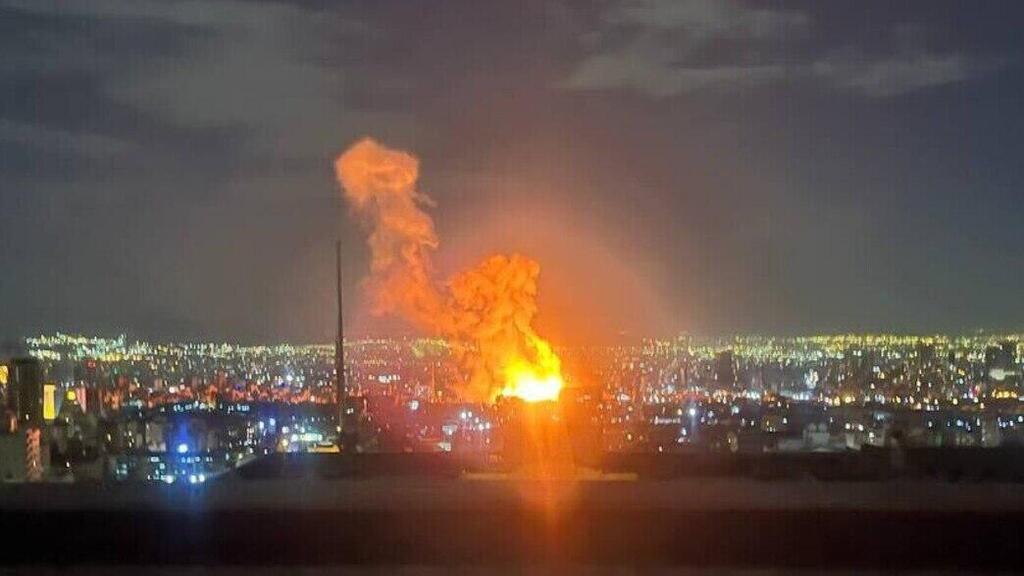
Drone and missile attacks have hit several Gulf states over the past week, including the United Arab Emirates, Kuwait, Qatar, Bahrain and Saudi Arabia.
Iran’s Supreme Leader Ayatollah Ali Khamenei was killed on the first day of the war. Tehran responded with strikes targeting Israel and Gulf Arab states hosting U.S. military installations, while Israel also launched attacks on the Iran-backed Hezbollah group in Lebanon.
Araqchi said in an interview Saturday that he remains in regular contact with Saudi officials and that Riyadh has assured Tehran it will not allow its territory, waters or airspace to be used for attacks on Iran.
Pezeshkian said Iran’s temporary leadership council had approved suspending attacks on neighboring countries unless those states were used to launch strikes against Iran.
“I personally apologize to neighboring countries that were affected by Iran’s actions,” he said.
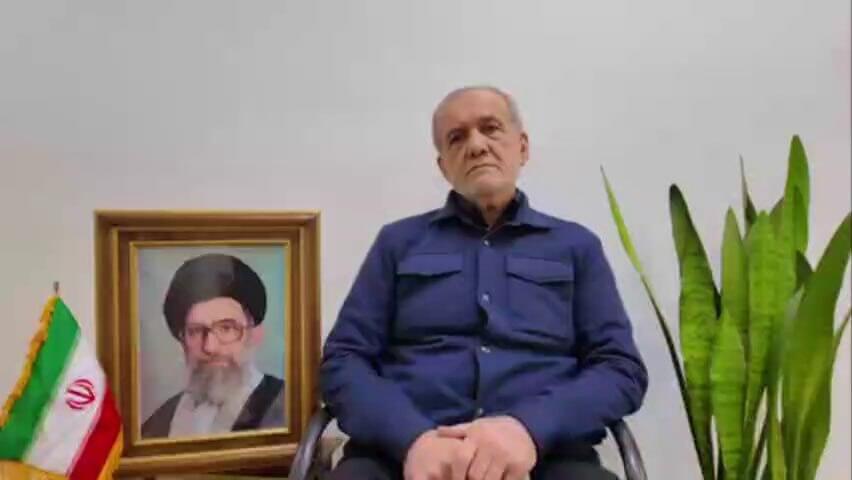
Iranian President Masoud Pezeshkian
However, it remains unclear whether the statement signals a shift in policy, as further reports of strikes targeting Gulf states emerged Saturday.
In a possible sign of divisions within Iran’s leadership, the Khatam al-Anbiya Central Headquarters — the unified command of Iran’s armed forces — said in a statement that U.S. and Israeli bases and interests across the region would remain legitimate targets.
The command said Iran respects the sovereignty of neighboring states but warned that U.S. and Israeli military assets across the region — on land, at sea and in the air — would be treated as primary targets and face “powerful and heavy” strikes.
U.S. President Donald Trump said in a social media post that Iran had “apologized and surrendered to its Middle East neighbors and promised that it will not shoot at them anymore,” adding that the pledge came only because of what he described as relentless U.S. and Israeli attacks.
Two Iranian sources confirmed that Saudi Arabia had warned Tehran to halt attacks on the kingdom and other Gulf states. Iran, they said, insisted that its strikes were aimed not at the Gulf countries themselves but at U.S. interests and military bases located on their territory.
One Iranian source said Tehran demanded that U.S. bases in the region be closed and that some Gulf states stop sharing intelligence with Washington that Iran believes is being used to carry out attacks against it.
Another Iranian source said some Iranian military commanders are pushing to continue the strikes, arguing that the United States is using bases and airspace in Gulf countries to conduct operations against Iran.
Iran had in recent years repaired relations with several Gulf neighbors, including former regional rival Saudi Arabia. But that diplomatic progress has been undermined by the recent wave of drone and missile attacks launched by Iran’s Revolutionary Guards.