

The discovery this week of the remains of the Altalena off the coast of Tel Aviv has revived memories of one of the most dramatic and divisive episodes in Israel’s early history, bringing renewed attention to the personal stories of those who stood on opposite sides of the confrontation.
Shlomo Goldhor, 97, was an Irgun fighter who went with his comrades to fight for Jerusalem. Just 17 and a half at the time, he was among those fighting with scarce and improvised weapons while waiting desperately for new arms that were supposed to arrive aboard the Altalena. “We fought very serious battles against the British, and the risks were enormous,” Goldhor said. “The battle for Malha, the battle for Deir Yassin, I took part in all of them. I survived by luck.”
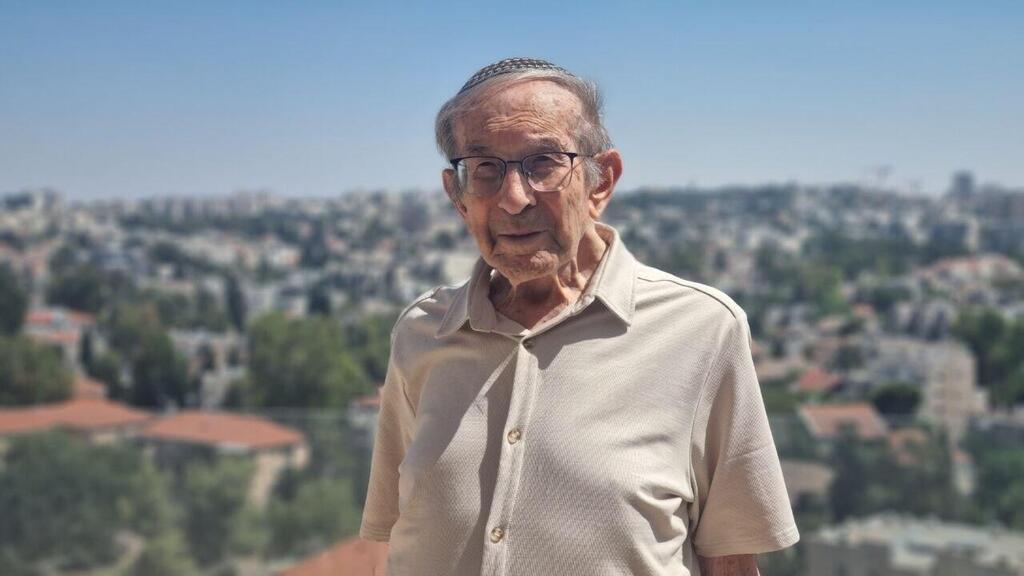
Goldhor said the Altalena arrived under an agreement with Israel’s provisional government, with 20% of its weapons intended for the Irgun battalion fighting in Jerusalem, which was then outside the territory allocated to the Jewish state under the UN partition plan. He recalled the desperate shortage of reliable weapons in the besieged city.
“We fought in Jerusalem with poor and defective weapons, weapons that failed us and endangered lives,” he said. “Molotov cocktails against armored vehicles. Only defective homemade machine guns. When you wanted to fire, they did not fire. They fired only when they wanted to.”
For the young fighters, news that the Altalena was carrying modern weapons transformed morale. “The Altalena restored our self-confidence and the fighters’ morale surged,” Goldhor said. “There was no limit to the explosion of joy as we waited for the new and advanced weapons.”
‘Civil war, never’
Looking back at the decision to fire on the ship, Goldhor said the confrontation should have been avoided. “They acted recklessly and ordered deadly fire instead of negotiating and preventing a tragic bloodbath that left a scar for generations,” he said. He contrasted that with Irgun leader Menachem Begin’s message: “Civil war, never.”
“Even if there are abysses between leaders, bridges can be built over them,” Goldhor said. “What matters is recognizing that what unites us is greater than what divides us. Hatred rose and disrupted the ability to prefer the common goal. Innocent blood was spilled and the weapons sank to the bottom of the sea.”
On the discovery of the wreck, Goldhor said he doubted much of the ship itself could still be recovered intact. “After so many years, I don’t know what they will bring up. Maybe just some scrap metal,” he said. “If they can bring up the ship as it was, that would be fantastic. But I don’t believe that after all these years the ship will be intact.”
Still, he said the remains have enormous historical value. “This is history that must be passed on to children and grandchildren, so they know what happened and so the world knows what happened,” he said. “Sometimes people today know nothing. Sometimes it annoys me that they don’t know elementary things about our history.”
Goldhor said he does not believe such a confrontation could happen again. “Today I think something like this cannot happen,” he said. “We are a special people, an ancient and wise people. Today Jews will not shoot Jews.”
‘Begin asked for a souvenir’
The discovery also resonated deeply with the families of two men whose lives became intertwined with the ship from very different sides.
Israel Sander, an Irgun fighter, survived the shelling aboard the Altalena. His daughter, Ariella Sander Biron, said her father fled his home in Romania at 16, joined Betar and eventually made his way to Mandatory Palestine aboard the ship. “The ship was shelled and he managed to survive and get out unharmed,” she told ynet. “He did not talk about the shelling itself, but he did say that he lost friends. There were many wounded. A friend who came with him from Romania was killed.”
After the underground militias were dismantled, Sander joined the newly formed IDF and was severely wounded in the War of Independence. During fighting at Latrun, a sack of grenades exploded and he was so badly injured that rescuers initially believed he was dead. “He blinked and someone realized he was alive,” his daughter said. Because his family was still in Romania, he was hospitalized as an unidentified patient while relatives were informed that he had been killed and sat shiva for him.
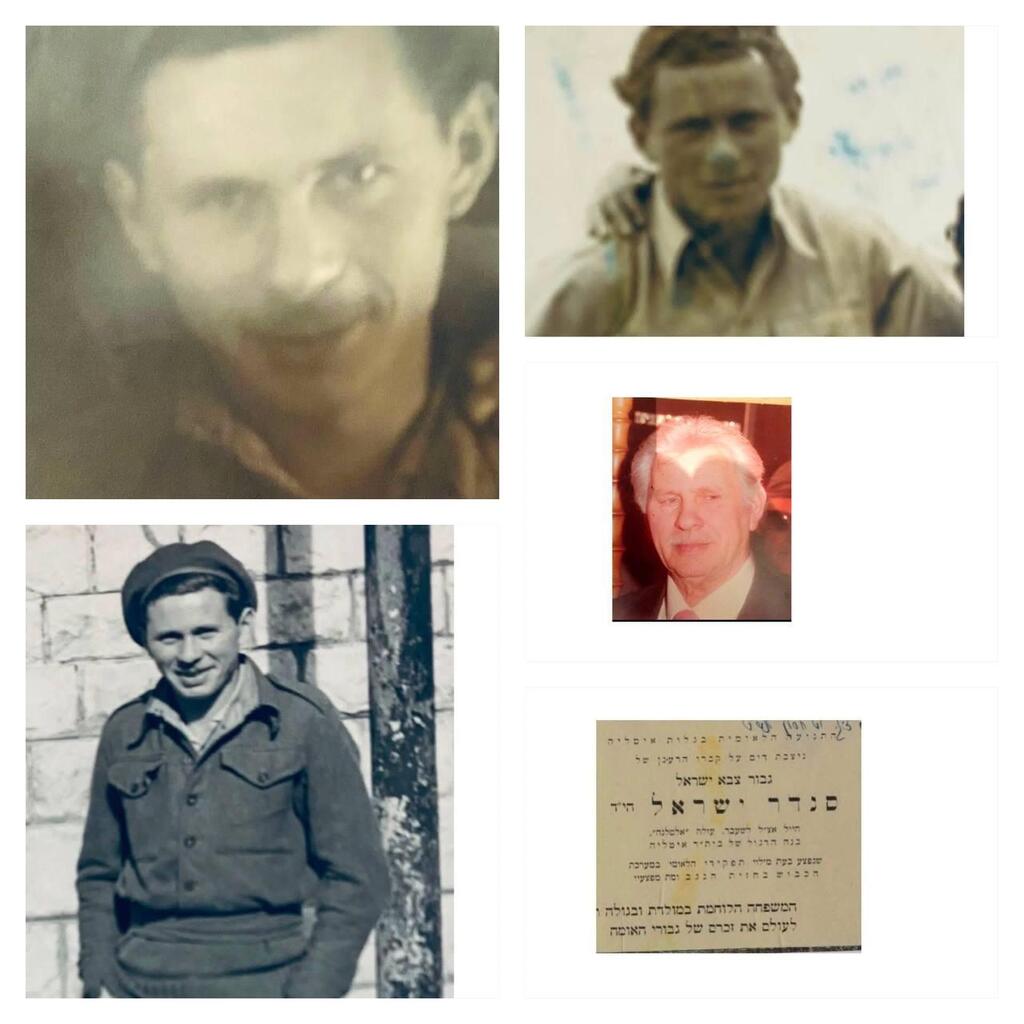
Israel Sander
Months later, after rehabilitation in Nahariya, he ran into an uncle by chance. “His uncle fainted because he thought it was the resurrection of the dead,” Sander Biron said. “My father used to brag about it and tell everyone it was a good omen for a long life. He carried his own death notice around in his bag.”
Sander died at 65. “When people say ‘Altalena,’ I immediately think of my father,” she said. “I felt he was happy up there that they brought the ship back, because he loved the country very much. He was a Begin man.”
Another family story comes from Binyamin Bobash, who served in the Israeli Navy and was assigned to guard the stranded Altalena off Tel Aviv. His grandson, Yaniv Simon, said Bobash immigrated to Mandatory Palestine in 1936, served in the British Army and later joined the Israeli Navy.
“They were given a mission to guard the Altalena, which was stuck off the coast of Tel Aviv,” Simon said. “While he was guarding the ship and the weapons, Menachem Begin approached him and asked for a souvenir. My grandfather refused. He did not recognize him. Only later did he find out it was Menachem Begin.”
Bobash was later given another assignment: to help sink the ship at sea. “My grandfather was a technical person and was given the mission of sinking the ship in the open sea, at a location he did not know,” Simon said. “It was a complicated logistical operation, and he told me they never told them exactly where they were sinking it.”
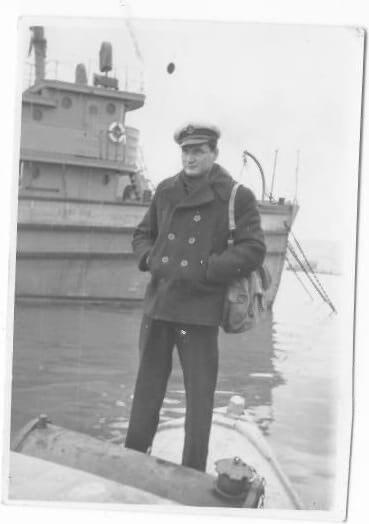
Binyamin Bobash
(Photo: Courtest of the family)
Bobash was also an amateur photographer who documented historical events, and his family believes some of his photographs may be among the final images taken of the Altalena before it was sunk. “At the time he did not understand the scale of the event,” Simon said. “When I asked him if he agreed to publish the photographs, he did not want to, and I don’t know exactly why.”
After the wreckage was located, Simon said he immediately searched for the photograph. “There are no other photographs of it from that event, and I think that, at least for me, this is an important part of the country’s history.”
Bobash died five years ago at 93. His daughter Orna said the discovery carried a broader lesson. “It is moving that part of the ship was recovered,” she said. “It is part of history, and for me it is a reminder of what happens when there is a civil war, of where things can lead. It was a shocking event, but it shaped the country and ultimately brought the ranks together.”