


U.S. President Donald Trump said Wednesday that his nearly three-hour meeting with Prime Minister Benjamin Netanyahu focused primarily on continuing negotiations with Iran, stressing that no agreements were reached beyond his insistence that talks move forward.
“It was a very good meeting, the tremendous relationship between our two Countries continues. There was nothing definitive reached other than I insisted that negotiations with Iran continue to see whether or not a Deal can be consummated,” Trump wrote on Truth Social after the meeting at the White House. “If it can, I let the Prime Minister know that will be a preference. If it cannot, we will just have to see what the outcome will be.”
Gallery
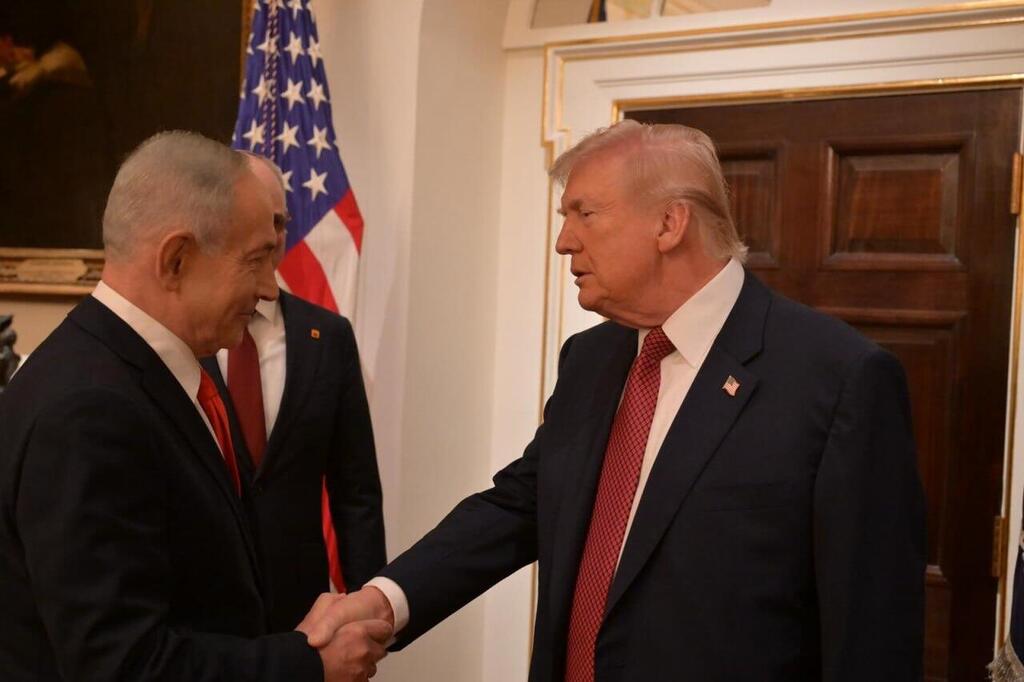
Prime Minister Benjamin Netanyahu meets with US President Donald Trump at the White House
(Photo: GPO)
Referring to past U.S. military action, Trump added: “Last time Iran decided that they were better off not making a Deal, and they were hit with Midnight Hammer — That did not work well for them. Hopefully this time they will be more reasonable and responsible.”
Meanwhile, the Wall Street Journal reported that the Pentagon has ordered a second aircraft carrier to prepare for possible deployment to the Middle East amid rising tensions with Iran. Citing U.S. officials, the newspaper said the order for the carrier strike group to move could come within hours, though Trump has not issued final authorization and plans could change.
According to the report, the additional carrier could arrive within two weeks. Officials mentioned the USS George H.W. Bush as a likely candidate, along with the USS George Washington and the USS Gerald R. Ford. Trump said Tuesday he was considering dispatching additional carriers to the region if talks with Tehran collapse.
The meeting between Trump and Netanyahu, held in the White House Cabinet Room rather than the Oval Office, lasted nearly three hours — longer than expected. The setting and duration suggested an in-depth discussion focused largely on Iran.
The two leaders discussed the ongoing negotiations between Washington and the Islamic Republic over a new nuclear agreement. Netanyahu sought to underscore Israel’s red lines, particularly regarding Iran’s ballistic missile program and its regional proxies, as well as key nuclear-related issues.
Netanyahu told Trump that Iran does not need intercontinental ballistic missiles to strike targets in Israel or Europe. He also presented information indicating that Iran continues to execute civilians despite commitments to the United States not to carry out executions of protesters detained during mass demonstrations.
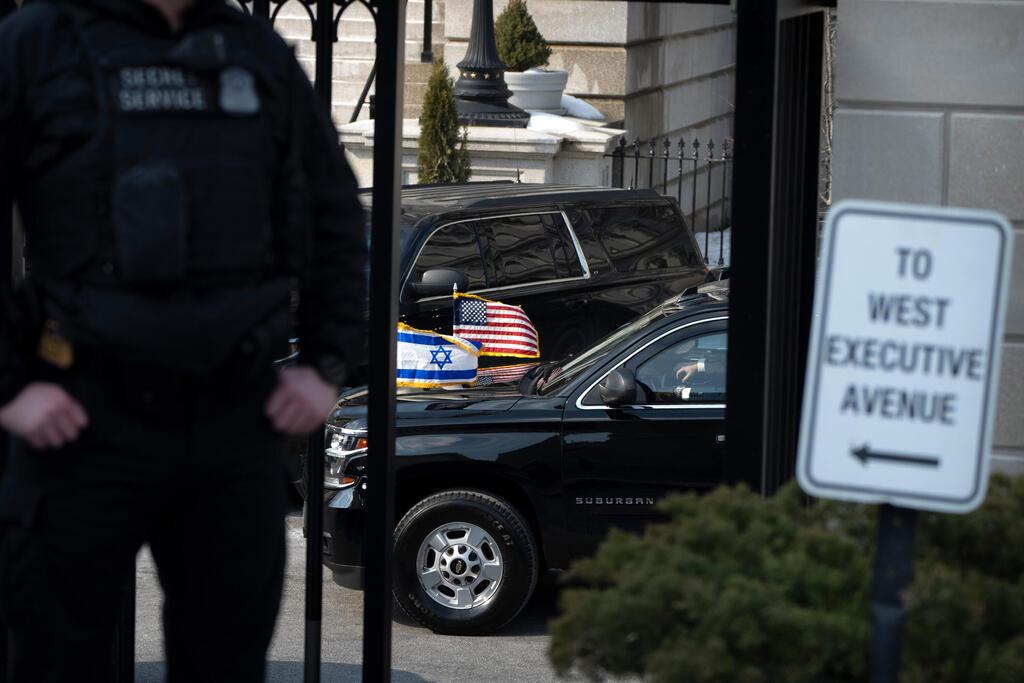
Netanyahu arrives at the White House
(Photo: AP Photo/Mark Schiefelbein)
The leaders reviewed possible scenarios should negotiations fail and what might occur if Iran were to attack Israel. Netanyahu is seeking to ensure Israel retains freedom of action, amid concerns in Jerusalem that a U.S.-Iran agreement could constrain Israeli military options, as critics argue happened following the nuclear deal reached under former president Barack Obama.
According to a statement from Netanyahu’s office, the leaders discussed the negotiations with Iran, developments in Gaza and broader regional issues. “The Prime Minister emphasized the security needs of the State of Israel in the context of the negotiations, and the two leaders agreed on continued coordination and the close contact between them,” the statement said.
Despite the ongoing diplomacy, Netanyahu believes a military confrontation with Iran is inevitable, according to people who spoke with him before the meeting.
Those familiar with the conversations said Netanyahu views the question not as whether conflict will occur, but when. In their assessment, he believes Iran has shown no signs of flexibility and is instead escalating its posture toward Washington.
The two leaders met at the White House with Iran’s missile program at the center of discussions. Netanyahu entered through a rear entrance in what appeared to be an effort to maintain a low media profile. He arrived in an official vehicle bearing Israeli and American flags. The meeting was expected to last about two hours.
According to the people who spoke with Netanyahu, images circulated Wednesday in Iran showing coffins bearing the faces of U.S. generals — including Adm. Brad Cooper, commander of U.S. Central Command — underscored Tehran’s awareness that tensions could soon erupt into open conflict. Cooper is responsible for American forces in the Middle East.
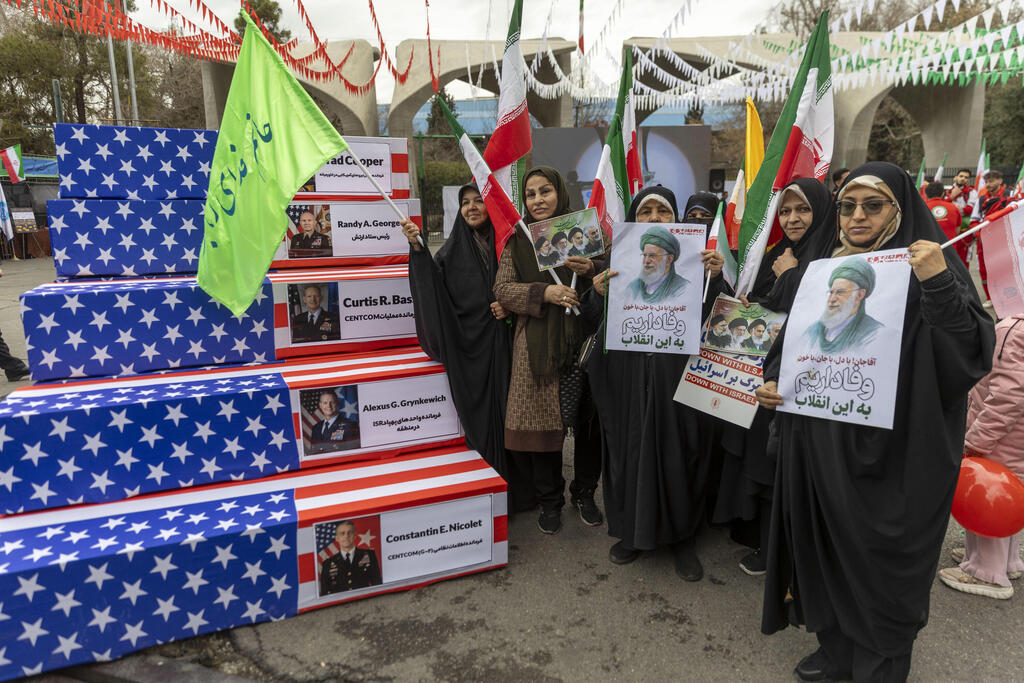
Coffins bearing photos of US Army generals, including CENTCOM commander Brad Cooper, displayed during a presentation marking the 47th anniversary of the Islamic Revolution in Tehran, Iran
(Photo: Majid Saeedi/Getty Images)
Iranian officials and supporters marked Wednesday the 47th anniversary of the Islamic Revolution, which brought the country’s clerical leadership to power. Mass rallies were held in cities across the Islamic Republic, with thousands participating. As in previous years, demonstrators burned American and Israeli flags.
One image widely shared in Iran, reportedly taken in Tehran, depicted coffins adorned with photographs of American generals, including Cooper. The display was seen as a direct warning to Washington.
Cooper joined negotiations between U.S. and Iranian representatives held last weekend in Oman, a move that reportedly angered officials in Tehran and was interpreted there as an explicit American threat.
He also accompanied Trump’s special envoys, Steve Witkoff and Jared Kushner, aboard the aircraft carrier USS Abraham Lincoln, which Trump deployed to the Middle East as part of what he described as a “big armada” prepared to strike if he gives the order.
On Tuesday, Trump said he was considering sending an additional aircraft carrier to the region if talks with Iran fail. In an interview with Axios, however, he expressed optimism about reaching an agreement.
“We can make a great deal with Iran. [Netanyahu] also wants a deal. He wants a good deal,” Trump said.
U.S. officials said the aircraft carriers USS George Washington, currently in Asia, and USS George H.W. Bush, on the U.S. East Coast, are potential candidates for deployment to the Middle East, though both are about a week away from the region. Another possible option is the USS Gerald R. Ford.
In an interview with Fox Business, Trump was asked whether Iran would abide by an agreement.
Trump on Iran negotiations
(Video: Fox Business)


“I’d rather make a deal. It's got to be a good deal — no nuclear weapons, no missiles, no this, no that — all the different things that you want,” he said. “Some people worry that [the Iranians] have been very dishonest with us over the years. Obama and Biden, what they did in terms of creating a monster with Iran was terrible. The Iran nuclear deal was one of the dumbest deals I’ve ever seen.”
Satellite images released Tuesday from U.S. bases in the Middle East showed an apparent buildup of American forces in preparation for a possible strike against the Islamic Republic. One image from Al Udeid Air Base in Qatar — which Iran targeted in June in response to the U.S. strikes on its nuclear facilities — showed Patriot missile launchers mounted on trucks, positioned for rapid deployment in the event of Iranian missile fire or for quick relocation if needed.
According to those who spoke with Netanyahu, Iran is fully aware of the conditions set by Washington but has shown no willingness to accept them, viewing them instead as tantamount to surrender. As a result, they said, Trump’s statements about additional carrier deployments are not idle threats, and there appears to be little appetite in Washington to prolong the standoff indefinitely.
First published: 20:46, 02.11.26