

Prime Minister Benjamin Netanyahu met Wednesday evening with President Donald Trump at the White House, marking their seventh meeting since Trump returned to office and their sixth on U.S. soil.
The two leaders were expected to discuss several pressing issues, chief among them Iran, against the backdrop of ongoing negotiations between Washington and Tehran and the possibility that Trump could order a strike against Iran’s ruling clerical regime.
Trump on Iran negotiations
(Video: Fox Business)


Ahead of his meeting with Trump, Netanyahu met with Secretary of State Marco Rubio and signed, in his presence, Israel’s accession as a member of the Board of Peace for Gaza.
Netanyahu entered the White House through a rear entrance, as apparent efforts were made to keep the visit low-profile. He arrived in an official vehicle bearing Israeli and American flags. The meeting with Trump was expected to last about two hours.
The talks were held behind closed doors and out of view of cameras. Netanyahu was expected to present Israel’s red lines, including a demand for freedom of action against Iran even in the event of a U.S.-Iran agreement. The prime minister was also expected to urge Trump to ensure that any future deal addresses Iran’s ballistic missile program and its network of proxy organizations across the Middle East.
Gallery
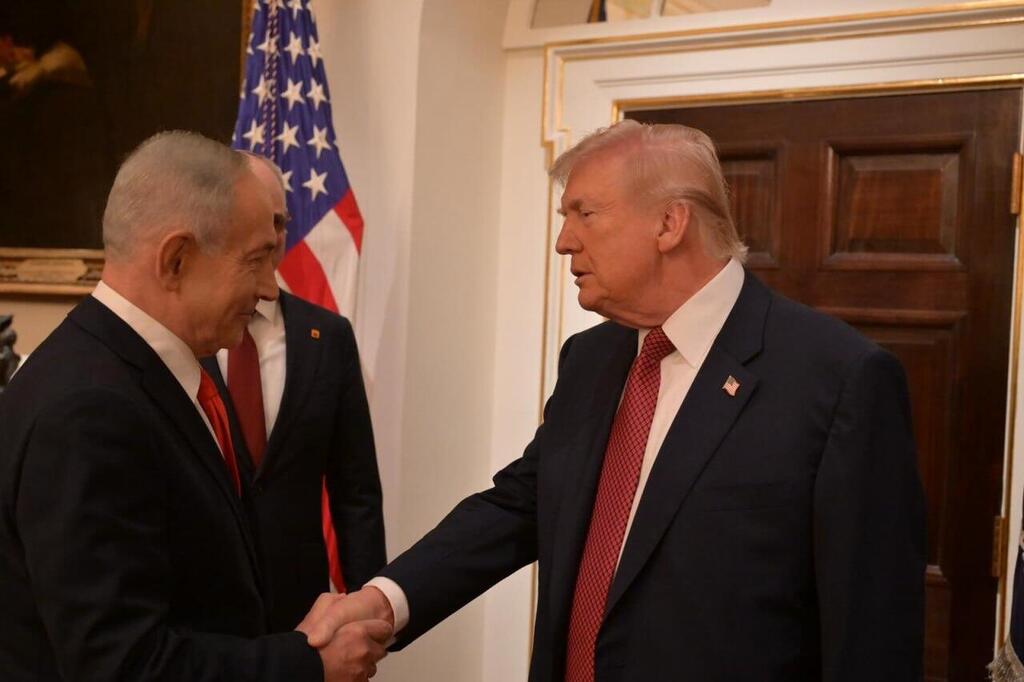
Prime Minister Benjamin Netanyahu meets with US President Donald Trump at the White House
(Photo: GPO)
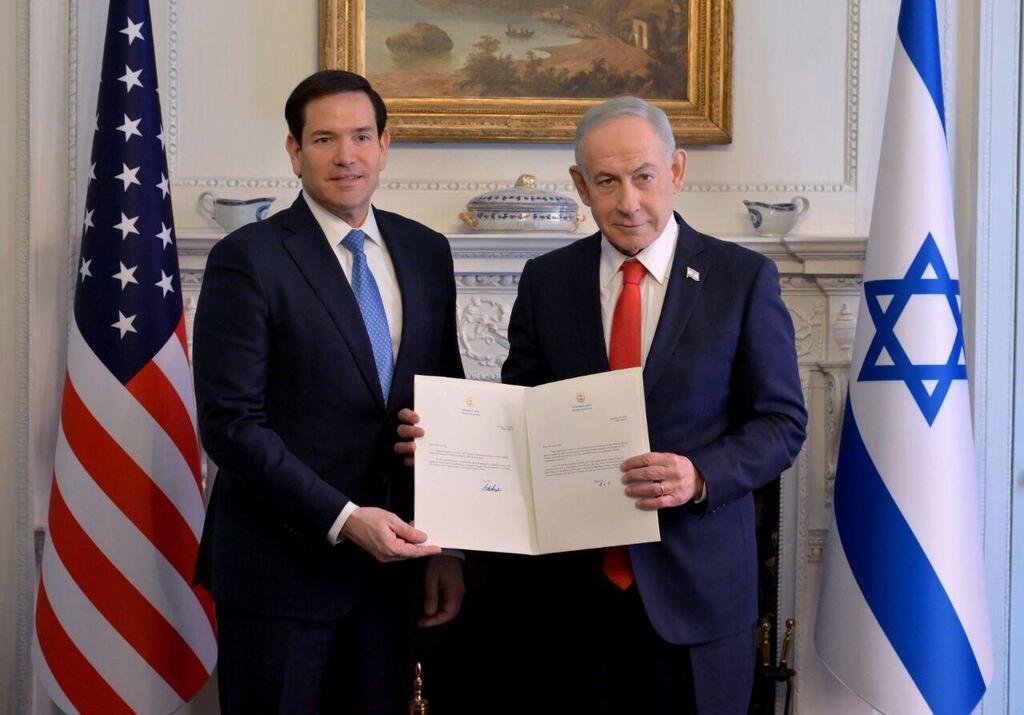
US Secretary of State Marco Rubio and Prime Minister Benjamin Netanyahu
(Photo: GPO)
A pro-Palestinian demonstration took place near the White House during the meeting.
The leaders last met in December at Trump’s Mar-a-Lago estate in Florida. At the time, protests against Iran’s government were just beginning. Since then, demonstrations have intensified and spread across the Islamic Republic, with the government carrying out mass killings in an effort to quash the unrest.
Trump had told demonstrators that “help is on its way,” but his rhetoric has since softened, as regional countries have urged him to resolve tensions through diplomatic means. Among those countries are Turkey and Qatar, both members of the Gaza Board of Peace. The United States has nevertheless continued to build up military forces in the Middle East.
Five of the leaders’ seven meetings since Trump’s return to office have taken place in Washington, one at the president’s Florida estate and another in Israel, when Trump addressed the Knesset to mark the entry into force of the Gaza ceasefire and the release of hostages.
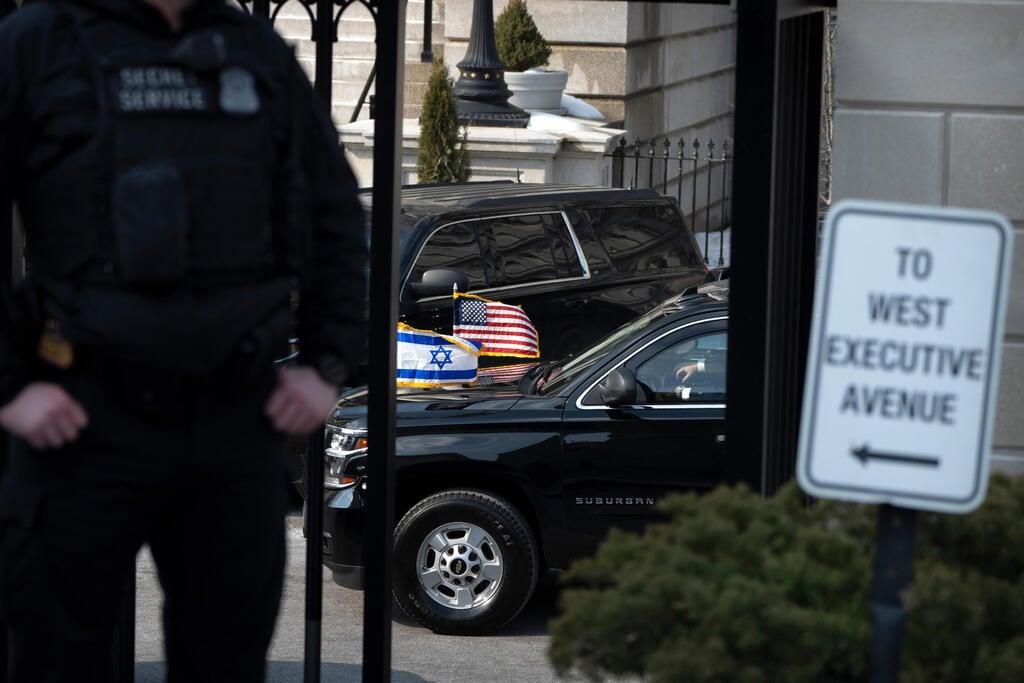
Netanyahu arrives at the White House
(Photo: AP Photo/Mark Schiefelbein)
Netanyahu traveled to Washington with a relatively small delegation and without senior security officials aside from his military secretary, Maj. Gen. Roman Gofman, and acting National Security Council head Gil Reich.
Unlike previous meetings, U.S. officials decided there would be no public statements at the start of the talks and no joint press conference afterward. American officials described it as a working meeting, a move that could signal Trump’s desire to avoid exposing any disagreements publicly.
Earlier in the evening, Netanyahu met at Blair House with special envoys Steve Witkoff and Jared Kushner. According to the Prime Minister’s Office, the sides discussed regional issues and Witkoff and Kushner briefed Netanyahu on the first round of talks they held with Iran last Friday.
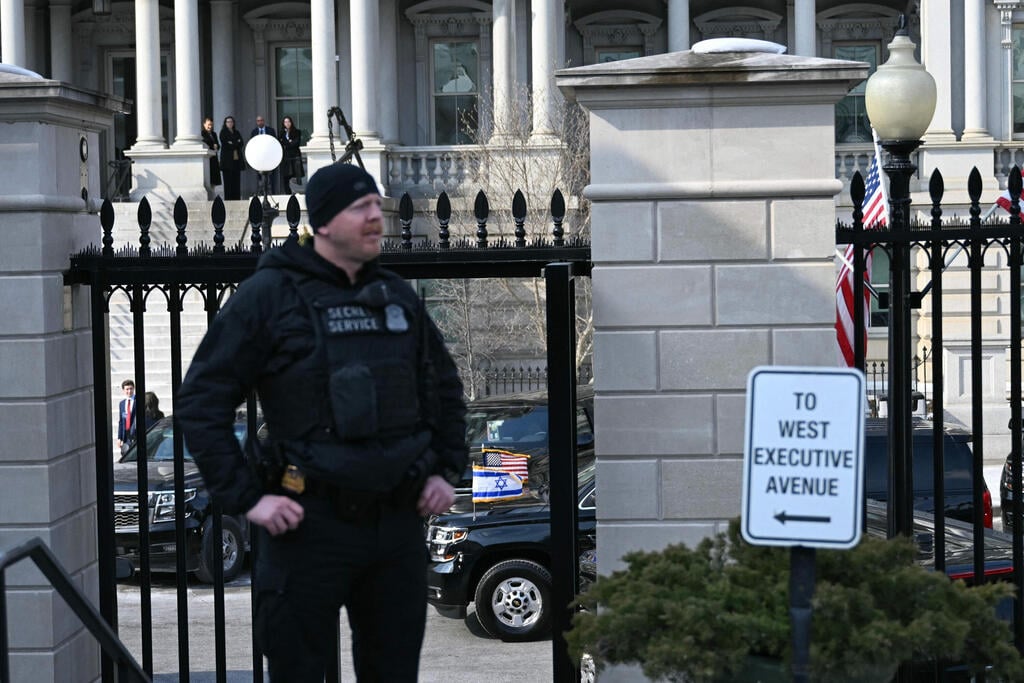
(Photo: Brendan SMIALOWSKI / AFP)
Over the past six weeks, Trump has shifted his tone on Iran after previously signaling that military action was his preferred option. On Tuesday, he told the news site Axios that he was considering sending another aircraft carrier to the Middle East if talks with Tehran fail, but also expressed optimism about reaching an agreement.
“We can make a great deal with Iran. [Netanyahu] also wants a deal. He wants a good deal,” Trump said. In a subsequent interview with Fox Business, he outlined his vision of such an agreement: “I’d rather make a deal. It's got to be a good deal — no nuclear weapons, no missiles, no this, no that — all the different things that you want.”
Israeli officials have expressed concern that a U.S.-Iran agreement could restrict Israel’s ability to act militarily against Iran’s leadership. After the 2015 nuclear deal negotiated under former president Barack Obama, Israel said it would not consider itself bound by the agreement and would act if necessary, but it ultimately did not carry out military action.
In that context, Israeli officials told CNN on Tuesday that Netanyahu would emphasize to Trump the need for military freedom of action against Iran even if a new agreement is signed. According to assessments cited by Israeli officials, Iran could possess approximately 2,000 ballistic missiles “within weeks.”
ynet military and defense analyst Ron Ben-Yishai noted this week in that context that an agreement that does not restrict Iran’s missile program or its nuclear weapons could cause Israel to lose its freedom of action to independently thwart and strike inside Iranian territory, even if those projects reach dimensions that pose a tangible threat to Israel.
That, he wrote, is because the current prime minister and Cabinet would not dare violate the calm and the “regional peace” that Trump would declare if and when he signs an agreement with Tehran.
It can be assumed, he added, that the same would hold true even under different governments in Jerusalem and Washington: after the United States signs an agreement with Iran, Israel would not be able to do much.