

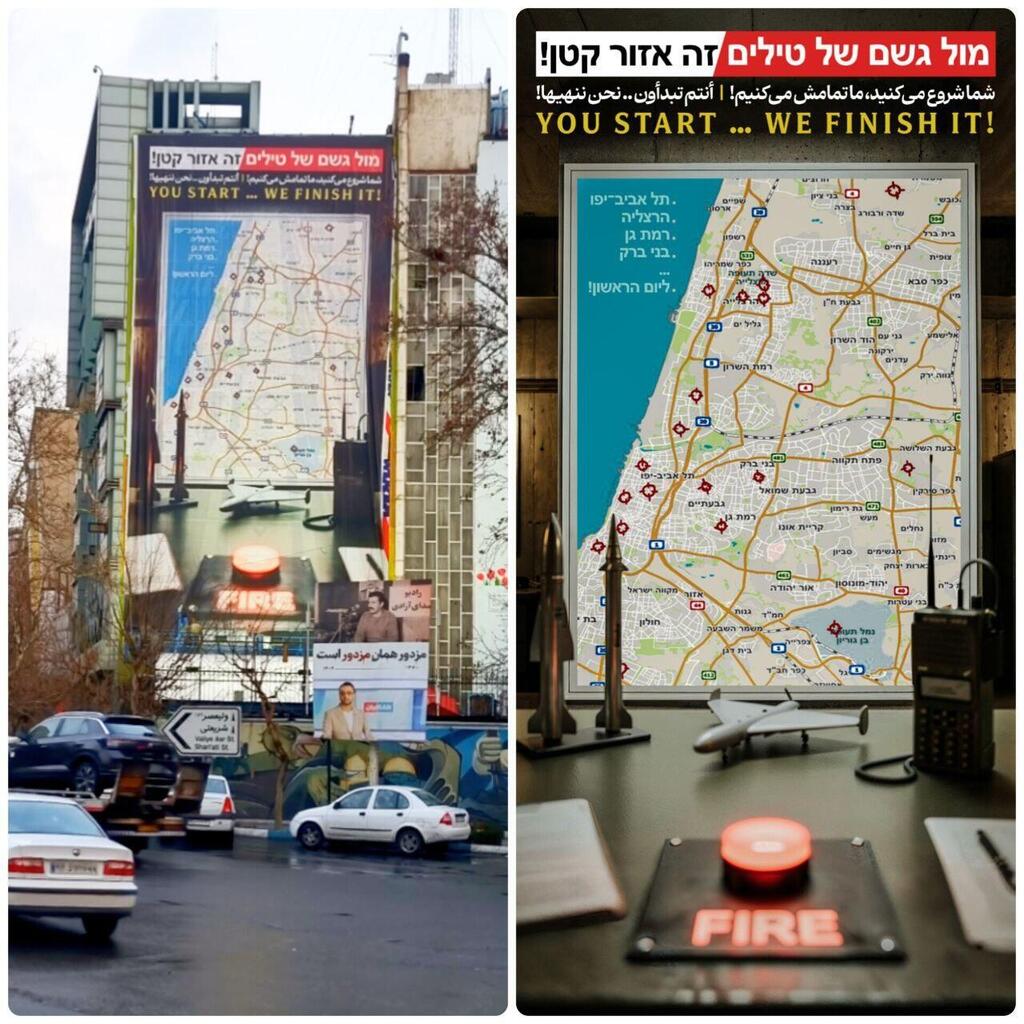
While President Donald Trump has said the Iranians “very much want a deal,” the tone in Tehran is hardening ahead of the next round of talks. On Sunday, a new threatening billboard was unveiled in Tehran’s Palestine Square, displaying a map of central Israel under the headline ‘Rain of missiles.’
At the same time, Iranian Foreign Minister Abbas Araghchi declared that the Islamic Republic would not give up its nuclear program under any circumstances, even if it leads to war.
Araghchi, who met U.S. envoy Steve Witkoff and Jared Kushner during talks held Friday in Oman, reiterated Iran’s long-standing position that it is prepared to accept certain limits on its nuclear program, but will not relinquish what it describes as its right to enrich uranium. According to assessments, enrichment is currently not taking place following strikes on Iran’s nuclear facilities during the 12-day war last June.
“We insist on our right to a nuclear program, even if it leads to war,” Araghchi told diplomats in Tehran. “We insist on uranium enrichment because no one has the right to dictate what we should do or demand that we reduce enrichment to zero.”
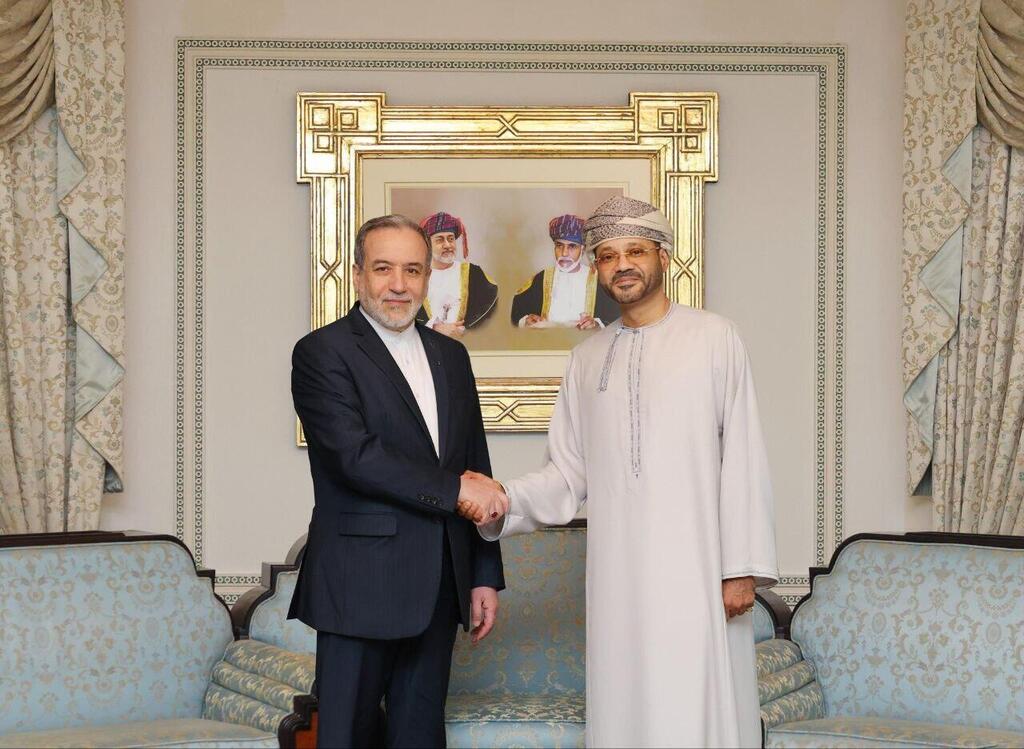
Abbas Araghchi
(Photo: Oman Foreign Ministry)
He added that attacks on Iran’s nuclear facilities had failed to achieve their goals. “The only option left to them is negotiations,” he said. “We do not accept dictates or control from anyone and are prepared to answer any question.”
Araghchi said Iran’s strength lies in its ability to stand up to pressure. “They fear our atomic bomb, but we do not seek an atomic bomb,” he said. “Our atomic bomb is the power to say ‘no’ to the great powers.”
The talks are taking place against the backdrop of repeated warnings by Trump that the United States could strike Iran if it does not move quickly toward an agreement. According to reports, Washington’s demands include a complete halt to uranium enrichment, restrictions on Iran’s ballistic missile program and an end to its support for terrorist organizations across the region.
Jared Kushner Steve Witkoff, they also shook hands with Araghchi, but the meeting was not documented
(Photo: Oman Foreign Ministry)
Trump himself has publicly focused on preventing Iran from obtaining nuclear weapons and has not explicitly called for a total end to enrichment. In Israel, officials fear Washington could soften its demands on missiles and Iran’s regional proxies.
Against that backdrop, Prime Minister Benjamin Netanyahu announced Saturday that he was moving up his visit to the United States by a week. He is expected to meet Trump on Wednesday.
“Any negotiation must include limits on ballistic missiles and an end to support for Iran’s axis,” Netanyahu’s office said. A senior political source said the early trip was intended to influence US positions in the talks, with particular emphasis on missile restrictions.
The U.S. has continued to signal that a military option remains on the table. The message was reinforced when US Central Command chief Adm. Brad Cooper joined Witkoff and Kushner in Oman and later accompanied them aboard the USS Abraham Lincoln aircraft carrier, which was deployed to the region along with eight destroyers.
Iran has warned that a US strike would ignite a regional war and that Israel would also be targeted. Sunday’s billboard in Tehran appeared to underscore that threat. The sign showed a map of Israel’s central region, listing Tel Aviv-Jaffa, Herzliya, Ramat Gan and Bnei Brak.
The Hebrew headline read, “In the face of a rain of missiles, this is a small area,” while the English text warned, “You start, we finish.”