

One day before the U.S. midterm elections on Tuesday, both parties are preparing for a battle that could reshape the balance of power in Washington and determine the course of Donald Trump's presidency over the next two years. The latest polls suggest the possibility of a "blue wave" that could deliver major gains for Democrats, potentially handing them control of both chambers of Congress. But amid growing Democratic optimism, pollsters are warning that their surveys may be overstating the party's strength, while Republicans hope the results at the ballot box will tell a different story.
Polling stations will open gradually across the country Tuesday, depending on local time zones. Some of the earliest could open at 5 a.m. Eastern in parts of Vermont, with most East Coast polling stations opening between 6 a.m. and 7 a.m. The first results are expected to begin arriving Tuesday evening, starting at 6 p.m. Eastern, when polls close in parts of Indiana and Kentucky. Polls in Georgia and Virginia will close at 7 p.m., followed by Pennsylvania and several other states at 8 p.m. California and Washington will close their polls at 11 p.m., with the final polling stations in Alaska closing at 1 a.m. Eastern on Wednesday. An initial picture of the balance of power in Congress could emerge overnight or Wednesday morning, although close races, particularly in states where mail-in ballots take longer to count, could take several additional days to resolve.
Gallery

(Photos: Shutterstock, Salwan Georges/Getty Images North America/AFP, AP Photo/Julia Demaree Nikhinson, Erik S. Lesser/AFP)
Meanwhile, Trump is continuing his efforts to mobilize supporters ahead of the vote. In a speech Monday evening in Washington, the president described the midterms as particularly consequential. "We're on the eve of the midterm elections, the most important, in my opinion, of our lifetimes," he declared. He made the remarks near the reflecting pool at the Lincoln Memorial, after devoting approximately 25 minutes of his speech to a detailed account of renovation work at the site. The choice of location was unusual for a closing campaign address, particularly as Republicans battle to retain their majorities in both chambers of Congress. Trump, who held campaign rallies in Iowa and Kansas on Sunday, is also expected to participate in a series of telephone rallies supporting Republican candidates across the United States.
At the same time, the president is already preparing for the possibility that Democrats will gain control of Congress. In an interview with the "Pod Force One" podcast published Monday, Trump said he would be prepared to protect billionaire Elon Musk and members of his administration from potential Democratic investigations, even raising the possibility of granting presidential pardons to associates. Asked about reports and rumors that Democrats intend to investigate Musk and potentially seek to seize his assets, Trump replied: "That's talk. But if that is the case, we'll have to protect them." Asked whether he would consider pardoning members of his team and others close to him if investigations were launched, he said: "I would do it if necessary, absolutely." The president added: "I wouldn't even think about it. I would just do it."
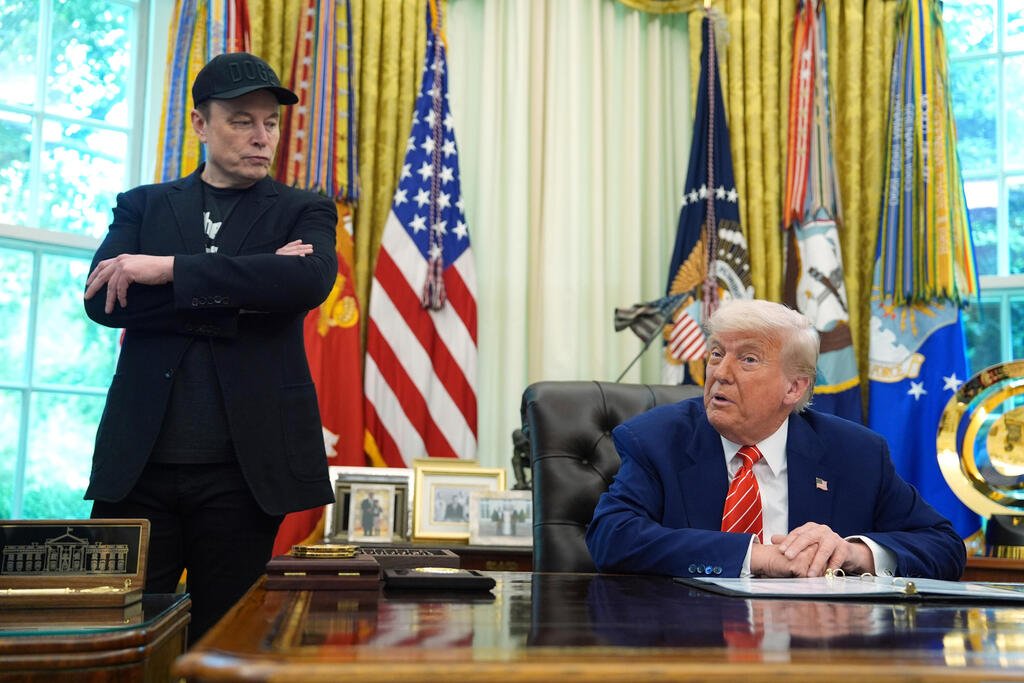
Elon Musk and Donald Trump
(Photo: Evan Vucci/AP)
His remarks come as Democratic lawmakers prepare to launch investigations into the administration and business figures close to it if they win control of the House of Representatives. One potential target is Musk, who played a central role in the Trump administration's efforts to cut government spending while pouring enormous sums into Republican election campaigns. According to figures published by Bloomberg, Musk has donated more than $445 million to political organizations during the current election cycle. In the first half of October alone, he contributed $77 million to America PAC, the political organization he founded. The group has spent tens of millions of dollars on Senate races, including more than $33 million on the Texas contest between Democrat James Talarico and Republican Ken Paxton.
Democratic Rep. Greg Casar, a member of the House Oversight Committee, said last month that congressional committees should investigate not only the Trump administration but also "the corporations and the ultrawealthy people who tried to corrupt our government." He said Musk was among those whose activities should be examined. However, a presidential pardon cannot halt a congressional investigation. The president's pardon power applies to federal criminal offenses, not congressional investigations, civil proceedings or violations of state law. Trump has not announced any pardons, presenting the possibility only as a measure he might consider in the future.
Midterm elections are held halfway through a president's four-year term, with Americans choosing representatives for a wide range of federal and state offices, including legislatures, governorships and attorneys general. The elections are widely regarded as a referendum on the sitting president's performance, and historically, the president's party tends to lose ground. Most attention focuses on the two chambers of Congress, the Senate and the House of Representatives. When the president's party controls both, it is easier for the administration to advance legislation and policy initiatives. When the opposition wins control, the president's ability to govern can be significantly constrained, potentially turning him into a political "lame duck."
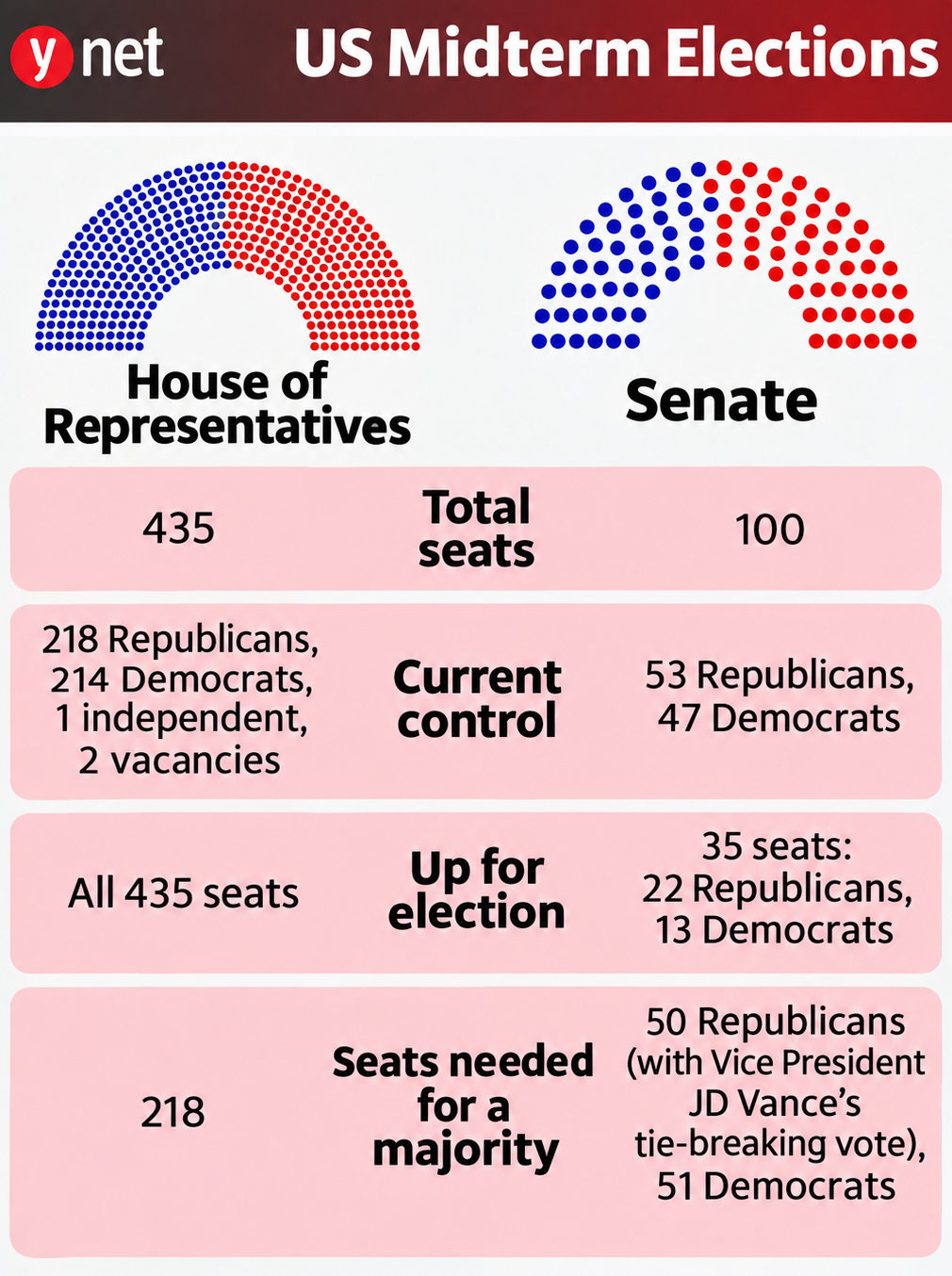
The Senate is the upper chamber of Congress, with 100 seats, two for each of the 50 U.S. states. Among its responsibilities are confirming presidential appointments, from Cabinet secretaries to ambassadors and judges, and deciding whether to remove a president from office following impeachment. Senators serve six-year terms, with approximately one-third of the chamber standing for election every two years. The House of Representatives is the lower chamber, with 435 voting members, all of whom face reelection every two years. Each state's representation is determined by population. California, for example, has 52 seats, while Alaska has just one. Legislation approved by the House must also pass the Senate and receive the president's signature to become law.
Republicans enter the elections controlling both chambers. In the House, they hold a narrow majority of 218 seats, compared with 214 for Democrats. Another lawmaker identifies as an independent but generally leans Republican, while two seats are currently vacant. In the Senate, Republicans hold a more comfortable 53-47 majority, meaning they could afford to lose up to three seats and still retain control, with Vice President JD Vance holding the tie-breaking vote in a 50-50 split. Nevertheless, Republicans are entering the elections under considerable pressure. Polls have indicated for months that Democrats are on course to retake the House, while their prospects in the Senate have also improved since the war with Iran drove up gasoline prices, creating unexpectedly close races in traditionally conservative states such as Texas, Kansas and Alaska.
Democrats lead in seven states, but can the polls be trusted?
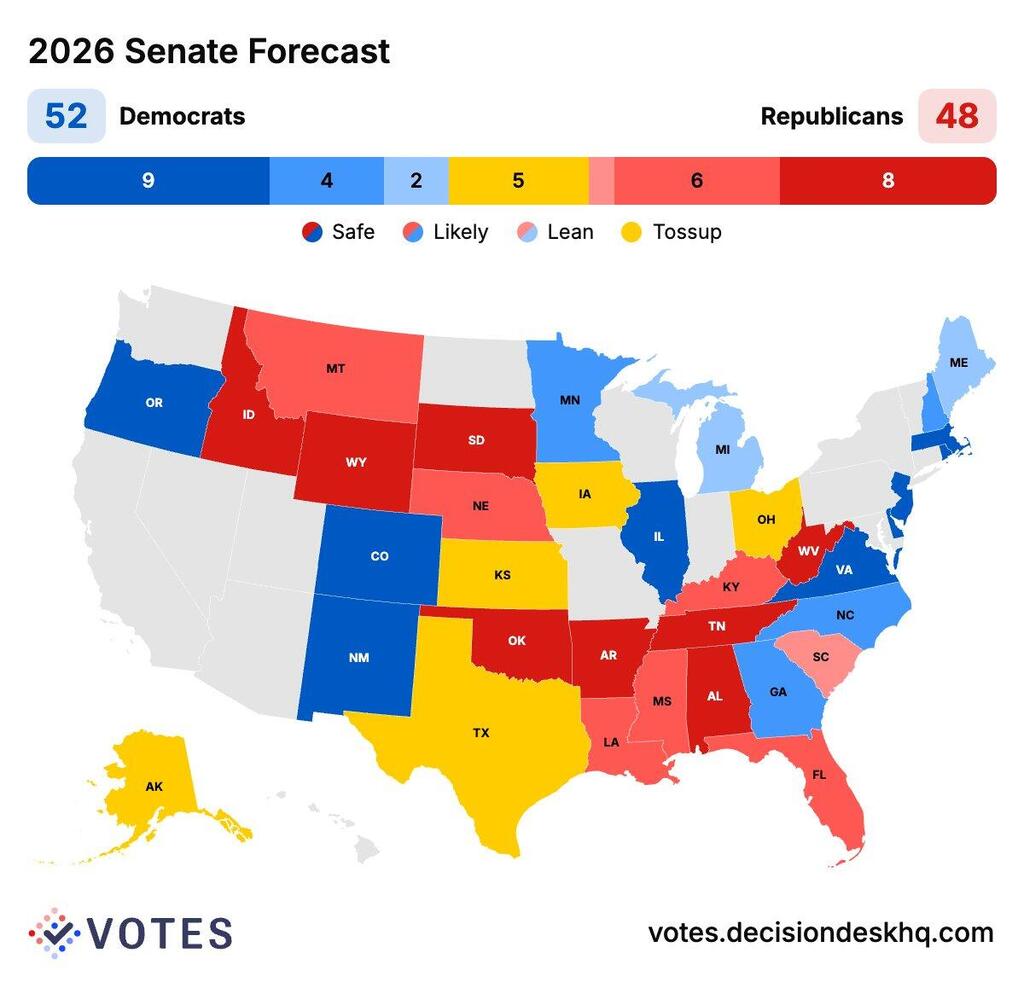
The latest New York Times/Siena College polls, released Monday ahead of the elections, show Democrats leading in all seven states surveyed in key Senate races. In Michigan, Democratic candidate Abdul El-Sayed leads Republican Mike Rogers by 53% to 42%. In Texas, Talarico leads Paxton by 50% to 43%, while in Maine, Democrat Troy Jackson leads incumbent Republican Sen. Susan Collins by 51% to 45%. Democrats also appear to be ahead in states long considered Republican strongholds. In Kansas, Adam Hamilton leads Sen. Roger Marshall by 49% to 44%, while in Ohio, former Democratic Sen. Sherrod Brown holds an identical advantage over Republican Sen. Jon Husted. The Democratic leads are considerably narrower in Alaska and Iowa, at two percentage points and one percentage point, respectively.
The figures are particularly encouraging for Democrats, who need to gain four Senate seats to secure a majority, assuming they retain all their existing seats. Republicans currently hold 53 seats to the Democrats' 47. In the House, where Republicans have a much smaller majority, the likelihood of a change in control is considered greater.
However, the substantial Democratic leads reported in some polls are also raising questions about their accuracy. Nate Cohn, chief political analyst at The New York Times, published an analysis Monday warning that Trump supporters are less likely to participate in surveys, creating the possibility that polls are once again overstating Democratic support. According to Cohn, recent polling in key states found that white registered Democrats were approximately 30% more likely to respond to surveys than white registered Republicans. He said the gap resembled the problems that contributed to polling errors in previous elections. In 2020, for example, New York Times/Siena polls underestimated support for Trump by an average of approximately five percentage points.
Nevertheless, Cohn noted that pollsters predicted the results of the 2018 and 2022 midterm elections relatively accurately, despite differences in survey response rates. He also pointed out that Siena College had changed its weighting methods this year to reduce potential bias. Without those adjustments, the Democrats' average lead in the latest polls would have been more than three percentage points larger. "There is precedent for polls in the Trump era overstating Democratic strength," Cohn wrote, emphasizing that it remains unclear whether the pattern will repeat itself this time.
Siena College Research Institute director Don Levy was similarly cautious about the forecasts. Despite the possibility of a Democratic wave and a Senate takeover, he said many contests remain close, meaning "a Senate majority for either party is still possible." In several states, the margins are smaller than the polls' margin of error, while other surveys show considerably narrower Democratic leads.
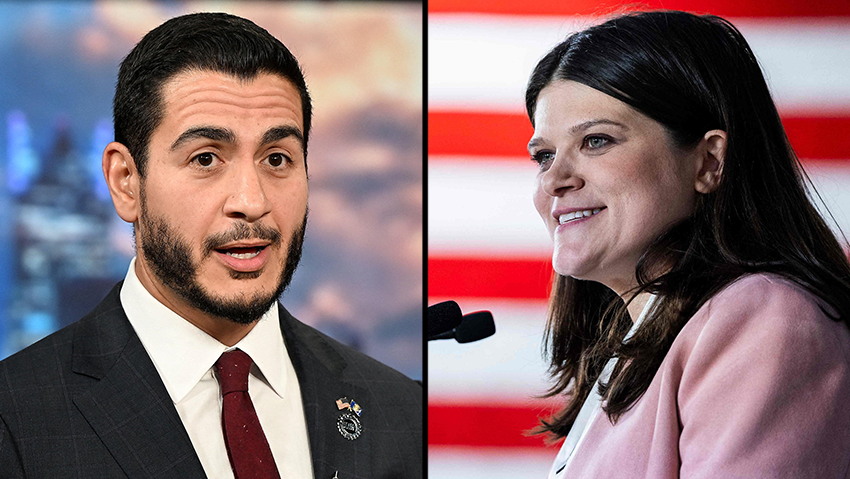
Haley Stevens and Abdul El-Sayed. A bitter Democratic Party rift in Michigan
(Photo: Finn Gomez / GETTY IMAGES NORTH AMERICA / AFP, Robin Buckson/Pool via REUTERS)
Another poll, conducted by Reuters and Ipsos and released Monday evening, also shows Democrats ahead, although their advantage over Republicans has narrowed. According to the five-day survey, which concluded Monday, 46% of registered voters said they would support Democratic congressional candidates, compared with 38% who favored Republicans. That represents an eight-point Democratic advantage, down from 11 points in a poll conducted a week earlier. The national survey reflects voter preferences across the country but does not necessarily predict the outcome of individual Senate and House races, where Republicans enjoy certain structural advantages.
Meanwhile, Trump's approval rating remains close to the lowest level of his presidency. Just 32% of respondents said they approved of his performance, unchanged from the previous week and only slightly above the record low of 31% recorded two weeks earlier. The survey also suggests that many independent voters view the midterms as an opportunity to express opposition to the president. Among registered independents, 50% said their vote would be a vote against Trump, compared with 13% who considered it a vote of support. Another 33% said the president was not a factor in their decision. The survey was conducted online among 1,765 U.S. adults, with a margin of error of two percentage points for the overall sample.
Beyond the polling numbers, Democrats are facing an internal crisis in Michigan, one of the most important states in their effort to win a Senate majority. Democratic Rep. Haley Stevens, who lost the party's primary to Abdul El-Sayed, a far-left candidate and outspoken critic of Israel, unexpectedly announced Sunday that she would support his Republican opponent, Mike Rogers. Stevens even appeared alongside Rogers at a church in Detroit, explaining that she could not support El-Sayed because of his statements and controversies surrounding Israel and antisemitism. She also criticized a campaign that blamed Israel for high food prices in the United States.
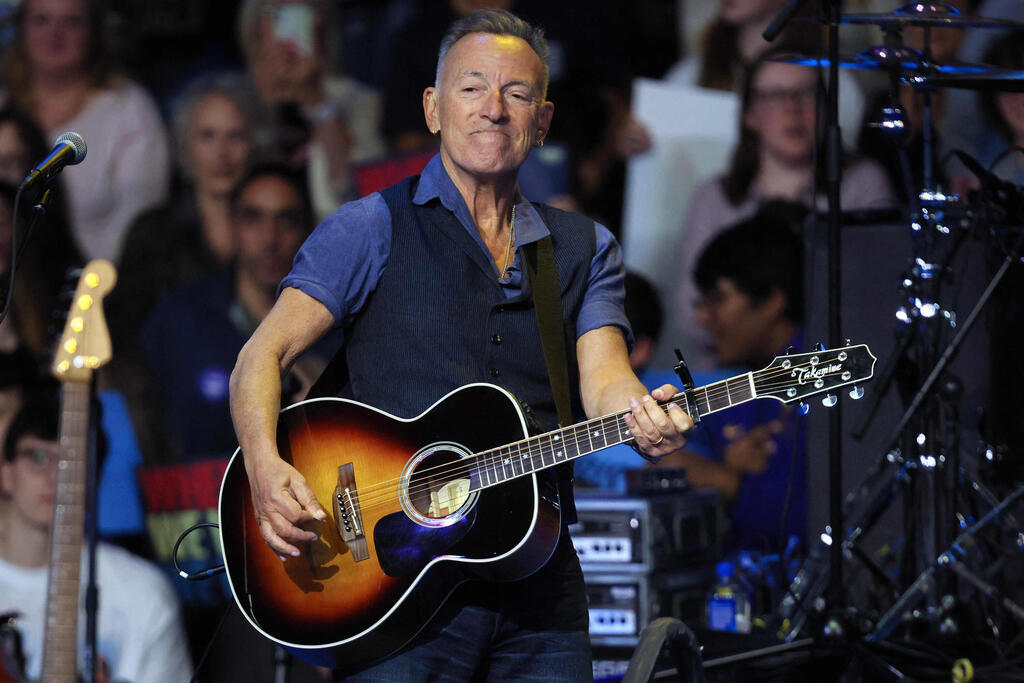
Bruce Springsteen. The rock star has endorsed Abdul El-Sayed in Michigan's Senate race
(Photo: WIN MCNAMEE / GETTY IMAGES NORTH AMERICA / AFP)
The move stunned Democratic Party leaders, who fear it could undermine one of their most important Senate races. Nevertheless, El-Sayed's campaign announced that the controversy had helped it raise $2.4 million in donations within 24 hours, primarily from small donors. The New York Times poll showing El-Sayed with an 11-point lead was conducted almost entirely before Stevens made her extraordinary endorsement of Rogers.
The Democratic candidate in Michigan also received an unexpected endorsement Monday from rock star Bruce Springsteen, one of Trump's most prominent critics. Springsteen released a message supporting El-Sayed, calling him "a fighter for the American Constitution." The musician, who has backed Democratic candidates for years, threw his support behind El-Sayed in one of the key contests that could determine control of the Senate.
More than 55 million have already voted as ballot-counting battles intensify
Early voting across the United States is already breaking records. According to the University of Florida Election Lab, more than 55 million Americans have cast ballots by mail or at early voting locations, compared with approximately 45 million early voters in the 2022 midterm elections. Trump has spent the final days of the campaign holding rallies in states where Republicans are facing unexpected challenges. On Sunday, he appeared in Iowa and Kansas, both of which he won by substantial margins in the 2024 presidential election, but where Republican Senate candidates are now struggling to secure victory.
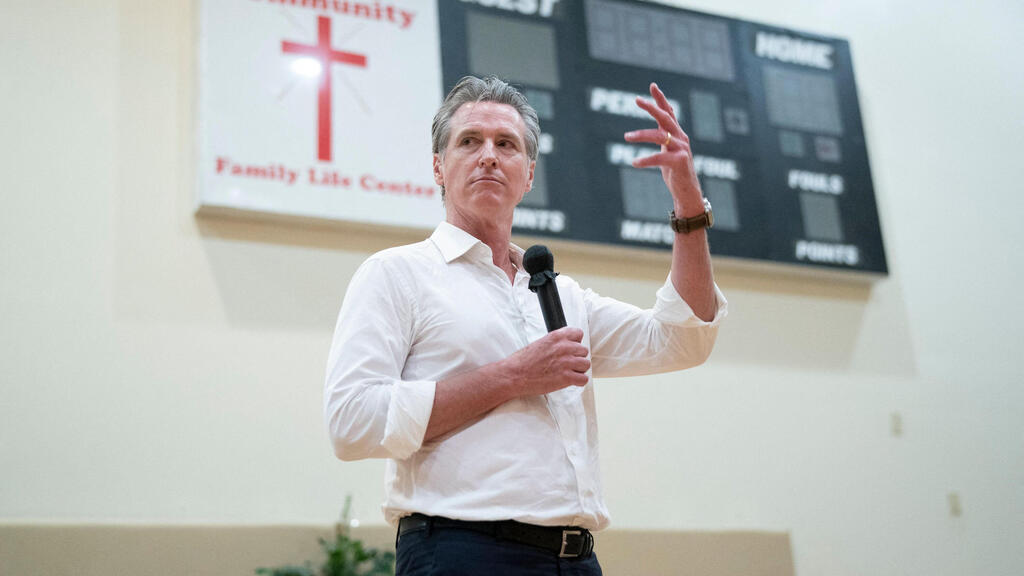
California Gov. Gavin Newsom. Warns the Trump administration could attempt to seize election ballots
(Photo: Sean Rayford / GETTY IMAGES NORTH AMERICA / AFP)
At the same time, the Trump administration is continuing its legal battles over election procedures. On Monday, one day before polling stations open, the administration asked the Supreme Court to order California to segregate approximately 20,000 mail-in ballots and exclude them from the count until the eligibility of the voters could be determined. The administration claims that some of those voters may not be U.S. citizens. California officials counter that the list submitted by the administration is unreliable and likely includes eligible American citizens. The request followed rulings by two lower courts rejecting the administration's position.
Federal Judge David Carter warned that segregating the ballots could create chaos in the election and undermine public confidence in the democratic process. "If the executive branch can invalidate votes and threaten an election already underway based on unproven claims, our democracy is in danger," he wrote in his ruling. Solicitor General John Sauer argued, however, that if the disputed ballots were mixed with valid ballots, it would become impossible to separate them later. California has approximately 23 million registered voters and mails ballots to all of them, with hundreds of thousands of ballots already processed. The Supreme Court has previously rejected a Trump administration attempt to restrict mail-in voting ahead of the midterms.
Meanwhile, a federal court in California ordered the Trump administration to stop demanding that state election officials segregate ballots cast by voters whom the administration claims are not U.S. citizens. The temporary order also bars the Justice Department from threatening election workers with prosecution for refusing to comply with administration demands or for counting votes in accordance with the law. Judge Trina Thompson ruled that the administration's actions could violate federal laws prohibiting voter intimidation and infringe on citizens' voting rights. The order will remain in effect until November 16. The decision follows earlier rulings rejecting the administration's attempt to require California to segregate more than 20,000 ballots pending verification of the voters' citizenship.
Against the backdrop of the legal dispute, Democratic California Gov. Gavin Newsom issued an unusual warning Saturday that the Trump administration could attempt to seize ballots using federal court orders. In a letter to the chief judges of the state's four federal judicial districts, Newsom warned that federal agents might seek search warrants allowing them to confiscate ballots and election materials before the results are certified. He said he feared the Justice Department, following a series of courtroom defeats, could turn to criminal investigations targeting election officials.
Newsom argued that seizing the ballots would serve no legitimate law enforcement purpose and could instead disrupt the counting and certification of election results. He urged judges to carefully scrutinize any such requests, emphasizing that he was not aware of any applications for search warrants having been filed. His warning came after a federal court ordered the Justice Department to stop threatening California election workers with prosecution for refusing to comply with administration demands.
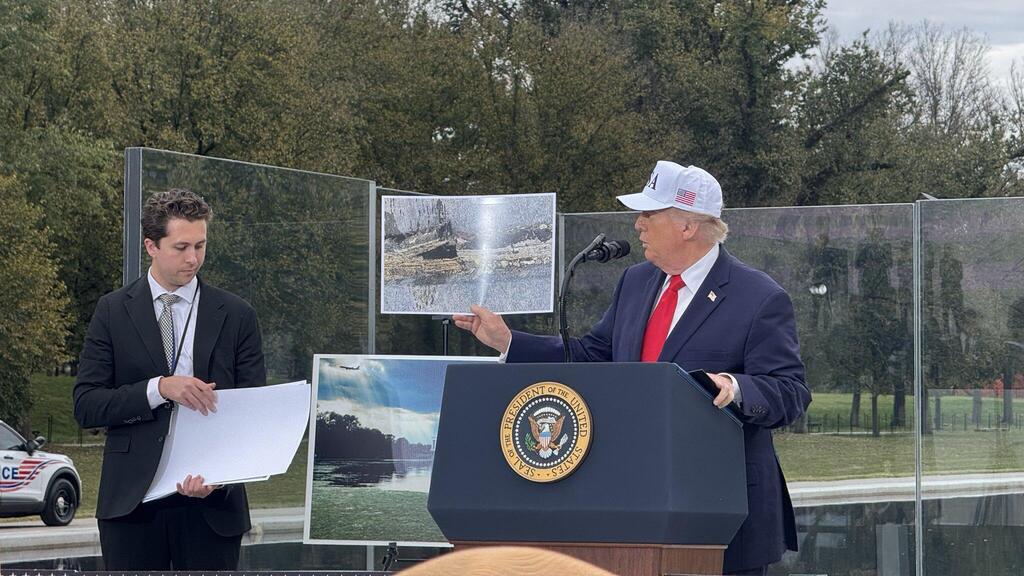
Trump delivers his closing campaign speech in Washington on Monday, devoting approximately 25 minutes to describing renovations at the Lincoln Memorial Reflecting Pool
(Photo: X)
In Alaska, where one of the closest Senate races is taking place, a federal judge on Sunday rejected a Justice Department attempt to prevent the certification of election results in advance if incumbent Republican Sen. Dan Sullivan narrowly loses. The dispute centers on another candidate with an almost identical name, whom the administration claims could confuse voters.
Tuesday's elections are widely seen as a referendum on the first two years of Trump's second term. The cost of living, gasoline prices and the consequences of the war with Iran dominate the political agenda, and Democrats hope to capitalize on public dissatisfaction to regain control of Congress. If they secure a majority in even one chamber, they could make it considerably harder for Trump to advance legislation while expanding congressional oversight and investigations into his administration. Winning control of the Senate would also allow Democrats to block senior appointments, including nominees to the federal judiciary.
Yet despite their advantage in the polls, no one can say with certainty whether Democrats are heading for a sweeping victory or whether Republicans will once again defy expectations. The outcome will be decided at the ballot box, and in some closely contested races, the final picture may not emerge until after several days of vote counting.