

The ultra-Orthodox Shas party said Wednesday it will resign from the government in protest over stalled legislation to exempt yeshiva students from mandatory military service—a key demand of the Haredi community.
The move comes amid mounting political tensions within Prime Minister Benjamin Netanyahu’s right-wing coalition, after the United Torah Judaism (UTJ) party, another ultra-Orthodox faction, already quit the government earlier this week.
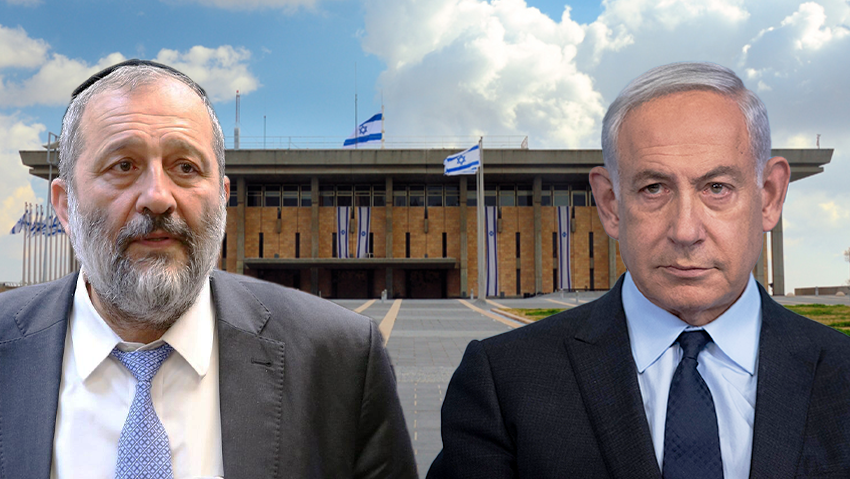
Shas said it would remain in the governing coalition for now, stopping short of fully collapsing Netanyahu’s parliamentary bloc. The decision followed hours of pressure from the Prime Minister’s Office, which had asked Shas to allow time to find a solution acceptable to ultra-Orthodox parties.
Religious Services Minister Michael Malchieli said the decision was based on “the persecution of Torah scholars,” and that “under the current circumstances, it is impossible to remain in the government and be party to it.” However, he stressed that Shas would not oppose the coalition. “We will not cooperate with the left,” he said in a statement following the council’s meeting.
Seven Shas ministers and deputy ministers are expected to resign, including Interior Minister Moshe Arbel, Health Minister Uriel Buso, Labor Minister Yoav Ben-Tzur and Welfare Minister Ya’akov Margi.
Ultra-Orthodox factions said earlier Wednesday that they had received several proposals from Likud aimed at resolving the coalition crisis—among them, a plan to move the controversial draft exemption bill to a new, separate Knesset committee, taking it out of the hands of Knesset Foreign Affairs and Defense Committee Chair Yuli Edelstein, who they see as the main obstacle to advancing the legislation. Edelstein, meanwhile, has come under fire from within his own party.
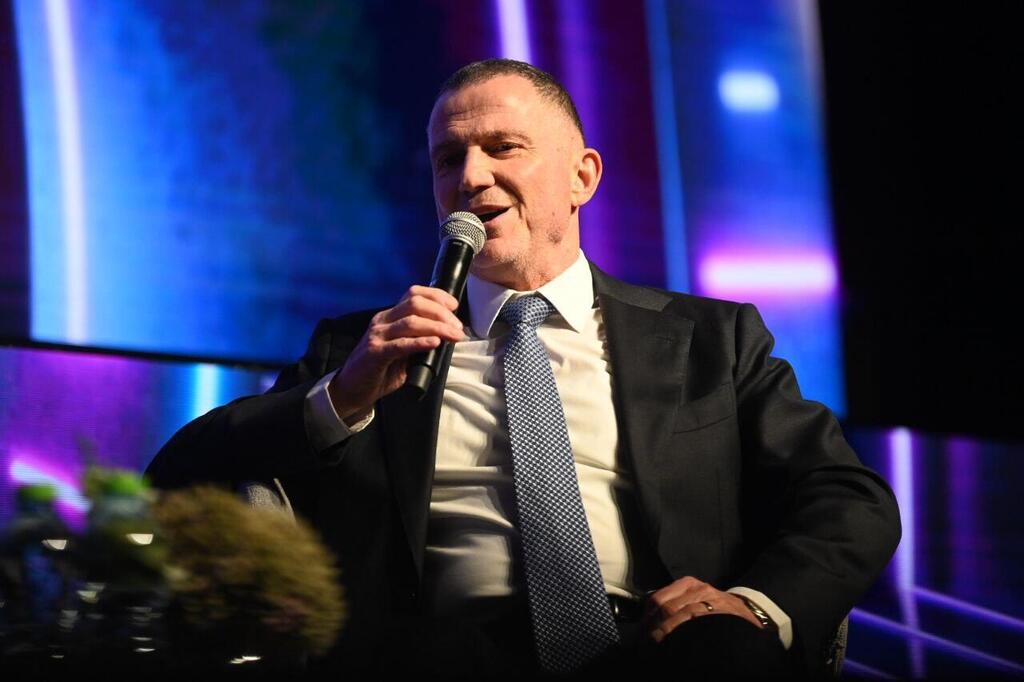
Yuli Edelstein
(Photo: Yair Sagi)
Transportation Minister Miri Regev sharply criticized Edelstein during a speech at a local governance conference, accusing him of attempting to topple a right-wing government during wartime. “He will be remembered as the chair of the Foreign Affairs and Defense Committee who tried to bring down a right-wing government in the middle of a war,” she said. “It’s a terrible thing and shows he’s unfit for the role.”
“Edelstein is not serving his personal agenda, he was elected as part of Likud,” Regev added. “He failed to reach an agreement and is now taking down the right-wing government.” At the same time, she urged the ultra-Orthodox parties to compromise. “I expect them to shoulder the burden and figure out how to work together. Deri, who sits in key cabinet forums, must do everything he can to prevent a government collapse during wartime,” she said, referring to Shas leader Aryeh Deri.
Communications Minister Shlomo Karhi echoed those criticisms, telling the conference that “a version of the draft law had already been agreed upon before the Iran operation. Then Edelstein presented a completely different version. If the draft law doesn’t pass, 10,000 soldiers won’t be recruited over the next two years. The ones who will suffer are the reservists in the field.”
Karhi directly addressed Edelstein: “Why are you doing this? You reached an agreement. The prime minister gave his approval. The Haredim are willing to share the burden. Why are you trying to interfere?”
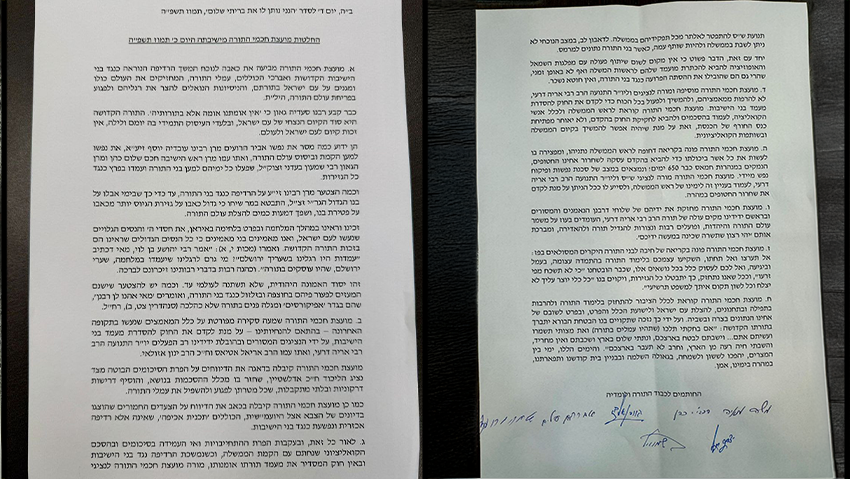
Shas' resignation letter
Edelstein responded earlier Wednesday at the same conference, saying, “The Haredim haven’t brought forward a single concrete proposal.” He added, “I’ve worked for decades with Haredi lawmakers, we’ve always had mutual respect. And now the insults, the name-calling. Deep down, they know I’m right. They know service is necessary, especially for those not fully devoted to Torah study. They know reservists can’t keep going like this. They know I’m right that without real sanctions and oversight, nothing will change. And privately, they’ve told me as much.”
A senior figure in the ultra-Orthodox political camp sharply criticized Netanyahu on Wednesday afternoon, blaming the current coalition crisis on failures within the Prime Minister’s Office.
Get the Ynetnews app on your smartphone: Google Play: https://bit.ly/4eJ37pE | Apple App Store: https://bit.ly/3ZL7iNv
“Netanyahu brought this crisis on himself because of the major failure of his office staff,” the official said. “In practice, he doesn’t have a functioning office. His inner circle lacks experience and fed him inaccurate information. Throughout the draft law crisis, Netanyahu’s team failed to engage with the details. He’s a prime minister without a working office.”
Before the Iran war, there had also been plans to convene Shas’ Council of Torah Sages to decide on the party’s stance, but in the end, party leaders opted to update the rabbis privately. The council gathered on Wednesday for its first official meeting since December, where it announced the party’s exit from the government.
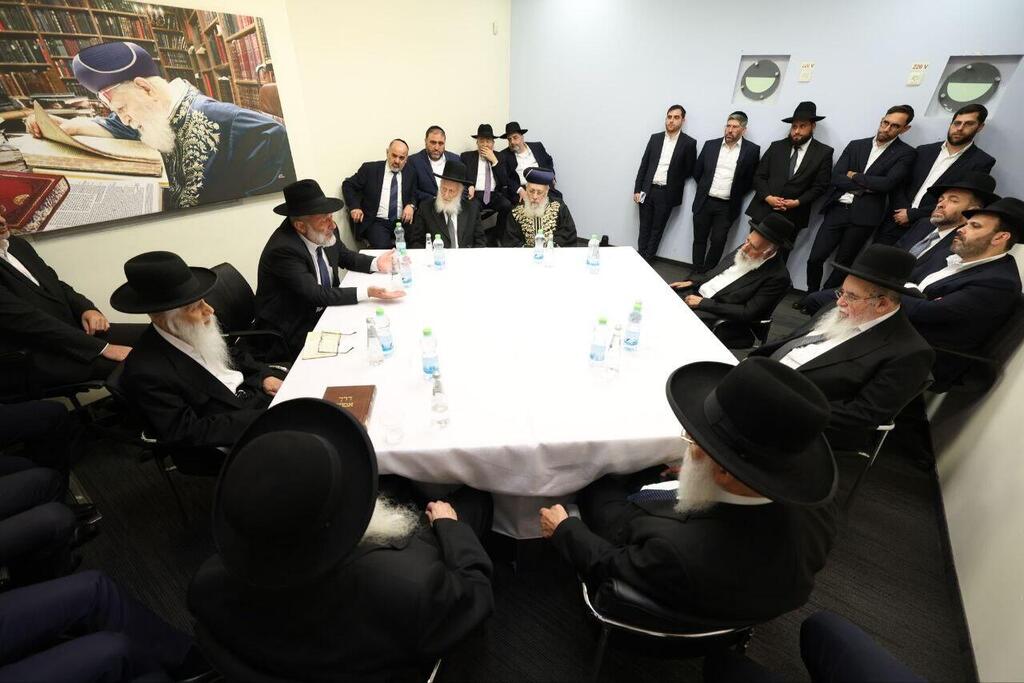
Shas’ Council of Torah Sages
By Wednesday night, 48 hours will have passed since UTJ formally withdrew from both the government and the coalition. That decision remains reversible, and Shas has quietly asked for more time to allow the coalition to reach a solution before making its own move. Despite the differences in timing between the parties, sources familiar with the situation say Shas and UTJ are closely coordinated.
The coalition now holds just 60 Knesset seats, with Noam party leader Avi Maoz acting as a “wild card,” stepping in for votes as needed. While UTJ chose to immediately leave the coalition and government, Shas has opted for a wait-and-see strategy, watching whether the Ashkenazi party’s departure triggers a domino effect that could reopen negotiations on a revised draft exemption bill. Only if that effort fails will Shas fully break away.
Unlike UTJ, which saw resignations mostly from committee chairs and sector-specific ministers, Shas is pulling out senior cabinet ministers, a move with greater political weight. Deri, who until now played a key role in preserving coalition unity, mediating even during past threats from the Hasidic UTJ faction Agudat Yisrael and former housing minister Yitzchak Goldknopf—also helped defuse tensions ahead of the strike on Iran, buying Netanyahu critical time. Now, it appears Deri’s patience has run out.