

Among the many controversial concepts the IDF has embraced over the years, one of the most maligned was the drive for a "small and smart army." Its final burial came on the morning of October 7, 2023.
Until then, under pressure from governments and finance ministers seeking to cut the defense budget, the IDF was built on the assumption that it could rely on a relatively small, high-quality and technologically advanced standing force, then call on the reserves in an emergency. That model worked reasonably well in planned operations or short wars, but it is a recipe for collapse in a surprise war like the Swords of Iron war, which has stretched on for years across several fronts and requires the military to maintain large, trained forces continuously.
Gallery
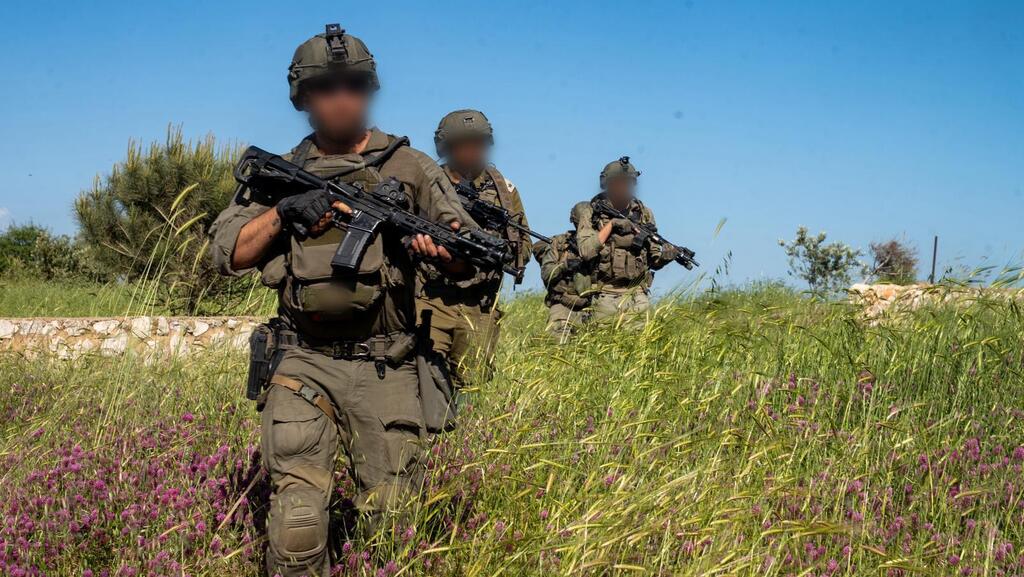
The challenge is not only recruiting soldiers, but keeping combat troops in the military; IDF forces in southern Lebanon
(Photo: IDF)
Under Chief of Staff Lt. Gen. Eyal Zamir, the IDF is now undergoing a major transformation in force buildup, and surprisingly, much of it is taking place under the radar. According to senior military officials, the active-duty and reserve combat forces have grown by tens of percentage points since the October 7 massacre. On the ground, that means more battalions, more brigades, more reserve formations and more troops holding sectors and borders.
The paradox is glaring: How can the military be expanding while the IDF itself says it is short about 12,000 soldiers, including roughly 7,500 combat troops? As will become clear, the answer is complex. The military is managing its existing manpower in an entirely new way, directing more soldiers into combat roles, dramatically expanding the reserve pool and dealing differently with troops suffering from burnout, thousands of whom left the military during the war.
The IDF has concluded that its main challenge is not necessarily getting recruits through the induction center, but keeping them in the system and using them effectively.
The key: The reserve pool
Before October 7, the Gaza Division consisted of two regional brigades and four battalions. Today, two division headquarters, five brigades and 16 battalions are deployed along the border and inside the Gaza Strip.
In the north, on the eve of the war, two regional brigades and four battalions operated under the Galilee Division. Today, two divisions, eight brigades and 15 battalions are deployed in the sector. Along the Syrian border, there was one brigade before the war. Today there are three, and they also hold territory beyond the border fence.
On the eastern frontier, the IDF established the Gilad Division to secure the porous Jordan Valley border, with five new reserve brigades. The Armored Corps is also undergoing a transformation. Before October 7, an average tank battalion consisted of two companies of conscripts, while the third company was made up of reservists. Since the war began, the IDF has fully staffed the battalions and created nine new companies to fill the gaps.
The burden takes a toll on multiple fronts; IDF reservists
(Photo: Shutterstock)
The reserve issue is probably one of the war's most important lessons. Before 2023, the IDF routinely discharged reservists from service, while those who remained received little training because of budget cuts. Since the war began, the reserve pool has grown by about 36% through the cancellation of exemptions, recruitment of volunteers, the return of former service members and call-up orders. In all, more than 100,000 people have returned to the system this way.
New formations have been established accordingly, including the Gilad Division, the Hashomer Brigade, local defense battalions, battalions in the David Brigade, tactical air defense units, rapid-response squads and others. It is important to stress that these are not 100,000 combat troops, but the figure is significant. The IDF realized that the manpower pool it had was simply not enough.
But even those tens of thousands do not solve the problem of burnout. Before the war, reserve units were activated in limited rotations, sometimes for only a few weeks spread over several years. During the Swords of Iron war, by contrast, some reservists accumulated as many as 600 days of service in less than three years, an extraordinary figure by any measure.
Service of that length causes damage across every part of a reservist's life, from strain on the family to lost income and harm to careers or academic studies, even before taking into account the psychological and physical toll.
The IDF estimates that one new regular battalion can eliminate the need to deploy about seven reserve battalions for routine operational missions. Indeed, in the current August recruitment cycle, the military began forming two new battalions, one in the Golani Brigade and one in the Nahal Brigade. Each will provide some additional breathing room for the reserve force.
Where are the Haredim going?
Creating additional regular battalions requires more recruits, presenting another challenge. The number of recruits is expected to rise by about 6% this year, partly because of demographic growth. The IDF is trying to make better use of that potential, and Haredi, or ultra-Orthodox, men are a prime example.
As recently reported, the number of Haredi men enlisting is expected to rise this year from about 2,800 to roughly 4,300. The figure includes several age groups of men who had previously received exemptions, ages 18 to 26.
That is a significant increase, but still far from full potential. About 14,000 Haredi men turn 18 each year. Even under the generous assumption that 7,000 of them are full-time Torah students, a similar number remain who, at least in theory, could be considered for enlistment and whose service even Haredi leaders are willing to discuss.
This is an important figure that the public does not always take into account. Media coverage often refers to "70,000 Haredi draft dodgers," even though most are no longer relevant to the military, much less to combat roles, because they are already in their mid-20s and are often married with several children.
The key will be reaching an agreement with Haredi leaders on drafting men who are not studying Torah and are still within the most effective age range for military service, 18 to 21. That will also require liberal Israeli society to recognize that it, too, will have to compromise and that its aspiration of "conscription for all" is unlikely to be fully realized.
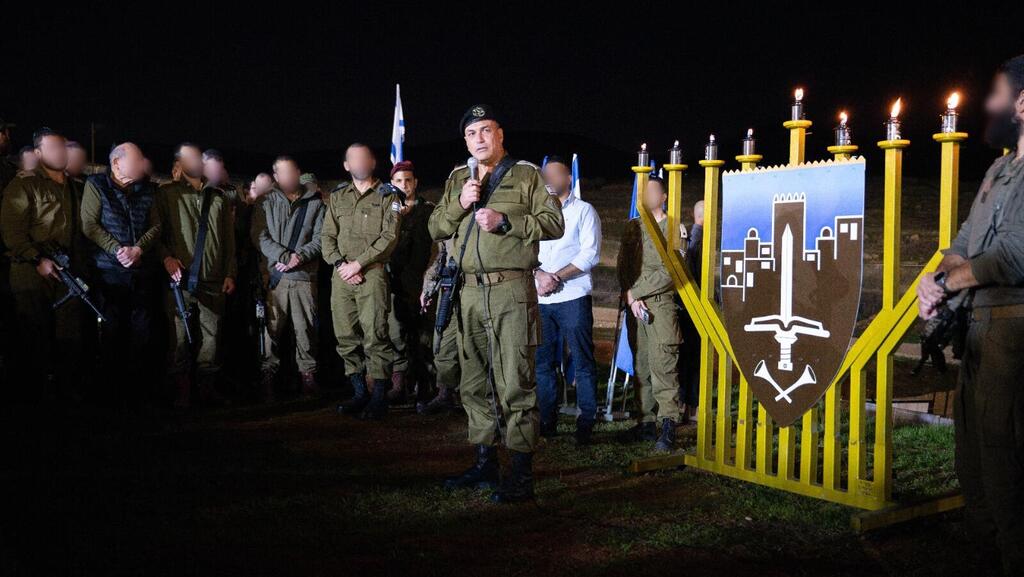
IDF Chief of Staff Lt. Gen. Eyal Zamir with soldiers from the Hasmonean 'Brigade'
(Photo: IDF)
In any case, the crucial issue is not necessarily how many Haredi men enlist, but where they serve. At present, only about 900 of the 4,300 expected recruits are slated for combat roles. Most prefer technological positions that can provide them with a profession for the future, sometimes within frameworks that do not require uniforms, such as the Kodkod program.
Those are necessary roles for a military that relies increasingly on technology, but they do not help fill empty battalions. One example is the Haredi Hasmonean "Brigade," which is called a brigade even though it currently has only one fully operational battalion.
The IDF hopes rabbinic opposition will ease and that Haredi integration into the military can be formally arranged. It understands that in the Haredi enlistment debate, legitimacy matters as much as the numbers. When a Haredi teenager knows military service can be discussed at home without the family feeling it is breaking a taboo, a new path to enlistment opens.
That is why the increase in Haredi recruitment is only a beginning. The goal is not simply to have more Haredim in the IDF, but more of them in meaningful service, particularly combat roles. That trend can continue through agreement, but without one, incentives and sanctions will have to remain part of the policy. This year's figures suggest that approach may already be having an effect.
Fewer Profile 21 exemptions, more dropouts
Another notable figure is the decline over the past three years in the number of mental health exemptions granted before enlistment. About 10,000 young people received Profile 21, an exemption from military service, in 2023. The figure fell to about 9,000 in 2024 and about 8,200 in 2025.
But there is another side to the equation. The IDF is seeing an increase in the number of soldiers discharged during their service and dropping out of the system. After the grinding months of war, about 8,000 regular-service soldiers leave each year on grounds of "incompatibility."
The IDF is trying to change that reality and make clear that not every soldier who struggles needs to leave the military. The "Na'arei David" program is designed to identify soldiers at risk of dropping out and intervene before they leave. Another body, known as the Service Directorate, is intended to retain high-quality soldiers who need to switch roles during their mandatory service rather than lose them altogether.
The issue is even more critical among midlevel career officers. Every new unit or battalion requires a battalion commander, company commanders and other officers, but this layer of command has already been carrying an extraordinary operational burden for years. Retaining them is critical, and the ability to offer them a future and greater stability is an integral part of force buildup.
The IDF is also seeing a rise in motivation for combat service after years of decline. Demand for combat tracks is increasing, more prospective recruits are reporting for elite-unit screening days and the number of women entering combat roles has risen from about 500 in the past to roughly 5,000. At the same time, the number of religious women enlisting has climbed to about 4,000, partly at the expense of civilian national service.
But motivation should not be confused with military strength. A young person who wants to serve in combat is not yet a combat soldier. Before becoming one, he or she must complete basic training and advanced training and make it through injuries, incompatibility, attrition and changes in assignment.
The conclusion is that force buildup begins long before enlistment itself. Two trends intersect here: increased motivation for combat service and unprecedented demand for gap-year volunteer programs and pre-military academies.
Since October 7, the number of young people choosing to postpone military service for a year to volunteer in their communities, lead social initiatives and prepare themselves for military service has risen significantly. But not every young person wants or is able to defer enlistment for a pre-military academy, a service year or a hesder yeshiva program. That is why Maj. Gen. Dado Bar Kalifa, head of the IDF Personnel Directorate, has led an expansion of shorter preparation programs.
One example is the "Haznek" program, which has been expanded in cooperation with the Defense Ministry's Social-Defense Directorate and other organizations. It provides mental, physical and values-based preparation before enlistment without requiring participants to postpone their military service.
The idea is simple: Take a young person several months before enlistment and give them tools that will increase their chances of succeeding in the military. That makes it possible to reach populations that previously did not choose traditional pre-military academies or preparation programs.
After a pilot involving about 450 participants, roughly 8,000 teenagers are taking part in Haznek this year. Overall, about 42,000 young people are now undergoing some form of preparation for military service, with a target of 60,000.
This is not simply another educational program. It is an integral part of force buildup. When a young person arrives at the induction center better prepared and more committed, the chances increase that he or she will become a combat soldier and remain in the military.
The most publicly sensitive change the IDF is seeking concerns the length of mandatory service, whose extension has become almost unavoidable. The IDF trains a soldier for months and invests money, time and resources in that soldier, and therefore wants to restore mandatory service for men to three years. But the initiative was blocked by the government, leaving the term at 32 months.
The contradiction is difficult to ignore: On one hand, the state is demanding that the IDF hold more sectors. On the other, it is not providing the manpower needed to do so. The math simply does not add up.
An October 6 budget
The IDF is rebuilding itself, but it is still too early to speak of a solution to the manpower crisis. The gap will not be closed by one more program or another recruitment campaign. The state must make decisions.
Zamir warned the Cabinet that without an immediate solution to the manpower shortage and the burnout of those serving, "the IDF will collapse in on itself." The warning came against the backdrop of a sharp increase in missions and mounting pressure on active-duty troops and reservists.
Those pressures are directly harming military discipline and, in extreme cases, have led to refusals to obey orders and open acts of insubordination. Military studies and psychological analyses indicate that when units remain in intense combat for extended periods without sufficient rest, troops undergo a process of "recalibration": Their attention narrows to survival, while the perceived legitimacy of administrative orders, routine disciplinary rules and authority from rear-echelon commanders erodes sharply. A clear example of that link came last month in what became known as the "Givati mutiny" at Sde Teiman.
Ultimately, the effort to expand the IDF cannot be understood without considering the financial dimension. The cost of reserve duty since the beginning of the war has already reached 100 billion shekels, and without a sufficiently large standing force, that expense will continue.
At the same time, the military is required to increase its order of battle, deploy across new fronts, expand infrastructure and replenish stocks, yet its budget framework has still not been adjusted accordingly.
Put simply, the IDF leadership has been asked to build a post-October 7 military with an Oct. 6 budget and no certainty about the future.
In the end, the most important number for the IDF is not how many battalions have been created, but how many will be fully staffed, trained and available on the day the next war breaks out.
The lesson of the Swords of Iron war is not that quantity replaces quality, nor that technology replaces mass. The IDF needs all three.
That will require an effective conscription law, a regulated reserve system, an adjusted budget and, above all, a decision on the length of mandatory service. The war taught the IDF, at the cost of lives, what it needs to defend the country. Now the state must make the decisions.