

Elizabeth Tsurkov, the Israeli researcher released last month after more than two years in captivity by an Iraqi militia, responded Wednesday to harsh criticism from Israelis following a controversial post in which she expressed sympathy for Palestinians on the anniversary of the October 7 Hamas attack.
“Israelis accused me of treason and wished I’d be kidnapped again,” Tsurkov wrote in a post on X (formerly Twitter), attaching screenshots of several hostile comments she received from Israeli users.
Gallery
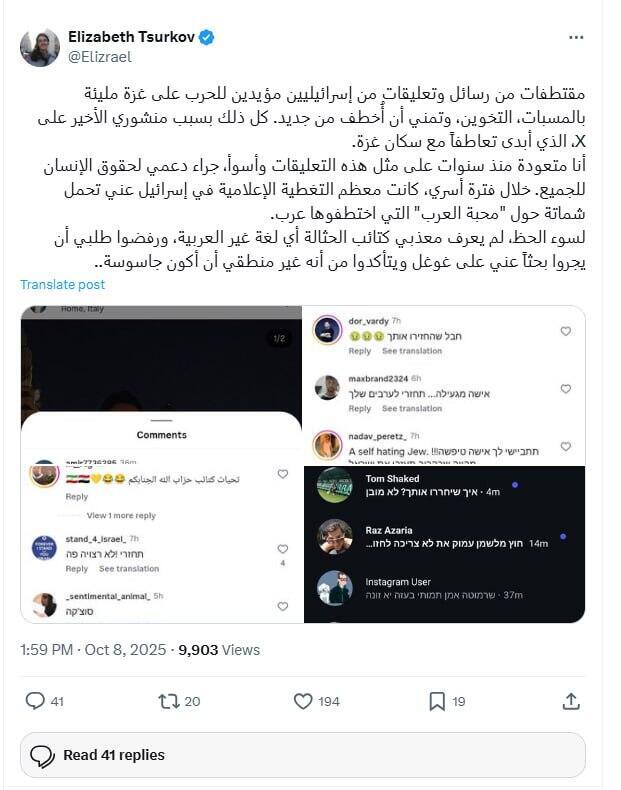
Elizabeth Tsurkov shares screenshots of hostile messages she received from Israelis after posting in support of Palestinians on the second anniversary of the October 7 Hamas attack. Tsurkov, recently freed after over two years in captivity in Iraq, said she was accused of betrayal and received comments wishing she’d be kidnapped again
(Photo: from X)
Tsurkov, 38, who holds dual Israeli-Russian citizenship and had been living in the U.S. as a Ph.D. student at Princeton University, was abducted in Baghdad in March 2023 during a research trip. She was reportedly held by Kataib Hezbollah, a powerful Iranian-backed militia, although the group denied responsibility. She is believed to have entered Iraq using her Russian passport, in what was not her first visit to the country.
In an earlier post marking two years since the war in Gaza began, Tsurkov recounted hearing about the Hamas-led October 7 massacre from captivity and criticized leaders on both sides, writing in Arabic: “May God bring relief to the people of Gaza — the hungry, the wounded, and the exhausted hostages. They are all paying a heavy price for the decisions of leaders who care only about staying in power.”
The post drew angry backlash in Israel, with commenters telling her “go back to your Arabs,” “you’re not wanted here,” and “shame on you, stupid woman.”
In a follow-up post, also in Arabic, Tsurkov wrote: “These are snippets of messages and responses from Israelis who support the war in Gaza — full of insults, accusations of treason, and hopes that I’ll be kidnapped again. All because I expressed sympathy for the people of Gaza.”
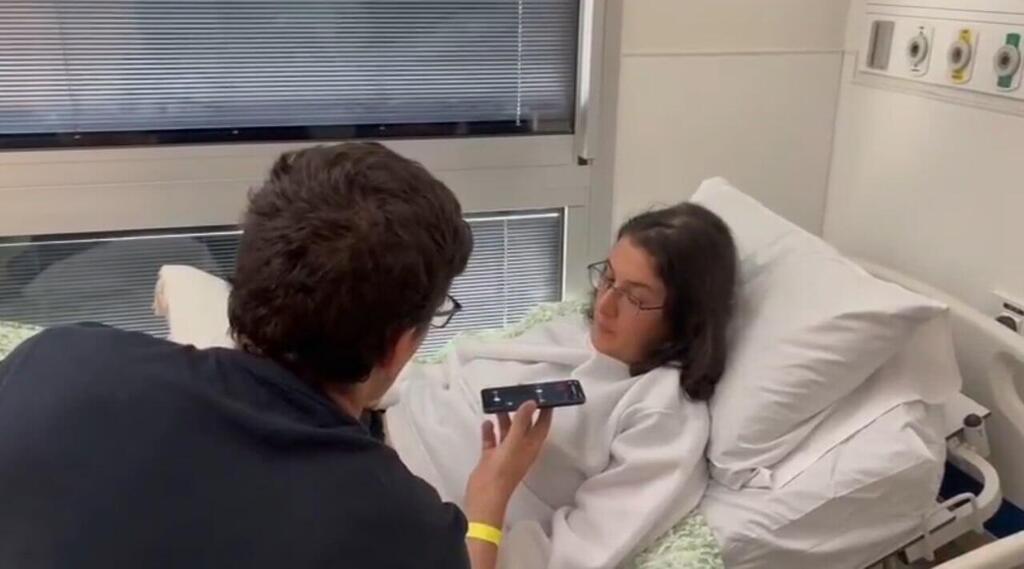
Elizabeth Tsurkov in the hospital
(Photo: from X)
She added that such reactions were not new to her. “For years, I’ve gotten messages like this — or worse — because I support human rights for everyone,” she wrote. “During my captivity, much of the media coverage in Israel expressed satisfaction that an ‘Arab lover’ was kidnapped by Arabs.”
Tsurkov said her captors spoke only Arabic and refused her requests to look her up online, which might have convinced them she was not a spy. “Unfortunately,” she wrote, “these scum didn’t know any language but Arabic and refused to Google me to confirm I wasn’t a spy.”
Following her release and return to Israel, Tsurkov spoke with Prime Minister Benjamin Netanyahu from Sheba Medical Center, where she was being treated. “I went through difficult things — torture in Iraq,” she told him. “It will take time to recover. I want to thank the medical teams and the Hostage Directorate for their dedicated care.”
At the time, she also mentioned Gali and Ziv Berman, who were kidnapped from Kibbutz Kfar Aza on October 7. “Yesterday was their birthday,” she said. “Birthdays are the hardest days in captivity. I wish for the speedy return of all the hostages to their families.”