


Prime Minister Benjamin Netanyahu is expected to share with U.S. President Donald Trump Israel's fears that Iran is accelerating the rebuilding of its ballistic missile program and nuclear infrastructure, as well as producing missiles at an unprecedented rate, according to a report by NBC News.
The two leaders are scheduled to meet later this month at Trump’s Mar-a-Lago estate in Florida. Israeli sources cited in the report say Netanyahu plans to outline several military options for responding to Iran’s actions, including a potential Israeli strike or a joint operation with the United States.
Gallery

(Photo: GPO, REUTERS/Evelyn Hockstein, Iranian Leader's Press Office - Handout/Getty Images, IDF)
According to NBC, Iran is now capable of producing up to 3,000 ballistic missiles per month unless disrupted. These missiles are being built using liquid fuel rather than solid fuel, reportedly because Israeli strikes destroyed Iran’s key manufacturing equipment for solid fuel, specifically planetary mixers. Despite this setback, Iran is working to restore its missile production capacity and repair damaged air defense systems.
The Israeli concern, officials said, is that Iran is also rebuilding uranium enrichment facilities struck during U.S. strikes earlier this year. However, the immediate threat is seen as Iran's efforts to rehabilitate its air defenses and restore large-scale ballistic missile production.
Netanyahu is expected to argue that these developments pose a significant threat not only to Israel but to regional stability and U.S. interests as well. He will reportedly urge Trump to ensure that any future U.S.-Iran talks address these issues directly.
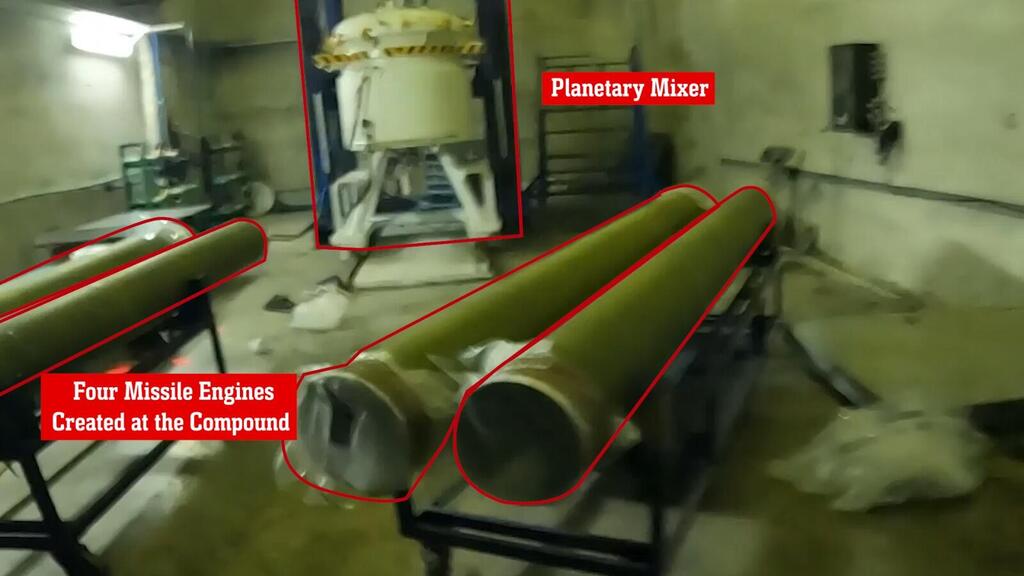
A planetary mixer and four missile engines located by Israeli forces during a commando raid in Syria, January 2025
(Photo: IDF)
In September, the Associated Press, citing satellite imagery, reported that Iran had begun rebuilding its missile manufacturing sites following Israeli strikes during June’s 12-day war. Yet Iran is still believed to lack the critical planetary mixers needed to produce solid-fuel missiles, an essential component for modern missile capabilities.
Solid fuel dramatically enhances missile readiness, allowing for rapid launches without the lengthy and vulnerable fueling process required by liquid-fuel systems. Missiles with solid fuel can remain hidden in underground shelters and launch within minutes, while also offering improved range and accuracy.
Israel views these technological developments, if left unchecked, as a significant shift in Iran's military posture, one that could demand preemptive action.