

Prime Minister Benjamin Netanyahu is preparing to present U.S. President Donald Trump with new military options for strikes against Iran, including potential joint operations, amid growing concern over Tehran’s expanding ballistic missile program, NBC News reported Saturday.
Israeli officials are increasingly alarmed by Iran’s reported ramp-up in missile production, and satellite imagery appears to show efforts to assess damage at key facilities targeted in last summer’s U.S. strikes. According to a source with direct knowledge of Iran’s missile development, and four former U.S. officials briefed on the matter, Israeli leaders plan to raise these concerns with Trump in an upcoming meeting.
Gallery
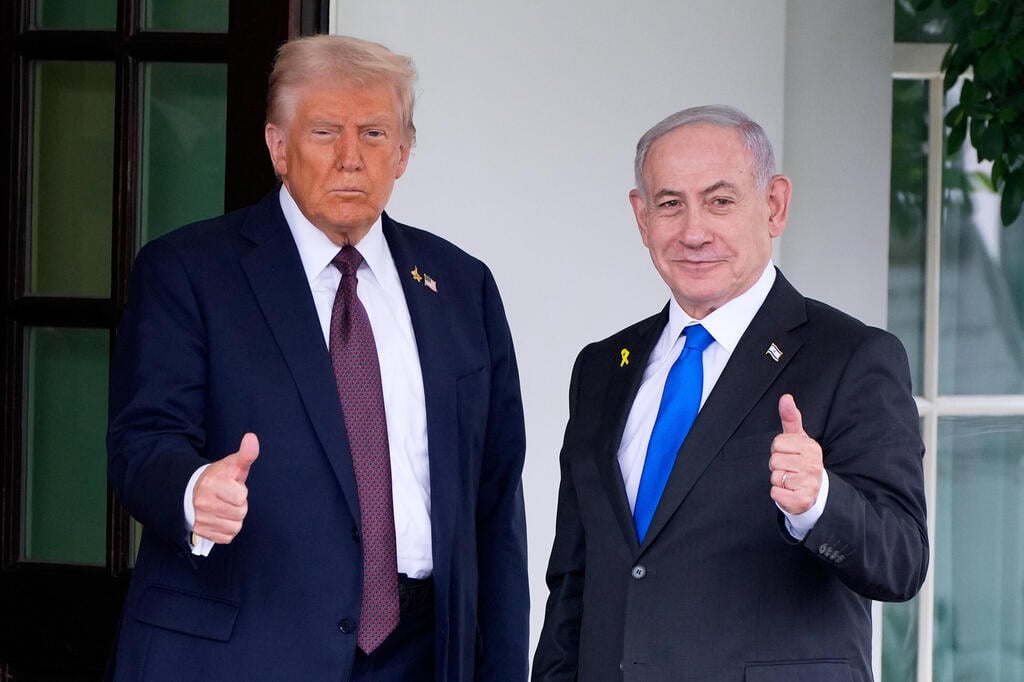
US President Donald Trump and Prime Minister Benjamin Netanyahu
(Photo: (AP Photo/Evan Vucci)
The meeting between Netanyahu and Trump is expected to take place later this month at Mar-a-Lago in Florida. Israeli officials reportedly intend to argue that Iran’s missile expansion presents a regional threat that could require swift action. Netanyahu is likely to present Trump with multiple options, including a unilateral Israeli strike, limited U.S. support, a joint operation or a U.S.-led attack, similar to scenarios discussed prior to the coordinated strikes in June.
According to the officials, Iran is also attempting to rebuild uranium enrichment facilities damaged during U.S. attacks, including the Natanz nuclear site. New satellite images show Iranian workers placing panels over what remains of the drone defense structure at the site’s Pilot Fuel Enrichment Plant (PFEP), likely to conceal the extent of destruction. The Washington-based Institute for Science and International Security (ISIS) wrote that this effort indicates a desire to examine the wreckage away from outside scrutiny.
The PFEP had housed a small but significant quantity of highly enriched uranium, according to ISIS. While not large compared to Iran’s total stockpile, analysts consider it noteworthy.
The officials also voiced concern over Iran’s efforts to restore its air defense systems and ramp up ballistic missile production. One Israeli source warned that Iran could eventually reach a production rate of 3,000 missiles per month unless checked. The sheer volume of such weapons, they said, could allow Iran to better shield its nuclear sites and accelerate the revival of its nuclear program.
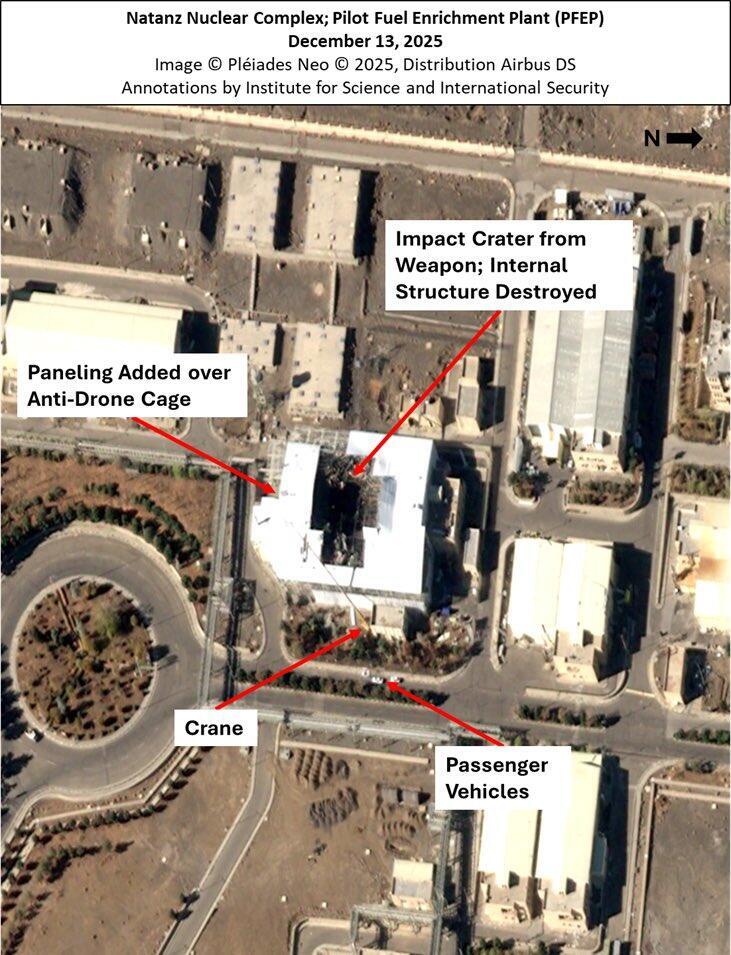
This annotated satellite image taken Dec. 13, 2025, shows damage at Iran’s Natanz nuclear complex, including the Pilot Fuel Enrichment Plant, following June's joint US-Israeli attacks. The image highlights a weapon impact crater, a destroyed internal structure, new paneling placed over an anti-drone cage and nearby vehicles and a crane
“There is no real question after the last conflict that we can gain aerial superiority and can do far more damage to Iran than Iran can do to Israel,” said a former senior Israeli official. “But the threat of the missiles is very real, and we weren’t able to prevent them all last time.”
The fragile ceasefire between Israel and Hamas is also expected to be a key topic during the Trump-Netanyahu meeting. Two former Israeli officials suggested that lingering U.S.-Israeli tensions over Netanyahu’s handling of the Gaza ceasefire could dampen Trump’s appetite for new military action in Iran.
U.S. and Israeli analysts believe that Iran’s ability to protect enrichment sites and its ongoing funding of proxy forces across the region could enable Tehran to rebuild its nuclear capabilities faster than anticipated.