


The news of Ali Khamenei’s death was withheld for many hours by the world’s most influential American newspaper, The New York Times, even after Israel confirmed the assassination. His fate was “disputed,” the paper wrote. Only after President Donald Trump made an unequivocal statement did the respected newspaper inform its readers of the death, at 86, of “Iran’s supreme leader, a hard-line cleric who made Iran a regional power.”
It is difficult to imagine a more misleading, erroneous and infuriating headline. Let us begin with the facts: He was not a “cleric” but a man posing as one, and he did not “die” but was eliminated in a massive Israeli Air Force bombardment. Most puzzling is the assertion that Khamenei “turned Iran into a regional power.” Hardly. Iran was a regional power under the Persian shah. As Khamenei’s authority and influence grew at the top of Iran’s dictatorship, the country’s economic, social and geopolitical standing weakened and deteriorated, ultimately collapsing.
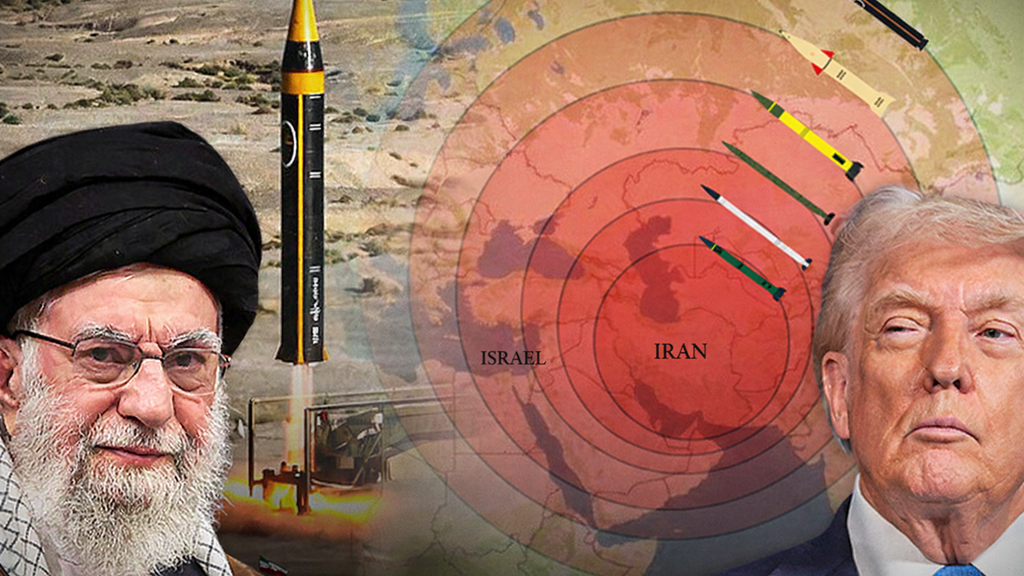
(Photo: REUTERS/Jonathan Ernst, KHAMENEI.IR/AFP)
As retired Maj. Gen. Yair Golan put it, “Khamenei enslaved all of Iran’s wealth to finance terrorism. He was dangerous to the world, to his own people and to Israel.” One key figure illustrates the point: From the outbreak of Ayatollah Ruhollah Khomeini’s revolution in 1979 through 2024, Israel’s per capita GDP in constant dollars grew by 150 percent, while Iran’s fell by nearly 20 percent over the same period. In current dollars, according to World Bank data based on the official exchange rate, Israel’s per capita GDP today is 1,300 percent higher — 14 times greater — than Iran’s: about $4,000 in Iran compared with $55,000 in Israel. Based on the exchange rate used by currency traders in Tehran, Israel’s per capita GDP is dozens of times higher than Iran’s.
This, then, is Khamenei’s achievement: He set Iran’s economy back decades. Not only the economy but its influence as well. Iran in 2026 lacks significant military capabilities beyond launching missiles in the style of Saddam Hussein during the first Gulf War in January 1991. Experts estimated a decade ago that rebuilding Iran’s military would require an investment of $250 billion. In today’s terms, Iran’s armed forces are short some $400 billion that they do not have and will not have, as vast sums were squandered on a futile nuclear project now largely buried under rubble — buried forever.
Nor is the imperial title bestowed on the late Khamenei by The New York Times the only distortion. In the newspaper’s pages I read commentaries by prominent analysts who just two weeks ago mocked President Trump for brazenly breaking his promise to the protesting and slain Iranian people that “help is on the way.” Now that help has finally arrived, they angrily criticize him from the opposite position, 180 degrees removed, for launching what they call “optional wars.” Why, they ask in all seriousness, did Trump attack impoverished Iran rather than North Korea? The question is absurd on every level and not worth addressing.
 Sever Plocker Photo: Yair Sagi
Hatred of Trump — and I am far from being among his supporters — completely distorts the moral, strategic and historical judgment of respected and educated commentators and thinkers. Particularly infuriating are opinion pieces asking, “How dare Trump risk the life of a single American soldier” to eliminate Khamenei, written by liberals of Jewish descent.
These were the very arguments made by American and European isolationists against going to war with Hitler in the late 1930s: Why risk the life of a single American, Briton or Frenchman to stop Germany’s Nazi leadership? Better to speak with Mr. Hitler through diplomacy, through peaceful means. “I have brought peace for our time,” British Prime Minister Neville Chamberlain proudly proclaimed to cheering crowds upon his return in September 1938 from a historic meeting with Mr. Hitler in Munich.
He brought not peace but surrender, at the cost of tens of millions of lives, including 6 million Jews.