

Since the ceasefire collapsed, Iran has increasingly targeted U.S. allies across the region, though not always directly. In recent days, the war has spread across a wider arc of the Middle East, including Egypt, as Tehran and its proxies seek to destabilize global markets and pressure Washington to end its campaign against the Islamic Republic.
Two senior Iranian officials told The New York Times that the attacks were part of a phased plan developed secretly during the ceasefire. The strategy was to activate Iran’s proxies and gradually intensify their operations if the United States escalated its own strikes. The objective, according to the officials, was to make the war as costly as possible for President Donald Trump without drawing Iran into a direct confrontation it could not control.
Gallery
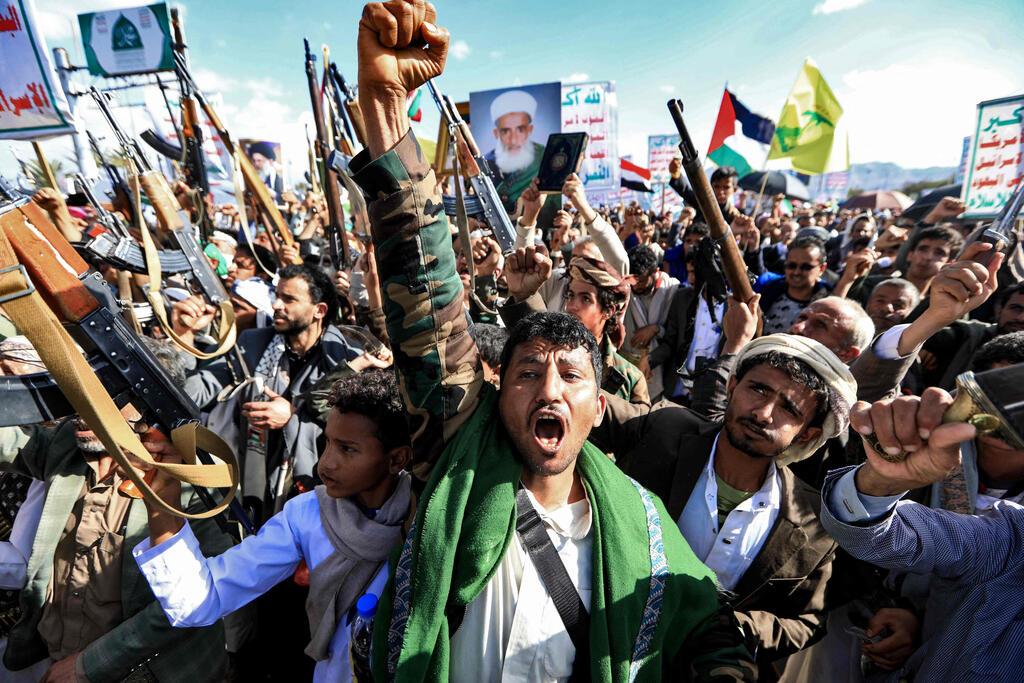
Houthi protesters in Sanaa, Yemen’s capital, rally in support of Iran and Hezbollah
(Photo: Mohammed Huwais/AFP)
Senior Quds Force commanders, the officials said, held online conferences with leaders from Hezbollah, the Houthis and Iraqi Shiite militias. Quds Force officers and advisers also operated alongside proxy forces on the ground, while the Revolutionary Guards worked to fill gaps left in Hezbollah’s ranks after the organization was badly weakened in the war with Israel. In Iraq, Iranian personnel operated from bases controlled by Shiite militias.
The United States and Saudi Arabia carried out joint strikes this week against militias in Iraq. Iranian media later published images of four men killed in the attacks, all wearing the green uniforms associated with the Quds Force, with their coffins draped in Iranian flags.
The New York Times noted that despite the severe blows Iran’s proxies have suffered since October 2023, recent developments show they still retain the ability to regroup, create instability and provide Tehran with leverage. Each proxy, however, operates with a different degree of independence. The Houthis are considered the most autonomous, Hezbollah coordinates most closely with Iran, and the Iraqi Shiite militias fall somewhere in between.
Experts told the newspaper that the attacks were designed to include missile and drone launches at bases housing U.S. forces while avoiding a direct confrontation with American or Israeli troops that could provoke a major strike on Iran itself. A recent attack on a Saudi oil facility pulled Riyadh into the conflict, but Saudi retaliation was directed at Iraqi militias rather than Tehran.
Iran’s proxy strategy is also aimed at restricting regional oil exports, pushing up fuel prices in the United States ahead of the midterm elections and cutting revenues for Washington’s Arab allies. Tehran appears to believe that sustained economic pressure could make neighboring states more receptive to its demand for control over traffic through the Strait of Hormuz.
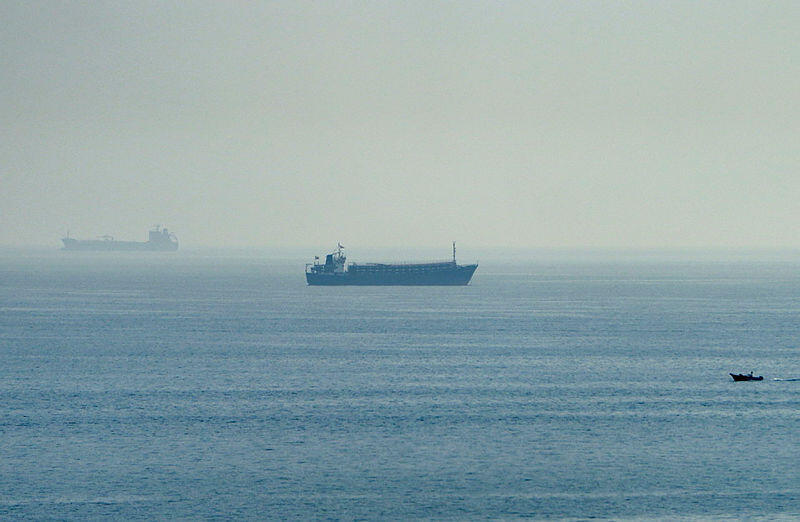
Strait of Hormuz
(Photo: REUTERS/Stringer)
With much of Saudi Arabia’s oil exports through Hormuz disrupted, the kingdom has shifted more crude through a pipeline crossing its territory to the Red Sea. From there, the oil passes through the Bab el-Mandeb Strait, the narrow waterway separating Yemen from Africa. The Houthis responded by declaring a maritime blockade against Saudi Arabia on July 20 and launching missiles and drones to enforce it.
The threat then widened to the Suez Canal after drones struck tankers in Egypt. Iran denied responsibility for that attack.
Experts said ideology remains another major driver. Iran built its proxy network around two principal goals: forcing the U.S. military out of the region and inflicting damage on Israel, while using militias as a buffer against direct attacks on Iranian territory.
Neither strategy has fully succeeded. Bashar Assad’s fall in Syria and the weakening of Hamas and Hezbollah have sharply reduced Tehran’s room for maneuver. Even so, the Quds Force appears to be betting that a coordinated proxy campaign can still raise the economic and political cost of the war for Washington without crossing the threshold into an all-out confrontation.