

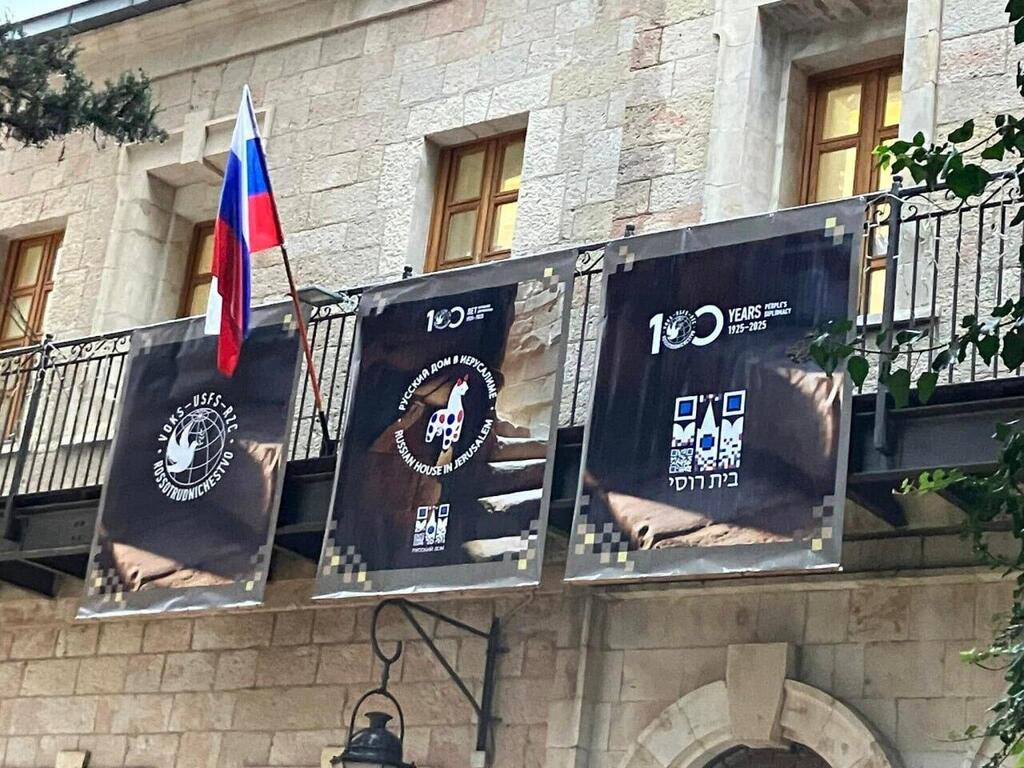
Russia’s embassy in Israel this week inaugurated a new branch of “Russia House” at the Sergei Courtyard in Jerusalem, a property owned by the Russian Federation, in a move Moscow says is aimed at expanding its cultural and spiritual presence in the Holy Land.
The opening ceremony included the raising of the Russian flag, decorations tied to Russia’s New Year traditions and the screening of a documentary on Russia’s historical presence in the region. The Jerusalem site joins an existing Russia House in Tel Aviv, which continues to serve as the organization’s main hub in Israel.
(Photo: Russian embassy in Israel)
Diana Meged, head of Russia House in Israel, said activities at the new Jerusalem branch will focus on strengthening Russia’s presence, drawing on the site’s historical significance. Speaking to Russia’s state news agency RIA Novosti, she said the Sergei Courtyard — returned to Russian ownership in 2008 — was built in the late 19th century by the Imperial Orthodox Palestine Society and has long served as a focal point for Russian religious and diplomatic activity.
“The location defines the concept,” Meged said, adding that Russia’s cooperation agency aims to bring together the work of Russia’s spiritual, diplomatic and historical organizations in Israel under one platform.
Russian Ambassador to Israel Anatoly Viktorov said the new center would bolster humanitarian and spiritual ties between Russia and the Holy Land.
“Russia is actively restoring and strengthening its cultural and spiritual influence in the Holy Land,” Viktorov said. “The opening at Sergei Courtyard symbolizes the continuity of our history and Russia’s return to its roots.” Foreign diplomats and leaders of Christian denominations in Jerusalem attended the event.
Russia House in Tel Aviv has operated for several years, hosting lectures, cultural programs and meetings with civil society groups. However, the opening of a second branch in Jerusalem has drawn scrutiny in Israel, particularly ahead of national elections.
Social activist Alex Tenzer said the timing was notable, arguing that Russia has made no secret of its intention to expand its influence in the Holy Land. He pointed to past statements by Russian President Vladimir Putin noting Israel’s large Russian-speaking population and to warnings by Israel’s state comptroller and security services about foreign interference in elections.
Israeli officials have previously accused Russia of attempting to influence elections through Russian-language media and social networks aimed at Russian-speaking voters. That community is estimated to represent a significant political bloc.
At the same time, analysts note that Russia’s influence among Russian-speaking Israelis has declined since Moscow’s invasion of Ukraine and amid criticism in Israel over Russia’s stance toward Hamas. Some observers view the Jerusalem opening as an attempt to rebuild influence, though they question how effective it will be under current political and regional conditions.