

Prime Minister Benjamin Netanyahu said Thursday he has instructed officials to begin direct negotiations with Lebanon “as soon as possible.” The talks will be led by Israel’s ambassador to Washington, Yechiel Leiter, and are expected to take place under fire, with continued rocket alerts in Israel due to attacks from Lebanon. An Israeli official said the discussions are expected to begin next week at the State Department in Washington.
Netanyahu said the decision followed “repeated requests from Lebanon to open direct negotiations with Israel.” The directive was issued at a cabinet meeting Wednesday. According to Netanyahu, the talks will focus on disarming Hezbollah and normalizing relations between Israel and Lebanon. “Israel welcomes the Lebanese prime minister’s call today to demilitarize Beirut,” he said. Ron Dermer, who previously handled the Lebanon portfolio, is not expected to take part in the initial phase.
Footage from the massive strike: 100 attacks in 10 minutes


Gallery
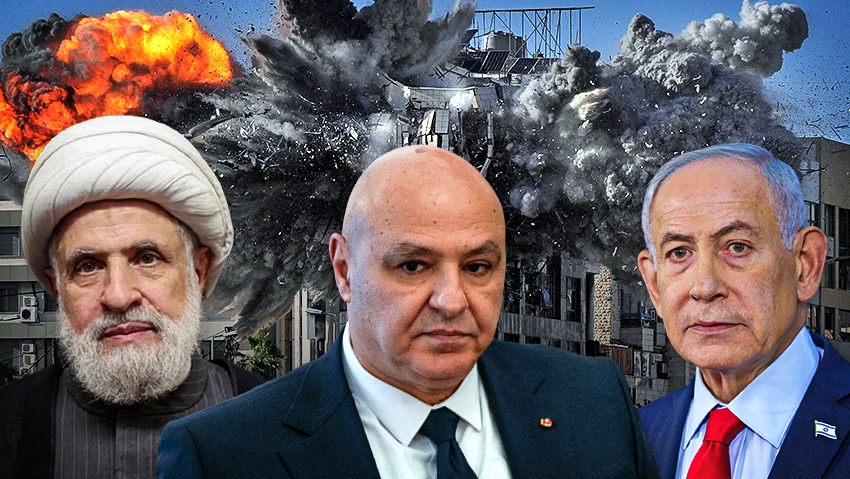
Netanyahu, Aoun and Hezbollah leader Naim Qassem; talks to focus on disarming the group
(Photo: Petros Karadjias/Pool via REUTERS, Shalev Shalom, REUTERS/Mohammad Yassine)
A senior Lebanese official told Reuters that Lebanon supports a temporary ceasefire to enable talks with Israel and needs the United States as a guarantor of any agreement. It remains unclear who will represent Lebanon. Israeli officials initially assessed it would be Lebanon’s ambassador to Washington, Nada Moawad, but Lebanese media reported that the envoy leading the country’s ceasefire committee delegation may instead head the team.
In Israel, officials expressed hope that efforts to disarm Hezbollah would succeed through both diplomatic and military means. The military has acknowledged in recent weeks that the objective cannot be achieved through force alone, as Israel does not plan to occupy all of Lebanon up to its northern border.
Lebanon’s army is widely seen as too weak to disarm Hezbollah across the country and has struggled to do so even in southern Lebanon. Recent heavy rocket fire from the south toward Israel — two months after the Lebanese army declared the area south of the Litani River cleared of weapons — has underscored those limitations. Even if an agreement is reached, it remains unclear who would enforce it on the ground against Hezbollah, which, though weakened, still commands tens of thousands of fighters and significant weaponry.
Lebanon first proposed direct negotiations with Israel last month, saying it had begun assembling a delegation. The initiative was promoted by President Joseph Aoun, who, according to reports, signaled willingness to pursue normalization with Israel — a stance long considered unthinkable and reflecting growing internal opposition to Hezbollah.
Israel did not formally respond to Aoun’s proposal at the time. Lebanese officials said the initiative drew little interest from Israel and the United States, citing Beirut’s inability to restrain Hezbollah over the past year and prevent renewed attacks on March 2, which undermined its credibility.
A Lebanese official told Reuters that when Beirut approached Washington last month to propose talks, it was rebuffed. “The Americans said 2025 was our window to confront Hezbollah and we didn’t do it, so there’s nothing they can do,” the official said.
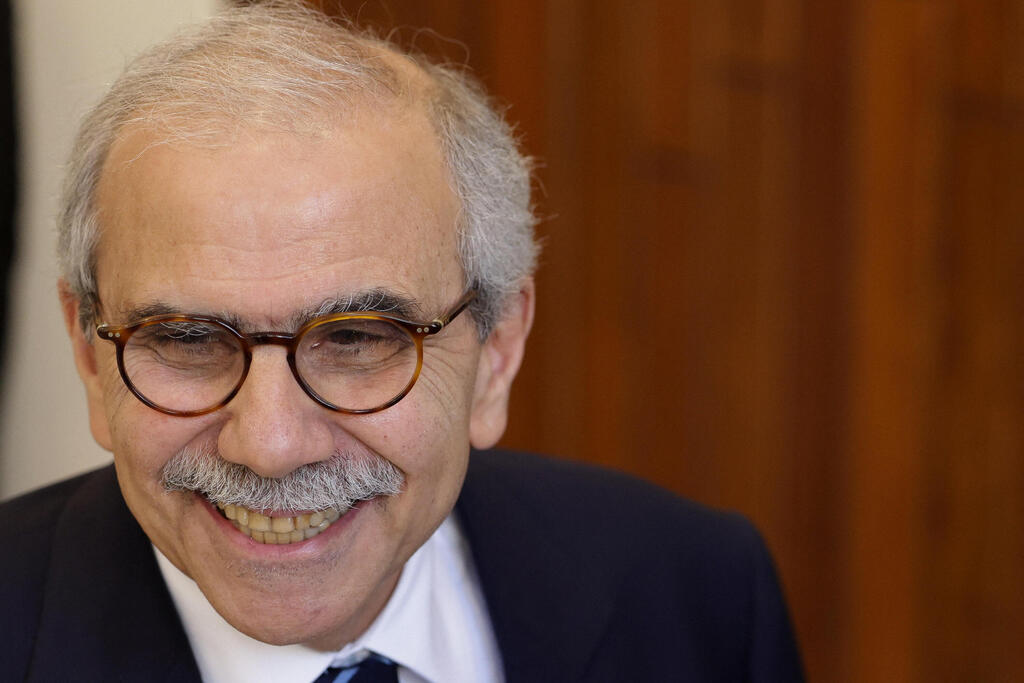
Lebanese Prime Minister Nawaf Salam
(Photo: REUTERS/Emilie Madi)
Since Hezbollah joined the war alongside Iran, Lebanese officials have taken unprecedented steps against the group, including declaring that all Hezbollah military activity would be banned and announcing the expulsion of Iranian Revolutionary Guard personnel. An attempt to expel Iran’s ambassador failed, but Prime Minister Nawaf Salam on Thursday ordered the effective demilitarization of Beirut, directing security forces to consolidate all weapons under state control and strictly enforce the law.
Netanyahu’s decision comes amid growing international pressure on Israel to halt its strikes in Lebanon, both due to rising casualties and destruction and Iran’s warning that it will not attend talks with the United States in Islamabad without a ceasefire in Lebanon — a condition it says is part of its agreement with Washington. Germany and Austria, among Israel’s closest allies in Europe, have called for a halt, joined by strong condemnations from Italy, France and Spain.
The Israeli military continues to operate across Lebanon by air and on the ground. On Wednesday, it announced the launch of Operation Eternal Darkness, which began with strikes on more than 100 targets in 10 minutes. Defense Minister Israel Katz said more than 200 militants were killed in the attacks.
Netanyahu said Thursday that Israel will continue striking Hezbollah “with force, precision and determination,” noting the killing in Beirut of Ali Youssef Harshi, a close aide to Hezbollah leader Naim Qassem. “Our message is clear: Whoever acts against Israeli civilians will be targeted,” he said.
Footage: Traffic jams in Dahieh after evacuation warning, today
Lebanon has not released a final death toll, but Health Minister Rakan Nassereddine said at least 203 people were killed and more than 1,000 wounded.
Condemnations of the Israeli strikes have also come from Arab states including Egypt, Oman and the United Arab Emirates, though the strongest opposition has come from Lebanon and Iran, whose officials have threatened retaliation and withdrawal from negotiations.
Lebanon’s leadership, led by President Aoun and Prime Minister Salam, faces a dilemma. On one hand, it seeks inclusion in a broader ceasefire to halt the fighting triggered by Hezbollah’s involvement. On the other, it is trying to distance itself from Iranian influence and assert independent decision-making. For now, Lebanon appears to have little choice but to align with a U.S.-Iran framework to secure a ceasefire before pursuing its own course.
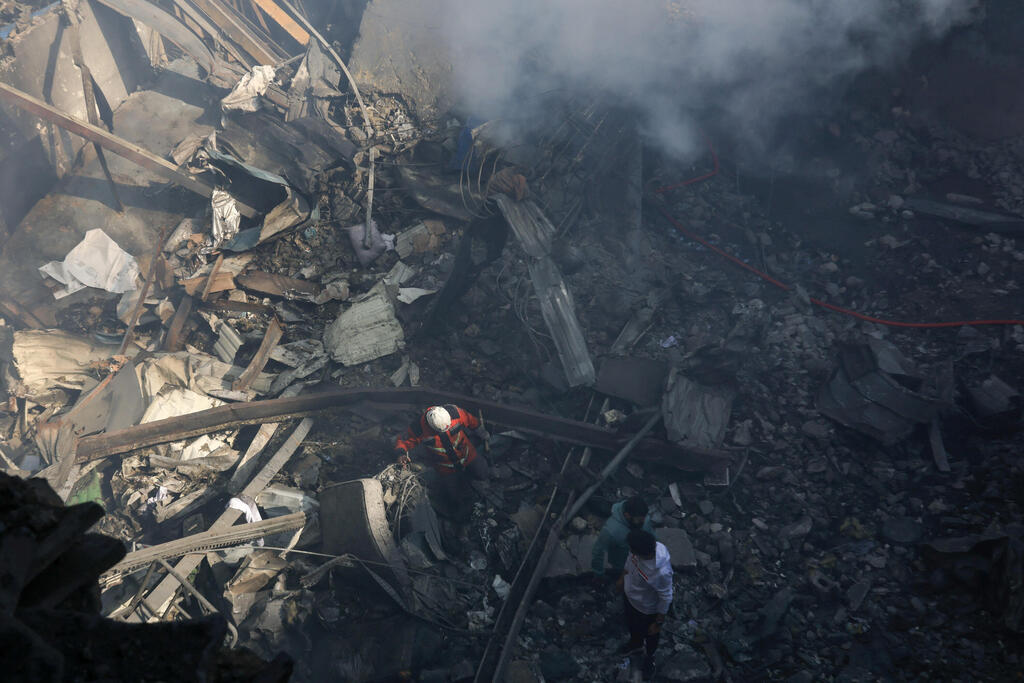
Damage from strikes in Beirut, yesterday
(Photo: REUTERS/Raghed Waked)
Aoun said during a cabinet meeting that efforts are underway to secure a ceasefire and open negotiations. “We are a sovereign state, and the state alone conducts negotiations. We will not accept anyone negotiating on our behalf,” he said.
While Lebanon’s leadership has condemned the Israeli strikes and plans to file an urgent complaint with the U.N. Security Council, it has also expressed anger at Hezbollah for dragging the country into renewed conflict. Foreign Minister Youssef Rajji said, “There is great anger at Israel for killing innocent civilians, and also anger at those who hide among civilians and cause what is happening.”
Lebanon continues diplomatic efforts to be included in a ceasefire arrangement. Aoun said proposals for a ceasefire with Israel and the start of direct talks have begun receiving positive feedback. Salam has also held talks with regional leaders, including Pakistan’s prime minister, Shehbaz Sharif, thanking him for efforts that led to the ceasefire and urging him to ensure Lebanon is included. Pakistani officials, according to Lebanese reports, condemned Israeli strikes and affirmed efforts to support peace and stability in Lebanon.
First published: 19:51, 04.09.26