

The rare IDF strike in Yemen overnight between Sunday and Monday involved approximately 50 missiles and bombs, targeting, among other things, the cargo ship Galaxy Leader, which was hijacked by the Houthis in November 2023. The freighter, reportedly owned by Israeli businessman Rami Ungar, has since become a “symbol” of the Houthis in the Red Sea and has been used for terrorist activities in the region.
The Houthis, agents of the Iranian ayatollah regime in Yemen, seized the ship about six weeks after Operation Swords of Iron began, citing “Israel’s aggression against the Gaza Strip.” Since then, the “Israeli” vessel has become a tourist attraction. The IDF stated that “Houthi terrorist forces installed radar systems on the ship and use it to track vessels in international waters to advance Houthi terror activity.”
The Houthis take over the Galaxy leader cargo ship in the Red Sea


Initial reports of the hijacking of the ship—which was flying the Bahamian flag and was en route from Port Said, Egypt, to southern India—surfaced on November 19, 2023. The Houthis boarded the ship, which had 25 crew members on board, just four days after it set sail.
Although the ship is owned by Ungar's company, Ray Shipping, Israel quickly distanced itself. A spokesperson for the IDF declared the hijacking “a very serious incident on a global level” and emphasized the vessel carried an international civilian crew and was not Israeli-flagged.
Gallery

The Galaxy Leader was hijacked by the Houthis in the Red Sea shortly after October 7
(Photo: Owen Foley /Handout via REUTERS)

Visitors to the Galaxy Leader step on Israeli and American flags
(Photo: Khaled Abdullah/Reuters)
Officials in the Prime Minister’s Office accused Iran of orchestrating the hijacking and clarified that the ownership belonged to a British company operated by a Japanese firm, with crew from Bulgaria, Ukraine, the Philippines and Mexico—but no Israelis. They classified the incident as “another Iranian terror act” that marks an escalation in Tehran’s hostility toward the free world and raises international concerns about maritime security.
Houthi military spokesman Yahya Saree said after the hijacking that their naval forces conducted the operation in the Red Sea, captured an “Israeli ship,” and brought it ashore in Yemen. “The Houthis are treating the crew according to the values of Islam,” he warned, calling Israeli-linked vessels legitimate targets for the Houthi navy.
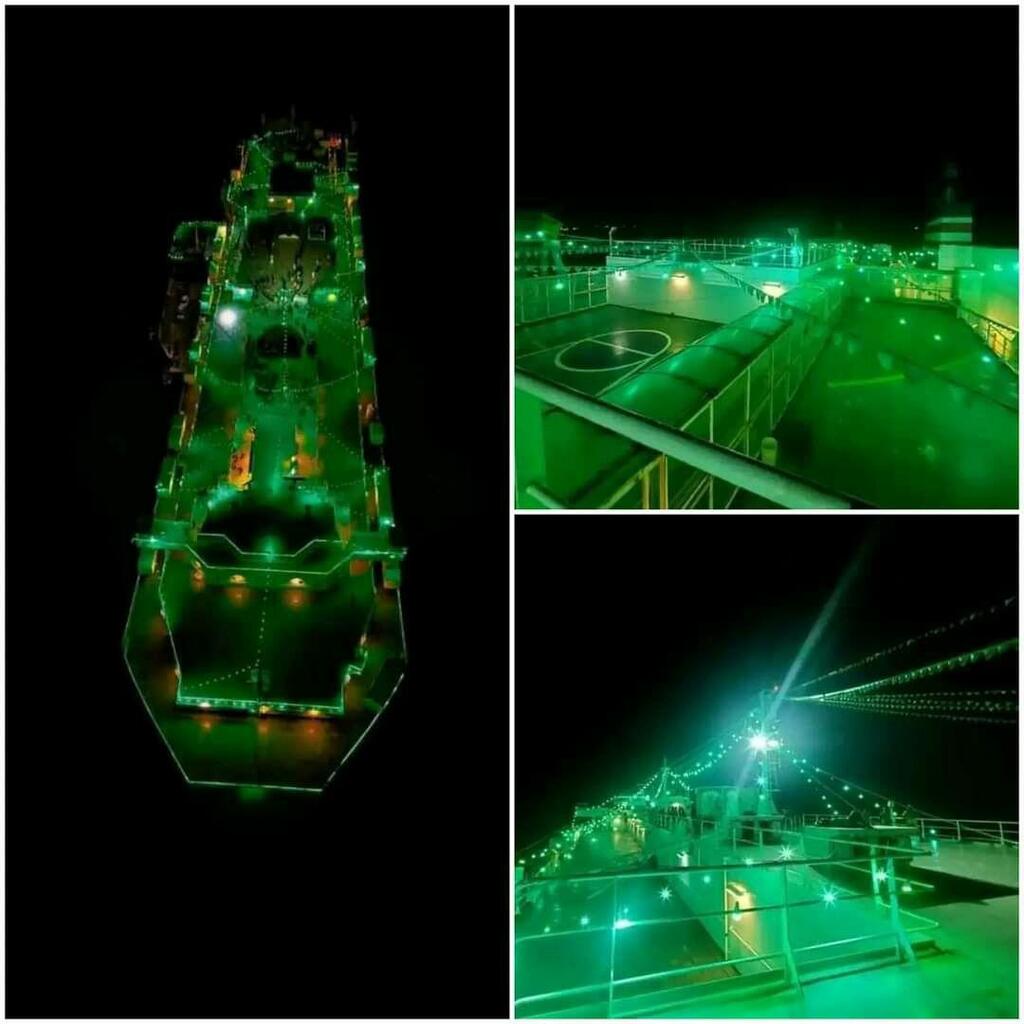
Galaxy Leader lit up in green in honor of the Prophet Mohammad's birthday
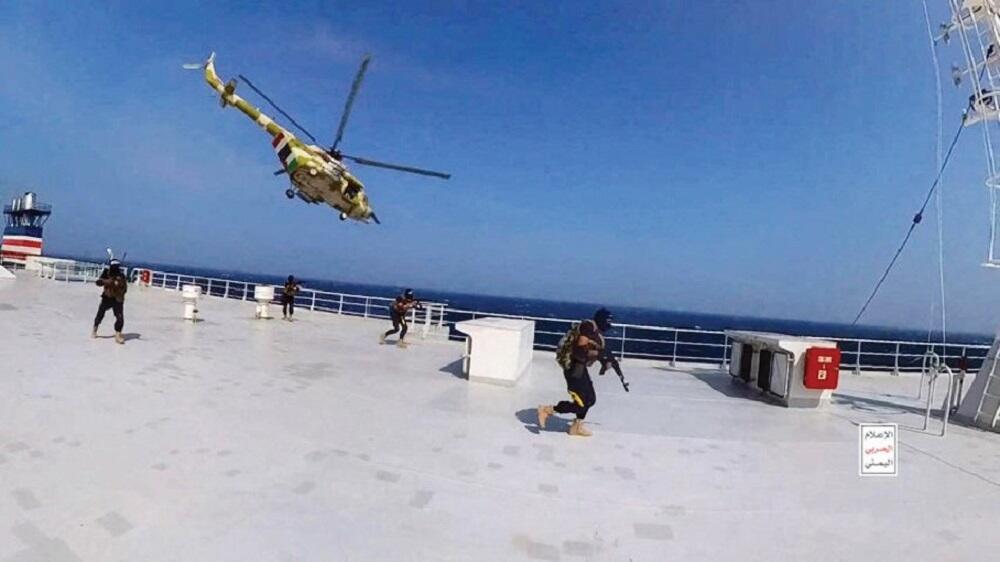
During the takeover on bboard the Galaxy Leaderר
(Photo: Reuters)
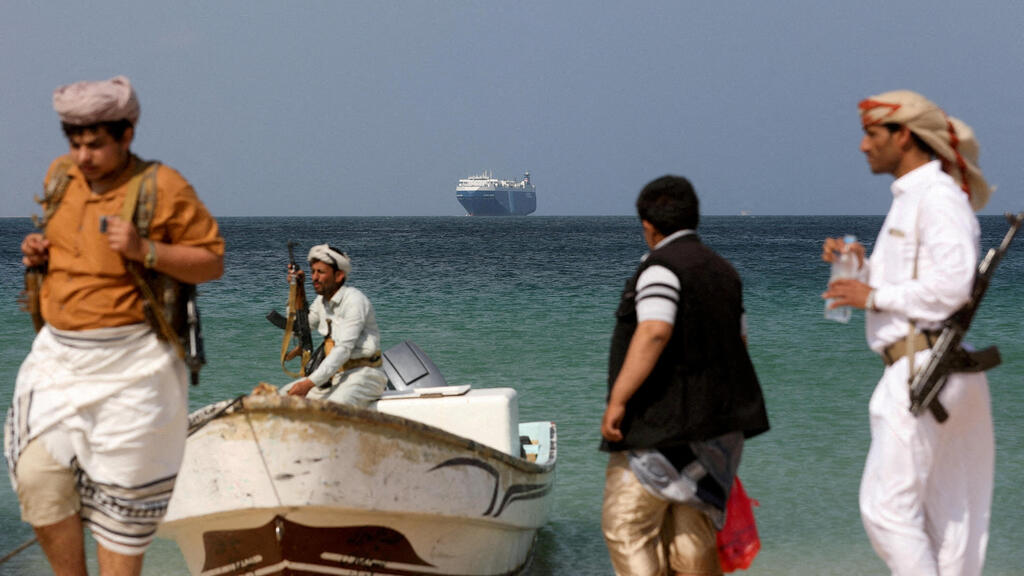
Houthi terrorists prepare to board the Galaxy Leader
(Photo: Khaled Abdullah//File Photo/Reuters)
About two and a half weeks later, the vessel had turned into a “tourist attraction” in Yemen. Moored off Al-Salif port in northwestern Yemen near Hodeidah, the ship drew crowds who arrived by small fishing boats. Videos show visitors touring the deck, taking selfies with the freighter, and stepping on American and Israeli flags while Houthi music plays over loudspeakers.
Houthi spokesman Samir Al-Rabeet told Reuters at the time that “instead of serving as an Israeli vessel, the Galaxy Leader has become an attraction for Yemenis from all districts. A large number arrive every day—forgoing park and beach visits in favor of touring the Galaxy.” Visitor Fadel Amar added: “We will seize Israeli vessels in the Red Sea and Bab al-Mandeb Strait to defend our brothers in Gaza and the women and children being attacked and killed in hospitals.”
On September 14 2024, the ship was festooned in green markings in celebration of Mawlid al-Nabi, the Prophet Muhammad’s birth, observed on the 12th of Rabi' al-Awwal on the Islamic calendar. Although not universally observed across Muslim communities, where noted the occasion features hymns praising Allah and the Prophet.
Crew of the Galaxy Leader was finally released in January
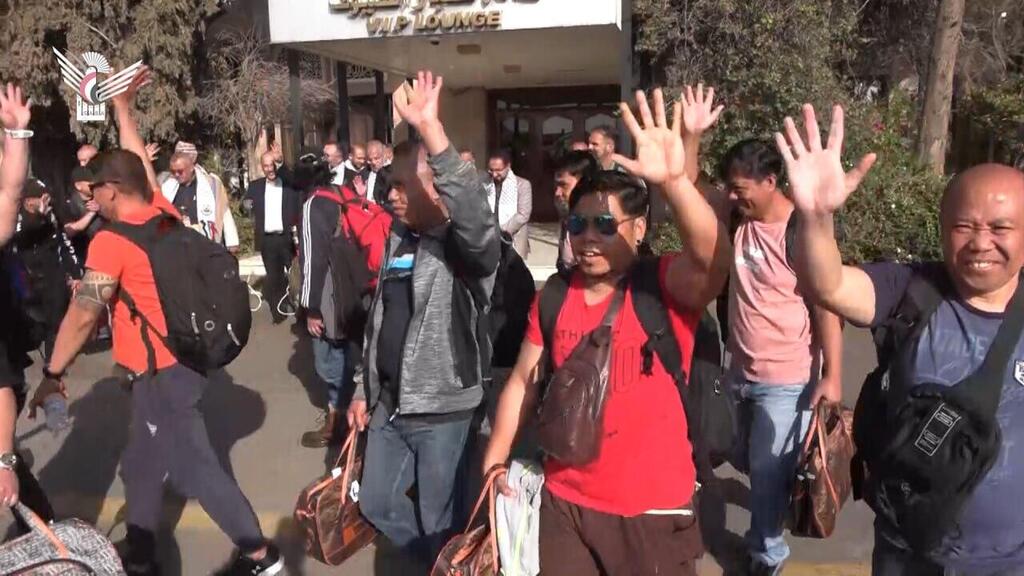
Galaxy Leader crew waves goodbye to their captors

The freed crew
The ship’s 25 crew members were finally released in January—about 14 months after the hijacking—under the latest Gaza ceasefire. In videos released by the Houthis, the crew receive parting souvenirs—janbiya, a traditional Yemeni dagger symbolizing honor—and were shown waving goodbye to cameras.
They were then moved from Yemen to neighboring Oman. The Houthis—positioning themselves as Gaza’s supporters—insisted the release was Hamas’ decision, as confirmed to mediators Qatar, Egypt and the U.S. Hamas official Nasser al-Din Amer stated: “At the request of our brothers in Hamas and through our brothers in Oman, the crew is being released today. Sanaa has emphasized from the beginning that the crew matter lies within Hamas’s hands.”
Get the Ynetnews app on your smartphone: Google Play: https://bit.ly/4eJ37pE | Apple App Store: https://bit.ly/3ZL7iNv
On Sunday night, Israeli Air Force jets launched Operation Black Flag, unleashing a wave of unusual strikes on Houthi-controlled ports in Yemen. The operation followed urgent IDF evacuation orders targeting Ras Isa, Hodeidah, and Al-Salif ports. In addition to hitting the Galaxy Leader, explosions were reported in Hodeidah and Ras Isa.
Defense Minister Israel Katz issued a statement, declaring, “The same fate awaits Yemen as Tehran. Under Operation Black Flag, the IDF has powerfully struck Houthi terror targets. As I have warned, anyone who tries to harm Israel will be struck, and any hand raised against Israel will be cut off. The Houthis will continue to pay a heavy price for their actions.”
Houthi authorities urged their supporters not to “talk or spread or mention any information regarding the Zionist attack on our country.” That night, two missiles were launched toward Israel, triggering Red Alerts in the Gush Etzion region and the Dead Sea area—for the second consecutive night. The IDF stated that details of the interception attempts are under review.