


Fire from Lebanon continued Monday as the IDF said it was deepening its ground operation in southern Lebanon, with commanders saying the move has successfully removed the threat of an incursion into northern Israel and is further aimed at pushing anti-tank missile fire away from border communities.
The military said Chief of Staff Lt. Gen. Eyal Zamir approved plans Saturday to expand the maneuver in consultations with the General Staff Forum, division commanders and brigade commanders operating in the north.
Gallery
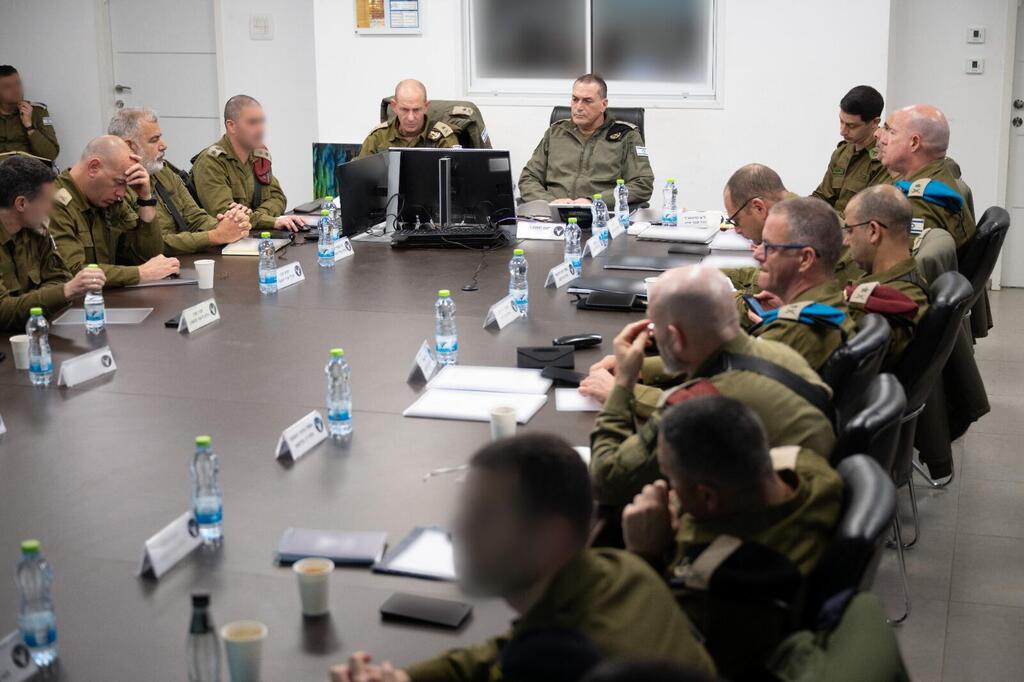
IDF Chief of Staff Lt. Gen. Eyal Zamir (center) holds a situation assessment in Northern Command
(Photo: IDF)
“The campaign against Hezbollah has only just begun,” Zamir said, according to a military statement. “At the end of the campaign in Iran, Hezbollah will remain alone and isolated. This is a prolonged campaign, and we are prepared for it.”
Northern Command officials in said the deeper ground push was intended to eliminate the threat posed by anti-tank missiles to communities along the confrontation line and to leave behind a buffer zone free of hostile forces when the fighting ends.
“We completed a ground entry into several villages near the fence, and we are continuing to deepen the maneuver for defense,” a senior Northern Command officer told several local council heads from the border area in a security briefing over the weekend.
The officer addressed what has been the biggest fear among residents of the border area since the Oct. 7 attack in southern Israel: a cross-border raid by Hezbollah’s elite Radwan force.
“We can look residents in the eye and say that this threat, in a tangible sense, does not exist,” the officer said. “There is no raid threat.”
Golani Brigade forces operating inside Lebanon
(Video: IDF)


The officer cautioned that individual attackers could still try to carry out assaults, but said the possibility of a broad infiltration had been blocked. He said the doubling of forward defensive posts inside Lebanese territory since Hezbollah joined the fighting had created a barrier preventing a large-scale raid, after IDF forces identified efforts by Radwan fighters to move south from the Litani River toward the line of contact on the border and attack defensive forces.
According to the officer, IDF troops are now deployed forward of the residential line of northern communities and would be the first to confront anyone attempting to attack civilians.
He said the military’s central objective now was to push back anti-tank missile fire, whose range reaches about 10 kilometers, or 6 miles. The army plans to expand the destruction of Hezbollah infrastructure in border villages that was not completed during earlier operations, including the village of Khiam, which overlooks Metula and other Upper Galilee communities and is seen as a threat to them.
The officer said that between 70% and 80% of residents of Shiite villages in southern Lebanon south of the Litani River had so far evacuated, and that the military expected that figure to reach 90% within a week.
Meanwhile, rocket fire from Lebanon has continued throughout, with four people wounded Thursday, including a man seriously hurt and a woman moderately injured, in a direct hit on a building in the northern city of Kiryat Shmona. Another strike hit the city’s industrial zone, where no injuries were reported.
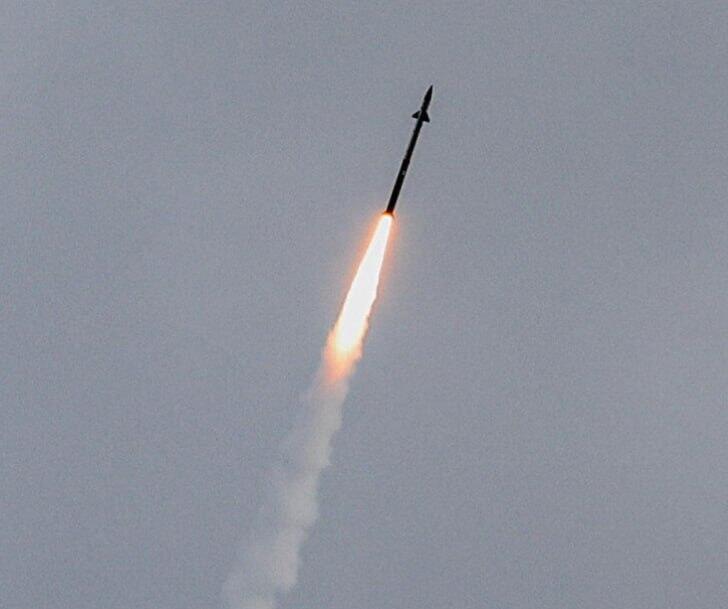
An Iron Dome interceptor missile
(Photo: REUTERS/Tyrone Siu)
The night before, the roof of a public building in the city was also struck as part of a barrage of about 300 projectiles toward northern communities, one of the most intense nights of the war on the northern front so far. Heavy barrages continued over the weekend, with several residents wounded in the towns of Kfar Vradim and Ma’alot-Tarshiha and extensive damage caused to homes and vehicles.
The IDF said it was making a concentrated effort to reduce high-trajectory fire on the civilian rear through strike plans and targeted killings, and that more than 130 launchers had been hit.
The military said it was targeting not only launchers but also Hezbollah’s finances. Since the end of Operation Northern Arrows in November 2024, Hezbollah has received $1 billion from Iran to rebuild its capabilities. As part of the effort to disrupt its funding, the military said it struck gas stations belonging to the Hezbollah-controlled Almana company across Lebanon last week.
On Sunday, a third bridge over the Litani River was struck in an effort to disrupt the movement of terrorists and weapons south of the river. According to the IDF, the Qasmiyeh bridge on Lebanon’s coastal highway near the city of Tyre had been used by Hezbollah to transfer thousands of weapons, rockets and launchers. “The crossing was struck to prevent harm to Israeli civilians as well as Lebanese civilians,” the military said.
Four divisions — the 36th, 91st, 146th and 210th — are operating on the ground, carrying out raids up to about 8 kilometers (5 miles) from the border to destroy terrorist infrastructure. So far, more than 2,000 targets have been struck, about 120 command centers destroyed and around 600 terrorists killed, including Radwan force operatives and senior figures.
IDF hits Qasmiyeh bridge on Lebanon’s coastal highway
(Video: Reuters)
On the ground, the cost of removing the threat of a ground incursion is constant noise inside Israeli communities. A military official told local leaders that because the Israeli Air Force is focusing much of its efforts on Iran, armored and artillery forces are bearing the main burden of fire in the sector.
“We have managed to move the tanks off the line of contact and push them forward,” the official said, “but that means there is ‘war noise’ here at levels not experienced even during Northern Arrows.”
The military’s message to residents who have remained in their homes under fire and are no longer expected to evacuate is complex, reflecting an expectation of patience as the army works to ensure long-term security.
“I say clearly to the residents — the good news is that we will win, but the bad news is that you will hear more of our fire,” the officer told local leaders. “We are bringing massive firepower to both the western and eastern sectors. This is a complex situation.”
He also addressed criticism from reserve soldiers about conditions in the field and restrictions preventing them from staying in civilian communities along the border.
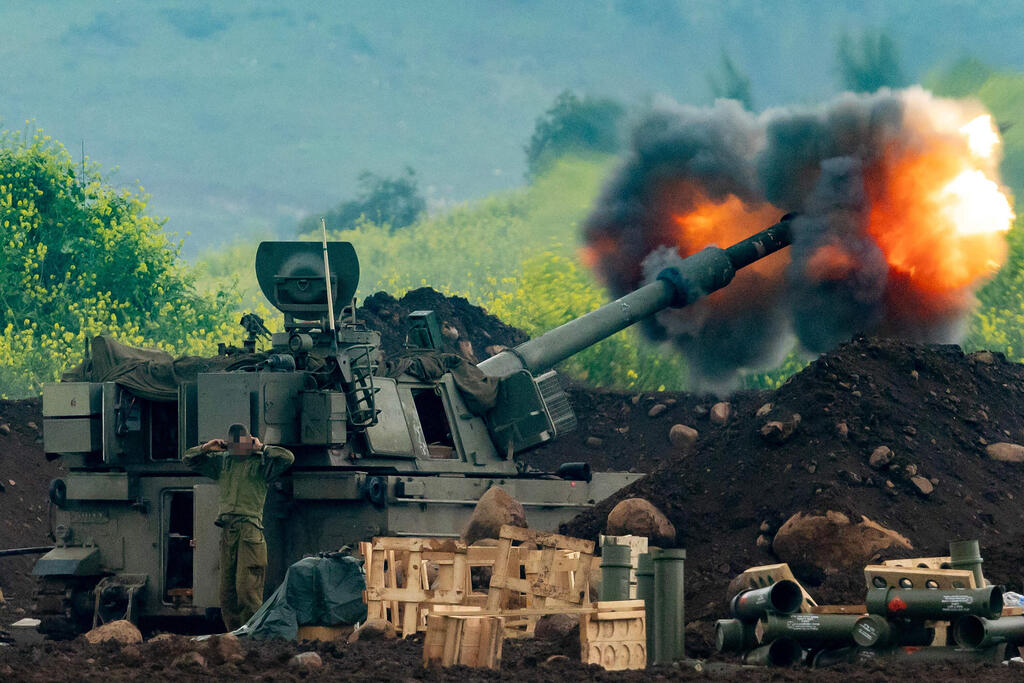
Israeli artillery on the Lebanon border
(Photo: ODD ANDERSEN/AFP)
“To avoid bringing fire into the communities, we do not want forces entering them,” the officer said, explaining the decision to keep troops in field tents rather than housing them in nearby kibbutzim and moshavim — collective and cooperative farming communities.
At the same time, the military said it was trying to minimize damage to farmland, while acknowledging that the scope of operations requires a broad deployment.
As fighting with Iran continues, the government has pledged to transfer millions of shekels to northern local authorities. The funds are intended for respite programs allowing residents living under constant artillery fire to spend several days in hotels outside the range of attacks.
The use of artillery is expected to increase in the coming weeks. “Some residents did not experience the previous war and are going through this for the first time,” the Northern Command official said. “At this stage, the artillery cannot be moved forward, and the noise will continue.”