


Prime Minister Benjamin Netanyahu announced on Sunday that the IDF is intensifying operations within Gaza City, targeting terrorist infrastructure and demolishing key Hamas strongholds.
Speaking at a Cabinet meeting, he said, “We’re destroying terror infrastructure, taking down criminal terror outposts and establishing additional humanitarian zones to allow Gaza’s civilians to reach safety and receive aid.”
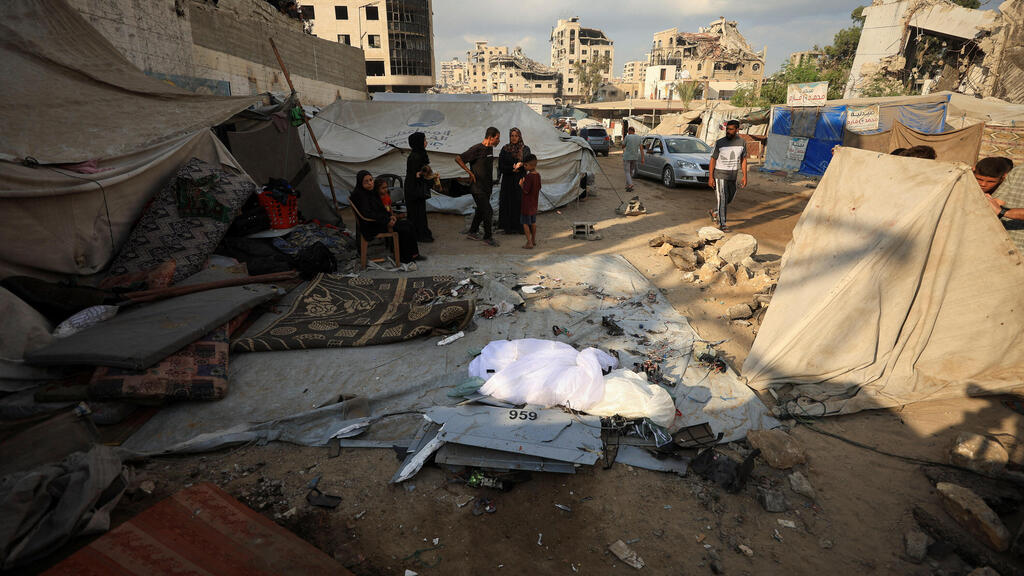
He noted that around 100,000 people have already left Gaza, but accused Hamas of forcibly preventing civilian evacuations to use them as human shields, saying, “Hamas shoots women and children in the legs, or worse, to stop them from leaving.”
Facing mounting international criticism over Israel’s actions in Gaza, Netanyahu acknowledged the “diplomatic and public relations cost” to Israel. Responding to IDF Chief of Staff Lt. Gen. Eyal Zamir’s estimates, saying that Operation Gideon’s Chariots II could last a year, Netanyahu emphasized the need to conclude the war swiftly with a defined victory.
He reiterated Israel’s goals: eliminating Hamas, freeing all hostages and ensuring Gaza poses no future threat. To manage the sensitive situation, he issued a rare directive to ministers to refrain from commenting on Gaza without his spokesperson’s approval, citing “sensitive days.”
Hamas official Basem Naim told Reuters that the terror group will not disarm but is willing to release all hostages if Israel ends the war and withdraws its forces. “This has been our position for a long time,” he said.
Meanwhile, Gaza City resident Imad expressed frustration to Reuters, saying, “We’re telling Hamas we want a ceasefire—end this war before Gaza becomes rubble like Rafah. How many lives will be wasted? Enough is enough.” His plea reflects growing civilian desperation as the conflict devastates the region.

Gaza
(Photo: Omar AL-QATTAA / AFP)
Hamas continues intelligence push in Gaza
According to reports, Hamas continues to use advanced military surveillance technologies, both on the ground and in high-rise buildings, nearly two years into the war. The
IDF is demolishing these structures with targeted airstrikes to encourage the roughly one million displaced Palestinians living in nearby tent camps to flee south. On Saturday, the IDF announced the completion of a new “displaced person city” in Khan Younis, equipped with water, food, medical and living facilities.
Operation Gideon’s Chariots II, already underway, faces pressure from U.S. President Donald Trump for a faster timeline. The IDF has slightly accelerated its phased ground raids into Gaza City, estimating that seizing key areas, including Al-Shifa, Indonesian and Turkish hospitals near the coast, could take one to two weeks, or possibly days.
The greater challenge lies in locating and destroying Hamas’s underground terror infrastructure, including kilometers of tunnels where hostages are believed to be held. The IDF anticipates Hamas may move additional hostages into the city.
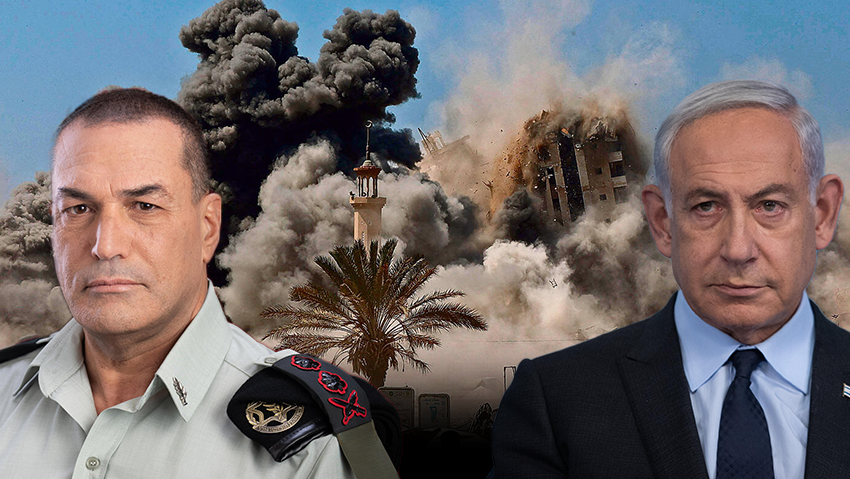
IDF Chief of Staff Lt. Gen. Eyal Zamir, Prime Minister Benjamin Netanyahu
(Photo: Alex Kolomoisky, IDF Spokesperson's Unit, OMAR AL-QATTAA)
Military assessments suggest Hamas, under former leader Yahya Sinwar’s strategy since November 2023, will continue exploiting civilian evacuations to relocate around 10,000 armed terrorists to southern Gaza, a tactic unchanged despite Hezbollah’s absence from the conflict.
The IDF clarified that the operation’s main goal is not to eliminate Hamas or its operatives but to severely degrade its terror infrastructure in Gaza City, similar to operations in northern Rafah and parts of Khan Younis during Operation Gideon’s Chariots over recent months.