

The United States and Iran are close to agreeing on a memorandum of understanding aimed at ending the war, according to regional officials and a diplomat cited by AP, as President Donald Trump prepares to review Iran’s latest offer and decide whether to keep negotiating or resume military action.
Trump told Axios on Saturday that he would meet later in the day with his negotiators, Steve Witkoff and Jared Kushner, to discuss the Iranian response. Vice President JD Vance was also expected to join the meeting. Trump said he would likely decide by Sunday whether to move forward with a deal or restart the war.
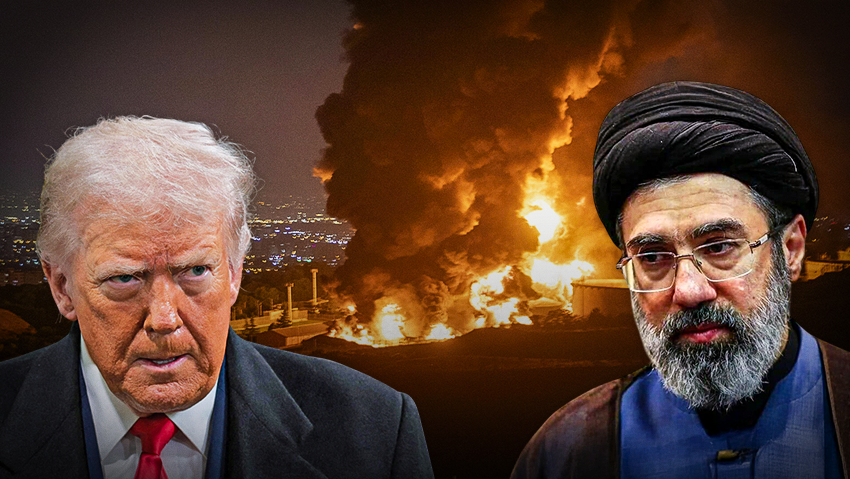
(Photo: Anna Moneymaker / AFP, Stringer / Getty Images)
He described the chances of reaching what he would consider a good agreement as a “solid 50/50.”
“I think one of two things will happen: either I hit them harder than they have ever been hit, or we are going to sign a deal that is good,” Trump said.
The latest diplomatic push centers on a Pakistan-prepared draft that officials hope could be approved within 48 hours. The officials and diplomat cited by AP said both sides were reviewing the proposal, and that Vance, Witkoff and Kushner had played significant roles in helping narrow the remaining gaps. Qatar also played a key role, including by sending a senior official to Tehran to support Pakistan’s mediation effort.
The reported progress came after Pakistan’s army chief, Field Marshal Asim Munir, left Tehran following meetings with senior Iranian officials. Iran signaled that differences with Washington had narrowed, while U.S. Secretary of State Marco Rubio said during a visit to India that “there’s been some progress made” and that “there may be news later today.”
According to the Financial Times, mediators believe the emerging arrangement would extend the ceasefire by 60 days and create a path toward broader negotiations over Iran’s nuclear program. The proposed terms include a gradual reopening of the Strait of Hormuz, easing the U.S. blockade on Iranian ports, limited sanctions relief and the phased release of Iranian assets frozen abroad.
Iran would also commit to discussing the future of its stockpile of highly enriched uranium, including the possibility of diluting it or handing it over. That issue remains one of the main obstacles in the talks, with Trump demanding that Tehran hand over about 440 kilograms of uranium enriched close to weapons-grade levels and accept restrictions preventing it from developing a nuclear weapon.
But Axios reported that the letter of intent currently under discussion is unlikely to resolve the uranium and enrichment disputes in detail. Instead, the proposal would end the war and commit the sides to 30 days of deeper negotiations.
Trump told Axios he would only accept a deal that covers uranium enrichment and the fate of Iran’s existing stockpile. He acknowledged that “some people would much rather have a deal and others would rather resume the war,” but rejected the idea that Prime Minister Benjamin Netanyahu was concerned he might accept a weak agreement.
Iranian Foreign Ministry spokesman Esmael Baghaei said Saturday that Tehran was working on a “memorandum of understanding” to end the war as a first phase, before moving to more detailed negotiations within 30 to 60 days.
“We are now finalizing this memorandum of understanding,” Baghaei said.
A diplomat briefed on the talks told the Financial Times that the proposal was now under U.S. review and that negotiations were moving in a positive direction. The diplomat said Iran might be ready to show more flexibility on nuclear energy, but not while the war is still ongoing.
Iranian Foreign Minister Abbas Araghchi with Pakistan’s army chief Field Marshal Asim Munir


Pakistan’s military said Munir concluded a “short but highly productive official visit to Iran,” during which he met Iranian President Masoud Pezeshkian, parliament speaker Mohammad Bagher Ghalibaf, Foreign Minister Abbas Araghchi and Interior Minister Eskandar Momeni.
The talks, according to the Pakistani army, focused on accelerating consultations aimed at supporting peace and regional stability.
“Negotiations over the last twenty four hours have resulted in encouraging progress towards a final understanding,” the statement said.
The Financial Times reported that Pakistani and Qatari mediators remained in regular contact with Witkoff while speaking with the Iranian delegation, led by Ghalibaf and Araghchi.
Ghalibaf told Munir that Tehran would not give up what it defines as its rights, especially in negotiations with the United States, which he said “has not been sincere and cannot be trusted,” according to Iranian media. He also said Iran would use diplomacy to protect its “legitimate rights and interests.”
Baghaei described the talks as fragile, saying the sides were both “very far and very close” to an agreement. He said Iran remained cautious because of what it sees as shifting American positions, but added that the sides were moving toward a possible formula.
“On one hand, we have the experience of the American side’s contradictory statements and shifting positions,” Baghaei said. “On the other hand, the views are getting closer, not in the sense that we have reached an agreement on such significant issues, but in the sense that we can reach a mutually satisfactory solution based on a set of parameters.”
Rubio, meanwhile, made clear that Washington’s core demands have not changed, even as he acknowledged progress.
“Iran can never have a nuclear weapon,” Rubio said. “The straits need to be opened without tolls. They need to turn over their enriched uranium. They need to turn over their highly enriched uranium. We need to address that issue. We need to address the issue of enrichment.”
Rubio on Iran talks
Rubio said Trump’s preference was to resolve the crisis through diplomacy, but warned that the issue would be settled “one way or the other.”
Trump has also demanded that Iran dismantle its three main nuclear sites, Natanz, Fordow and Isfahan, which the U.S. bombed after joining Israel’s 12-day war against Iran last June. Much of Iran’s highly enriched uranium is believed to be buried beneath the damaged sites, mainly at Isfahan.
The current talks are meant to preserve the fragile ceasefire reached on April 8. Trump said Monday that the United States had delayed a planned attack on Iran because “serious negotiations” were underway, adding that Saudi Arabia, Qatar and the United Arab Emirates had urged him to hold off.
Both Iran and the United States have continued to publicly emphasize their red lines while warning of the risks of renewed attacks. Gulf states fear another round of U.S. and Israeli strikes could trigger Iranian retaliation across the region and further destabilize global energy markets.
For that reason, reopening the Strait of Hormuz, one of the world’s most important oil shipping routes, has become a central part of the proposed arrangement.
First published: 17:46, 05.23.26