

A partner in war but not in peace talks
Israeli security officials said Israel has been “completely sidelined” by the Trump administration, to the extent that its leaders are barely involved in the ceasefire negotiations between the United States and Iran.
“In the absence of information from their closest allies, the Israelis have had to learn what they can about the contacts between Washington and Tehran through ties with regional leaders and diplomats,” the paper reported Saturday morning, in a story also co-authored by Israeli journalist Ronen Bergman of ynet and Yedioth Ahronoth. According to the report, Israel is also using its surveillance capabilities inside Iran to stay informed.
The background, the report said, is the assessment Prime Minister Benjamin Netanyahu gave U.S. President Donald Trump before the start of Operation “Roaring Lion,” according to which the Iranian regime could collapse with high probability as a result of a joint US-Israeli strike.
According to The New York Times, “many in Trump’s inner circle always viewed the idea of regime change as absurd,” and it did not take long for U.S. and Israeli priorities to diverge, especially after Iran closed the Strait of Hormuz, driving oil prices higher and increasing pressure on Trump to agree to a ceasefire.
Authorising strikes, then publicly distancing
Netanyahu set three goals at the start of the war: destroying Iran’s nuclear programme, eliminating its missile programme and toppling the regime. So far, none of these objectives have been achieved. Iran, meanwhile, is acting as though it has emerged victorious, despite being militarily defeated, simply by surviving.
In negotiations, the United States has reportedly proposed suspending Iran’s nuclear activity for 20 years, a timeframe that could be shortened in later proposals.
The New York Times noted that with Israel excluded from the talks, Iran’s ballistic missile arsenal may have been left off the table, according to Israeli officials. The concern in Israel is that a deal could ultimately resemble the 2015 Obama-era nuclear agreement, without restrictions on missiles, without sanctions and without a permanent halt to the nuclear programme. In such a scenario, billions of dollars would flow into Iran, providing an economic lifeline and enabling it to support its proxies, including Hezbollah, and help rearm them.
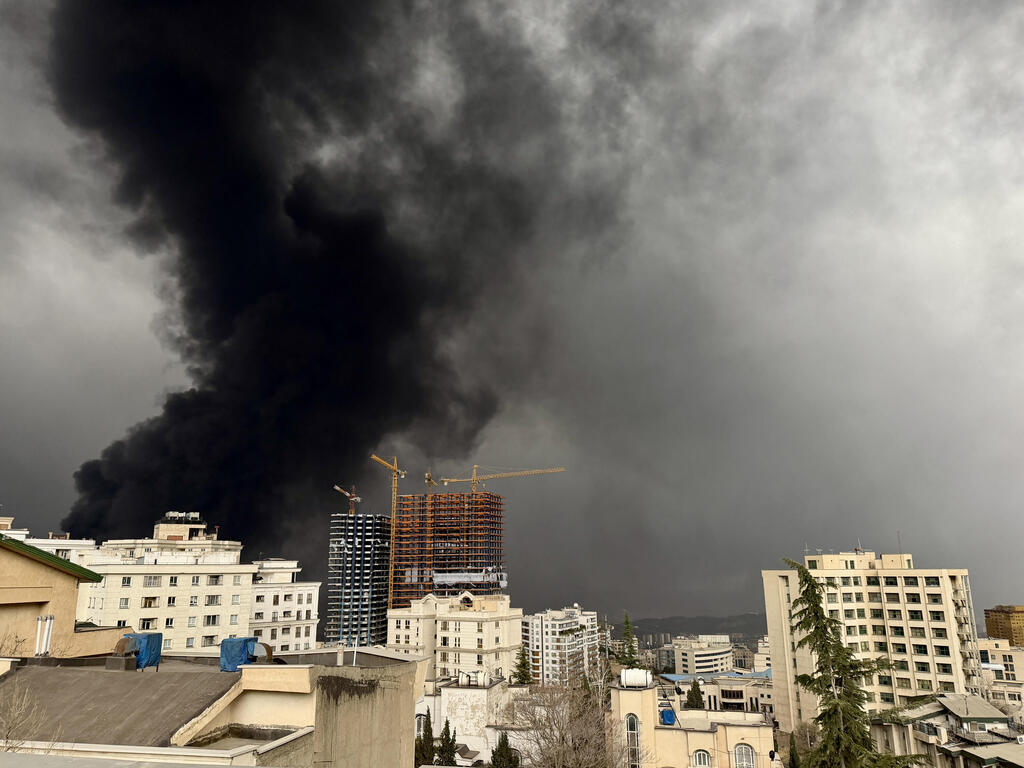
Smoke in the sky over Tehran
(Photo: Majid Saeedi/Getty Images)
The report described how the Israel-U.S. relationship shifted during the war: from a situation in which American officers sat in the IDF command bunker in Tel Aviv and decisions were made jointly in real time, including responses to Iranian missiles, to a state in which Israel functions as a kind of “subcontractor” to the United States, waiting for approval for every action.
Among other examples, when the Americans approved Israeli strikes on oil facilities in Tehran and Karaj, they expected a small, symbolic attack intended to signal to Iran that its energy sector was at risk. Instead, Israel produced massive black smoke plumes carrying hazardous chemicals that hovered over Tehran for days. The Trump administration responded by saying it had not approved the strike and demanded that Israel stop. This was not the only case in which Israel approved plans with the United States, only for the Trump administration to cancel them after they had already been carried out.
In another case, when Israel struck the South Pars gas field and oil facilities along the Persian Gulf in southern Iran, it did so as part of a coordinated effort with the United States to pressure Iran into agreeing to a more favourable ceasefire.
Instead, Trump ordered the bombing campaign halted. He initially denied prior knowledge of the strike in South Pars, then criticised Israel for a “violent attack,” and later suggested he had in fact spoken with Netanyahu in advance and urged him not to carry it out. That night, Netanyahu said Israel had acted alone and that Trump had asked it to delay future strikes.
Days after the ceasefire with Iran was signed, Israel also agreed to halt its ongoing campaign against Hezbollah in Lebanon early and accept unusual restrictions. The New York Times noted that Israeli officials protested their marginalisation in the negotiations, especially after Israel had voluntarily taken on some of the most internationally controversial missions, including an alleged attempt to target Supreme Leader Ali Khamenei in an airstrike.