

Lebanon saw heightened political tension Tuesday as the government convened to discuss stripping Hezbollah of its weapons — a move President Joseph Aoun is pushing but that risks triggering violent unrest from the Iran-backed group, which has been significantly weakened in its war with Israel but still wields vast political and military power.
Aoun, along with Prime Minister Nawaf Salam, is advancing a plan to consolidate all weapons under the control of the Lebanese state. The initiative follows a cease-fire agreement with Israel, under which the Lebanese army was deployed to enforce the provision barring Hezbollah from keeping armed forces south of the Litani River. The current debate centers on what to do with the group’s arsenal north of the river.
As Lebanon’s cabinet debated disarming Hezbollah, the terror group “threatened” with motorcycle convoys


The United States, via envoy Tom Barrack, has been pressing for a roadmap to disarm Hezbollah in exchange for halting Israeli strikes, a full withdrawal of the IDF from five contested border points, and funding to help rebuild Lebanon’s war-damaged infrastructure. With Beirut slow to act and requesting amendments to the U.S. proposal, Washington signaled its patience is running out, pushing the Lebanese government to commit publicly to centralizing all arms under state authority.
Tensions flared even before the meeting began, with reports overnight of Hezbollah supporters riding in motorcycle convoys — an act seen by some as an intimidation tactic. Before the meeting started at 3 p.m., Hezbollah loyalists in Beirut’s Dahiyeh stronghold staged another display, waving Iranian flags and portraits of slain leader Hassan Nasrallah. A Lebanese security source told the Saudi-owned Al-Hadath channel that the army is deployed nationwide to prevent street clashes and will act against any convoy threatening public order.
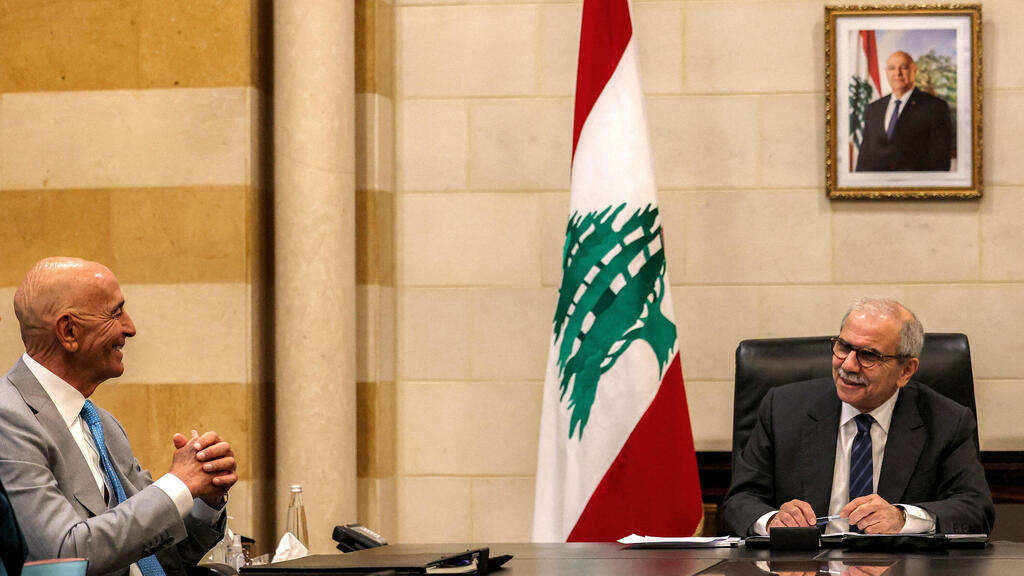
The cabinet session itself was described as highly charged. According to Al-Hadath, Aoun sought to postpone the discussion on disarming Hezbollah until the end of the meeting to prevent the situation from spiraling. Sky News Arabia quoted Hezbollah-aligned sources as praising Aoun for resisting a decision they warned could “plunge Lebanon into chaos.” They claimed Lebanon’s proposed amendments to the U.S. document had been ignored, insisting the country needs Hezbollah’s capabilities given “regional changes caused by Israel.”
After five hours, Prime Minister Salam announced that the debate would continue on Thursday. He said the army has been tasked with preparing an implementation plan to consolidate weapons under state control before year’s end and to submit it to the cabinet no later than October 31.
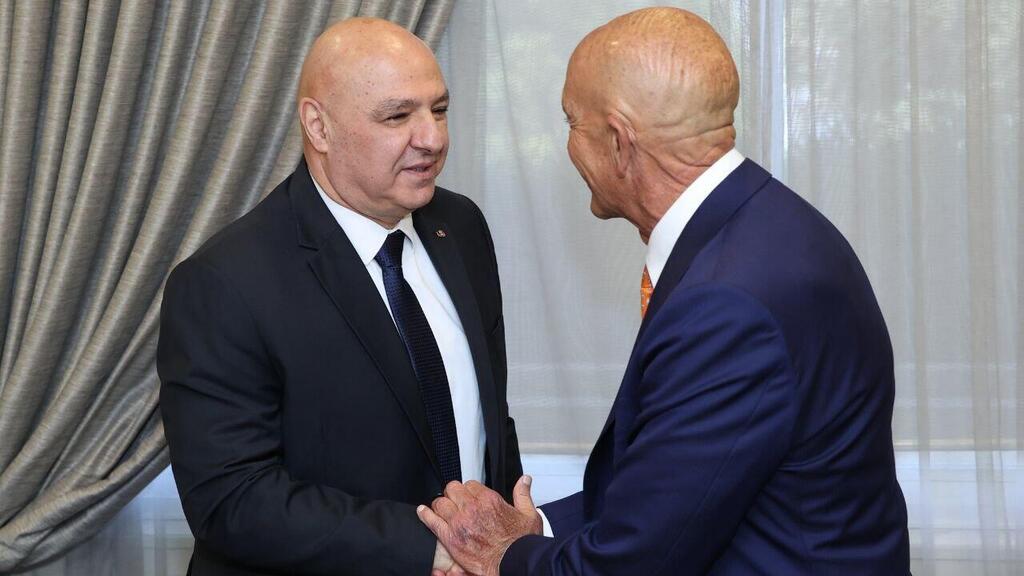
Lebanese President Joseph Aoun met with U.S. envoy Tom Barrack
Meanwhile, Hezbollah deputy leader Naim Qassem, speaking at an event honoring slain Iranian Revolutionary Guards commander Saeed Izadi, reiterated the group’s rejection of disarmament. “To build Lebanon and ensure stability, we must act within national unity, set priorities based on Lebanese realities, and not surrender to U.S. or foreign oversight,” he said. He accused Israel of repeatedly violating the cease-fire agreement and warned that giving up Hezbollah’s weapons would not stop “aggression,” but serve Israel’s agenda.
Get the Ynetnews app on your smartphone: Google Play: https://bit.ly/4eJ37pE | Apple App Store: https://bit.ly/3ZL7iNv
Issuing a direct threat to Israel, Qassem said: “If Israel launches a broad aggression, the resistance will defend itself, the army will defend itself, and the people will defend themselves. Missiles will fall inside Israel, and all the security they have built over eight months will collapse in one hour.”
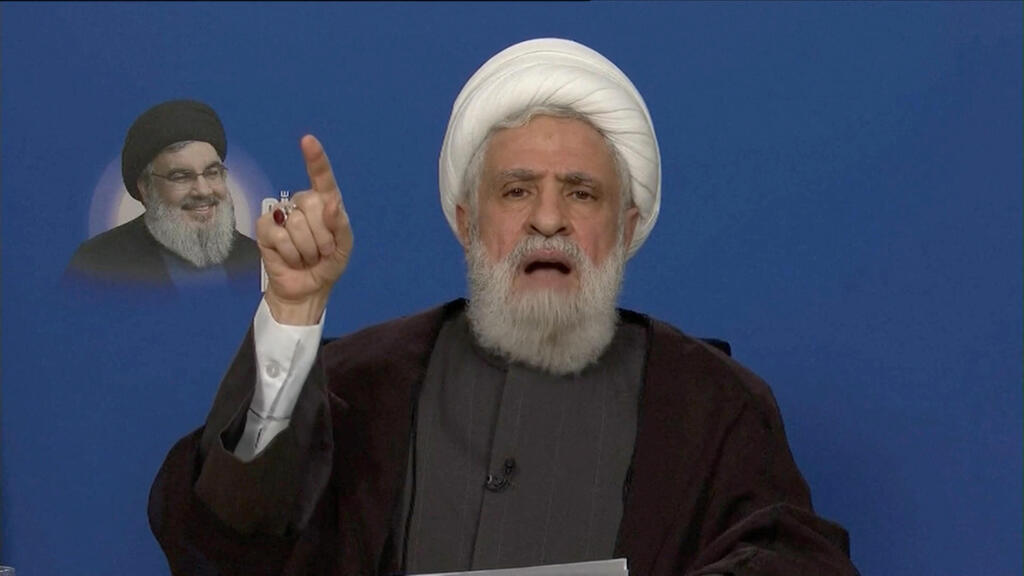
Hezbollah leader Naim Qassem
(Photo: Al Manar TV/Reuters)
Despite Hezbollah’s defiance, international pressure on Lebanon to act is unlikely to relent. The Saudi daily Asharq Al-Awsat described the situation as a “true test” for the country. A source close to Aoun and Salam told the paper they are determined to resolve the issue in the state’s favor, expand its authority, and seize what they call Lebanon’s “last opportunity” amid growing Arab and international pressure.
Justice Minister Adel Nassar told Lebanon’s MTV before the meeting: “We will demand a timetable for handing over weapons. We hope Hezbollah’s conscience will awaken so the group surrenders its arms and we can move forward together to build the state. But if they insist on keeping their weapons, it is unacceptable to lead the Lebanese people into suicide with them.”