


Thousands gathered Wednesday afternoon in the southern community of Meitar to accompany Sgt. First Class Ran Gvili at his memorial ceremony, ahead of his burial at the local cemetery following eulogies at the community center. His coffin arrived from the Military Rabbinate base at Shura, escorted by a police convoy, after police held a ceremony there earlier in the day in honor of the last hostage returned from Gaza two days earlier.
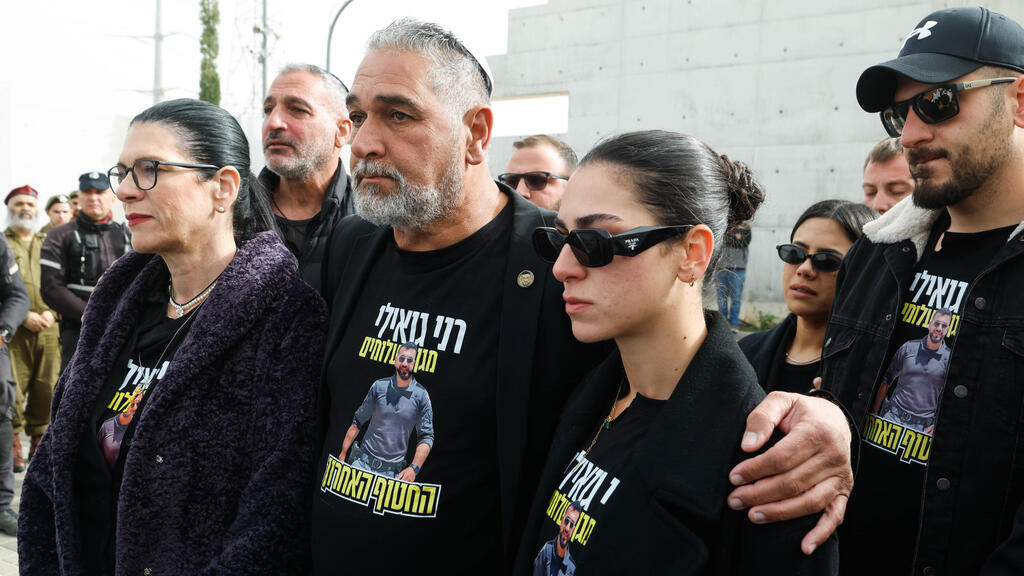
“I just wanted to tell you, my beloved child, that the hope you might return to us on two legs, or even one leg, gave us hope,” his mother, Talik Gvili, said in her eulogy. “Rani, my love, I promise you that thanks largely to you, all of Israel remembered that despite all the divisions, we are one big, strong people. Everyone is worthy of your sacrifice.”
Itzik Gvili
(Photo: GPO)
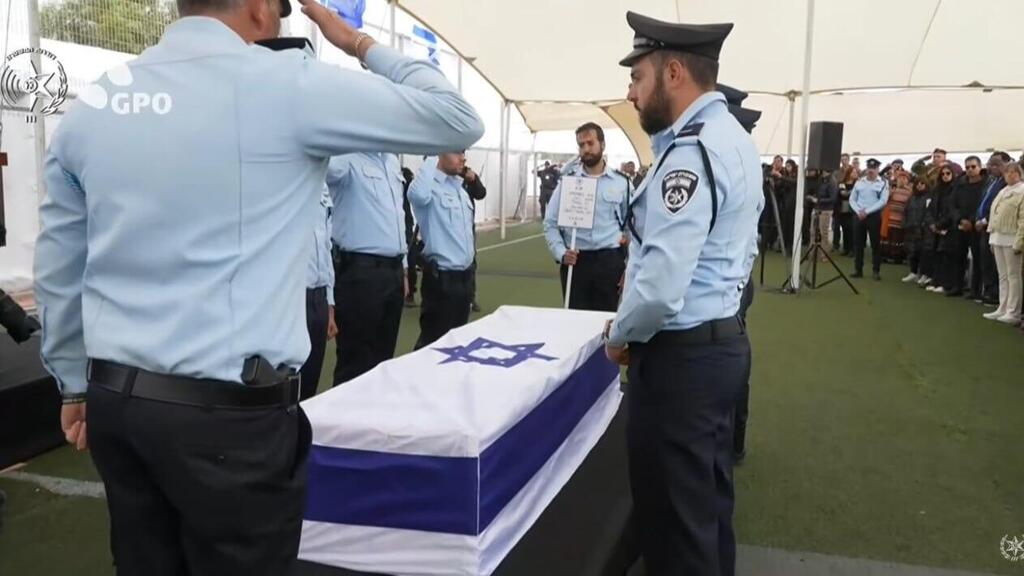
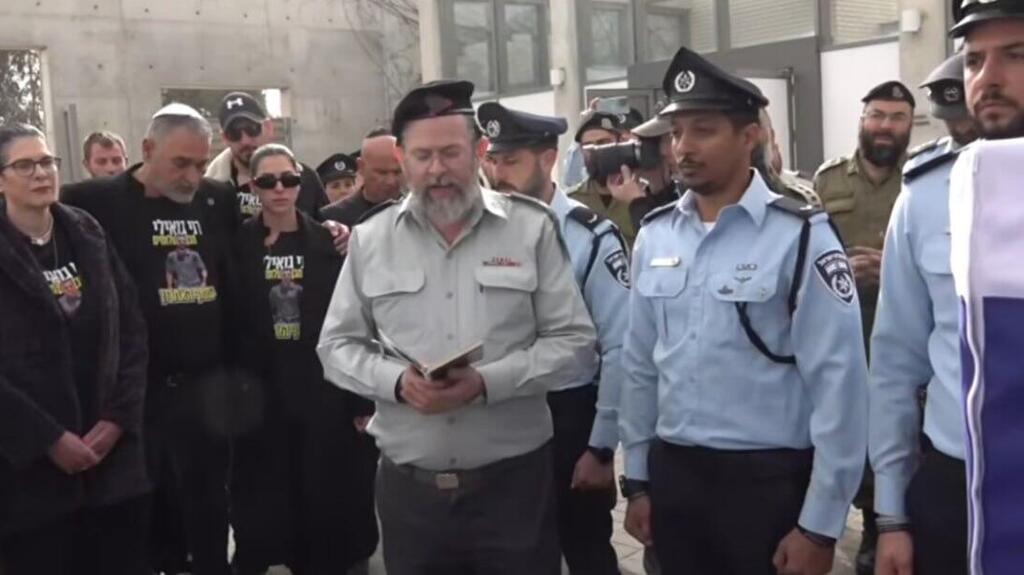
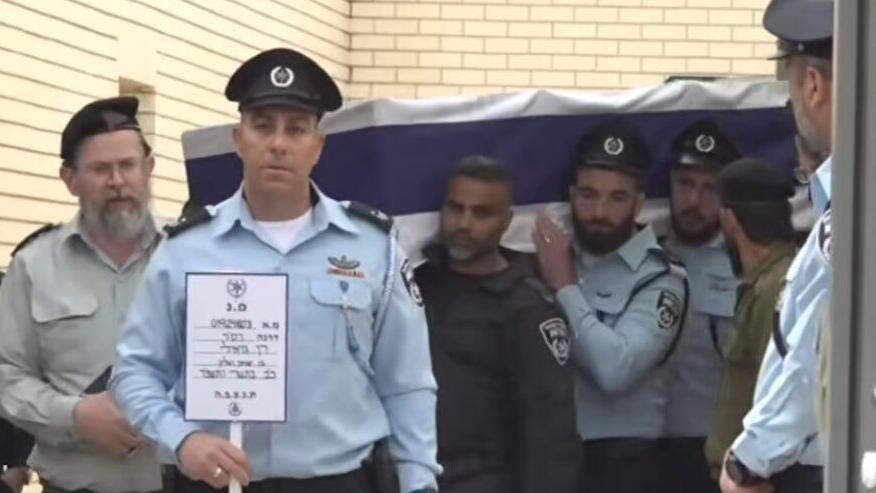
Police officers saluted as Gvili’s coffin arrived in Meitar, and Police Commissioner Danny Levy walked among the officers, shaking their hands. At the Military Rabbinate base in Shura, rabbinate officials and Israel Police officers held a final honor guard for Gvili, a Yassam fighter, before the funeral procession set out.
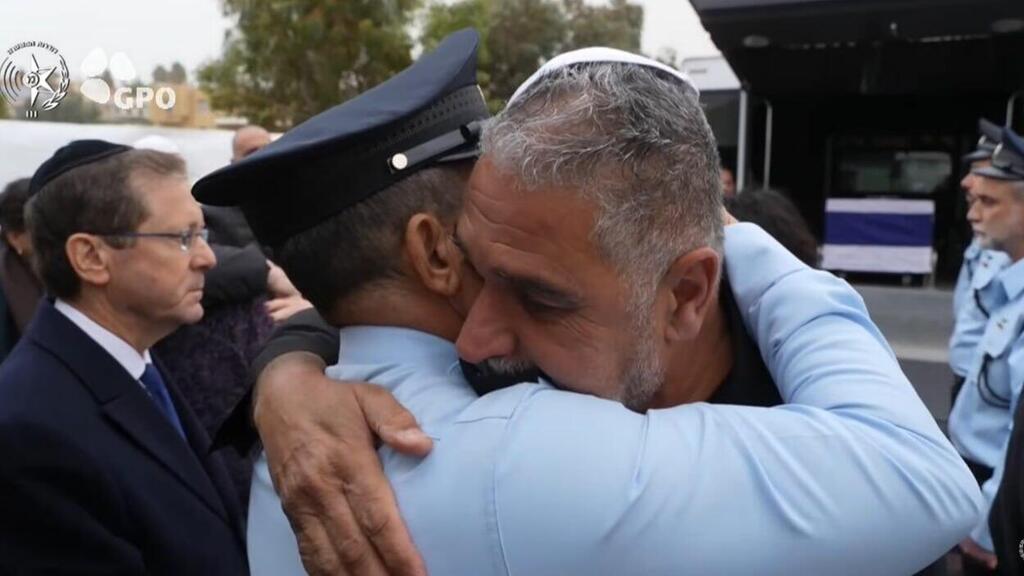
His father, Itzik Gvili, recited Kaddish over the coffin, saluted and said, “Here, your friends are taking you.” Gvili’s mother kissed the coffin, then went outside the base to embrace citizens who had come to pay their respects.
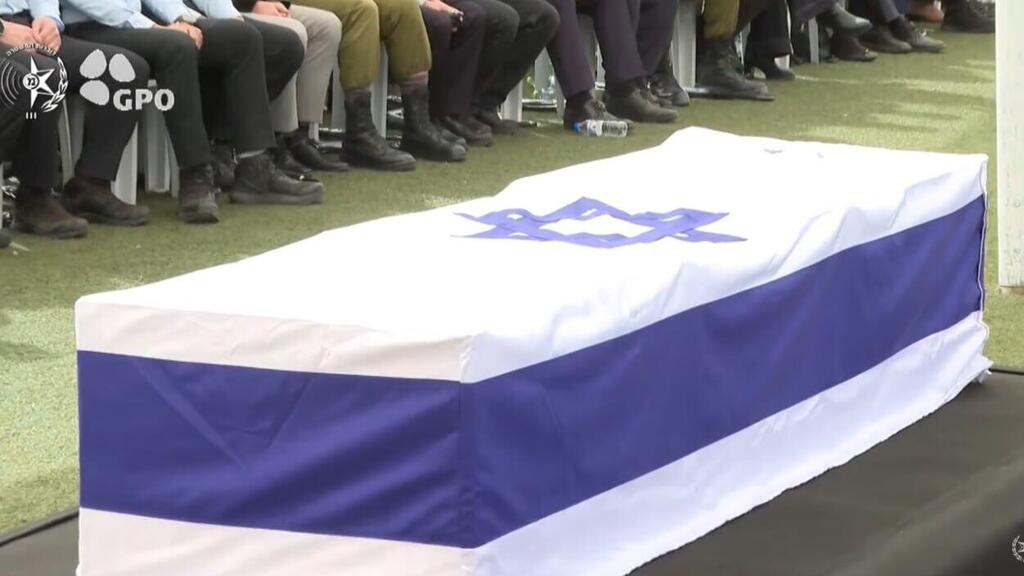
Gvili's coffin in Meitar
(Photo: GPO)
(Photo: Ziv Koren)
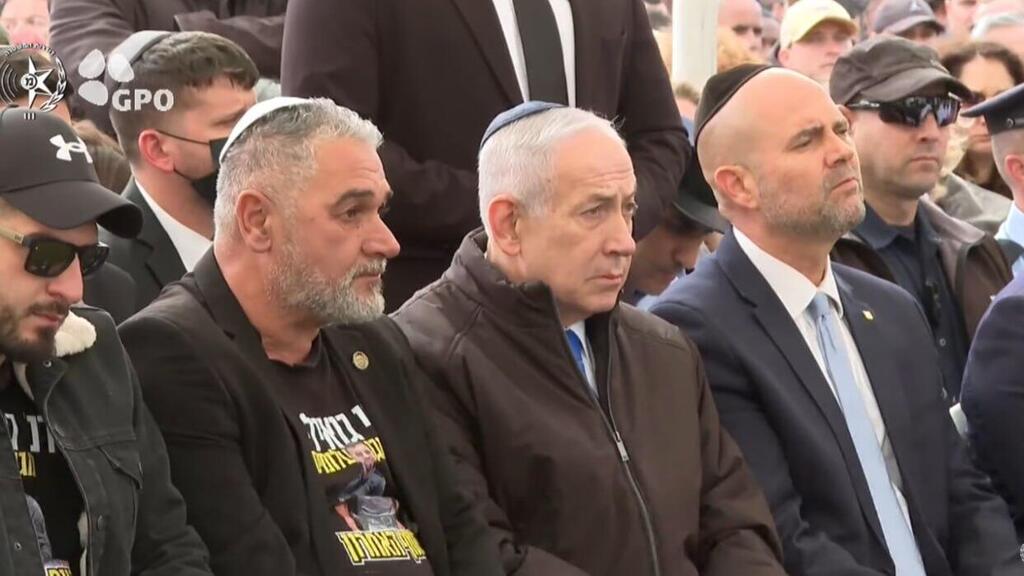
Itzik Gvili alongside Prime Minister Netanyahu and Knesset Speaker Ohana
(Photo: GPO)
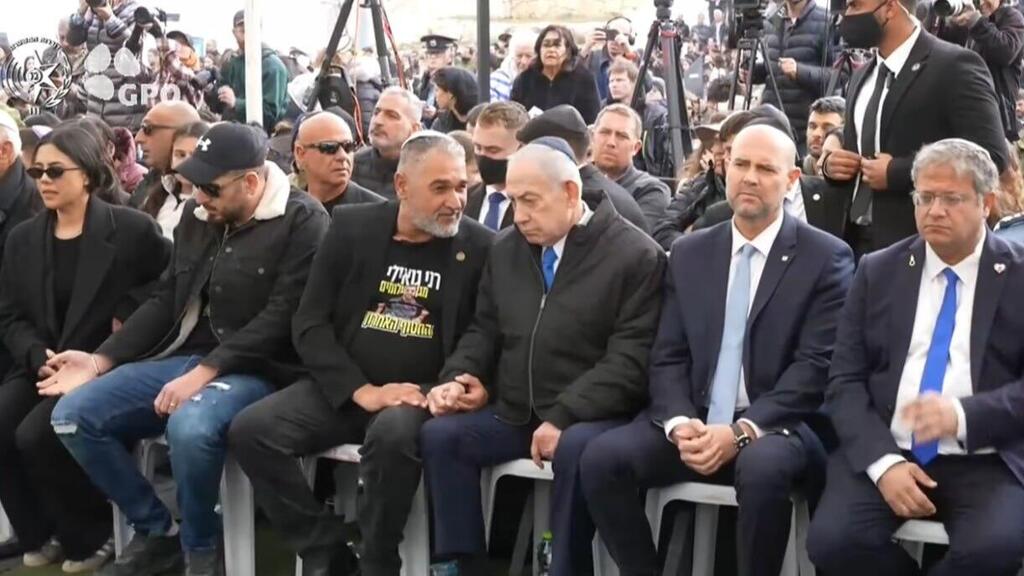
(Photo: GPO)
The convoy escorted Gvili’s coffin to Meitar via Route 431, joining Route 6 at the Nesherim interchange and later continuing on Route 60. After the eulogies, a burial ceremony is scheduled for 2:30 p.m. at the Meitar cemetery, in a limited ceremony without media. President Isaac Herzog and Prime Minister Benjamin Netanyahu are among those expected to speak at the eulogies.
Adi, Avigail and Zohar, who came to the Shura base, told ynet: “It’s sad and emotional to be here, and it was very important to us. We came as a group to pay our respects on this important morning.” Oscar and Sonia Solomon, who also attended, said: “We came from Kibbutz Na’an to pay our final respects to a hero. It’s the least we can do.” Two other women said, “We come to every funeral of every fallen soldier who leaves from here. It’s important. It’s painful that he fell, but it’s good he was brought back now and that it didn’t end like Ron Arad.”
The funeral procession
(Video: Shilo Fried, GPO)


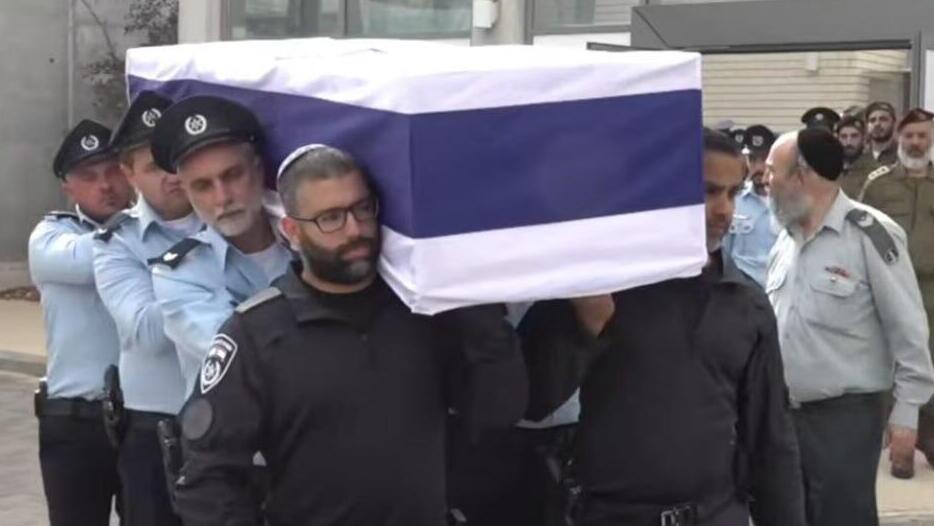
Ran Gvili’s coffin is carried at the Shura base
(Photo: GPO)
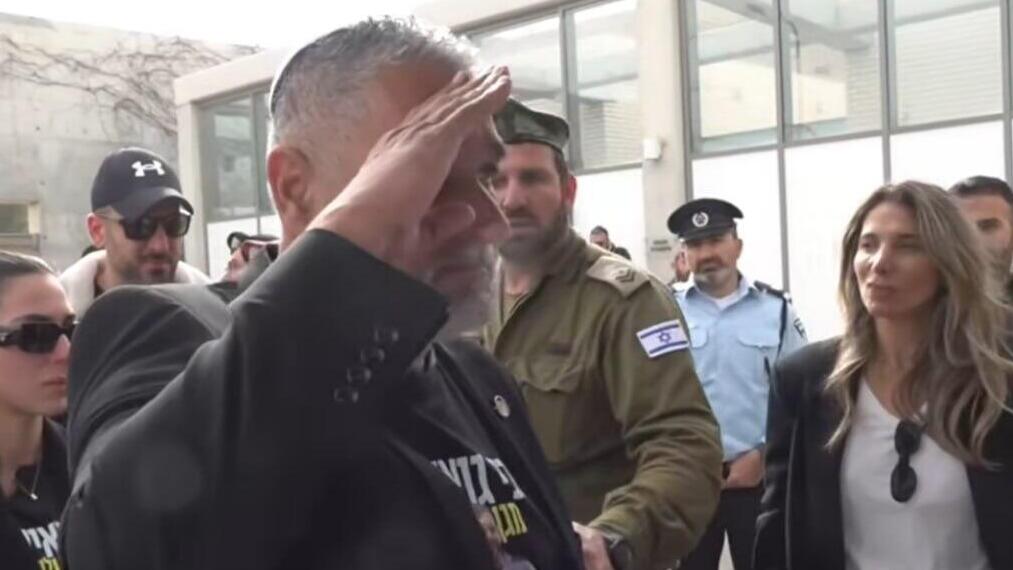
Itzik Gvili salutes over his son’s coffin
(Photo: GPO)
The funeral procession of Sgt. First Class Ran Gvili
(Photo: GPO)
(Photo: GPO)
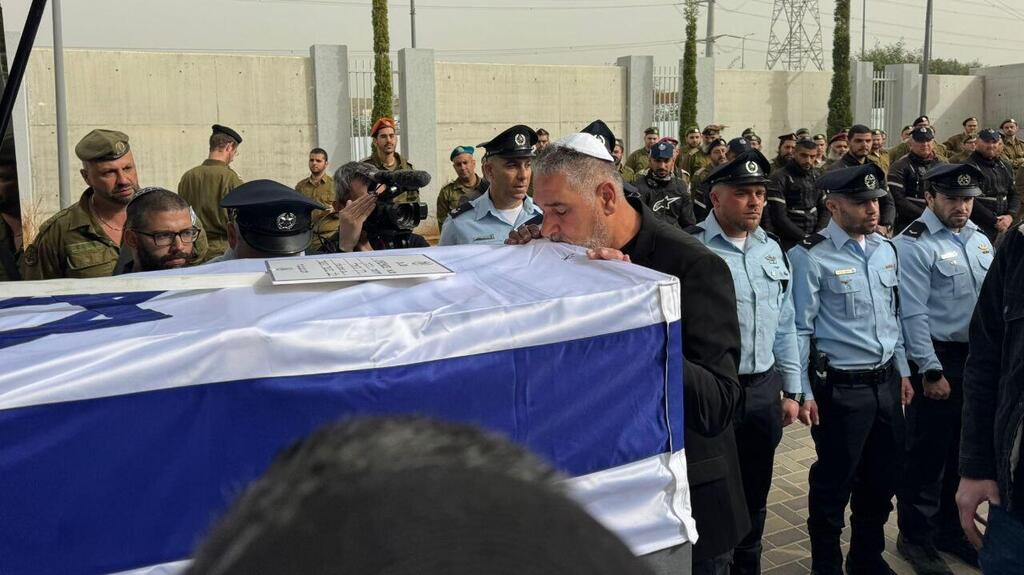
Itzik Gvili kisses the coffin
(Photo: Shilo Fried)
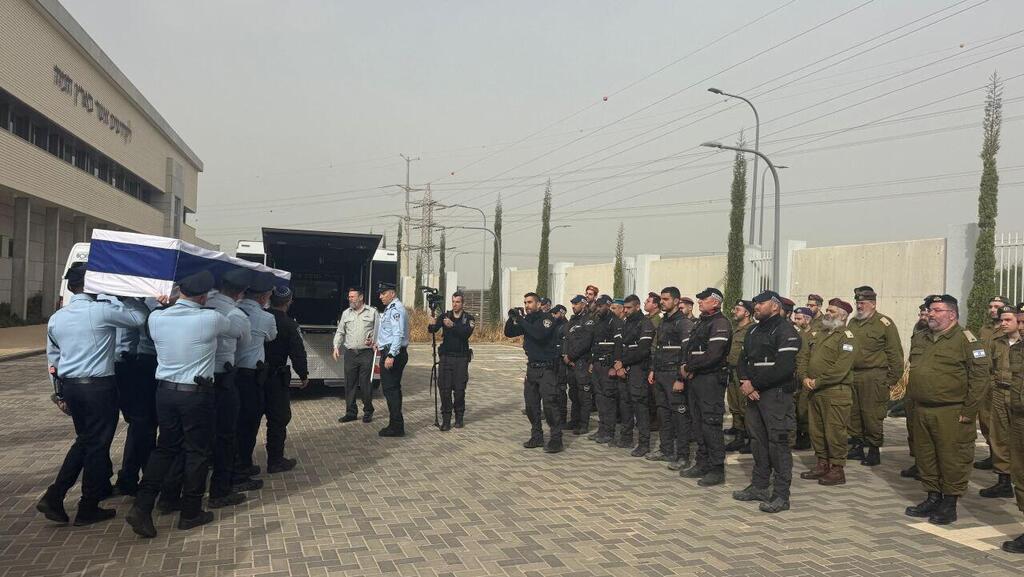
Bidding farewell to Ran Gvili
(Photo: Shilo Fried)
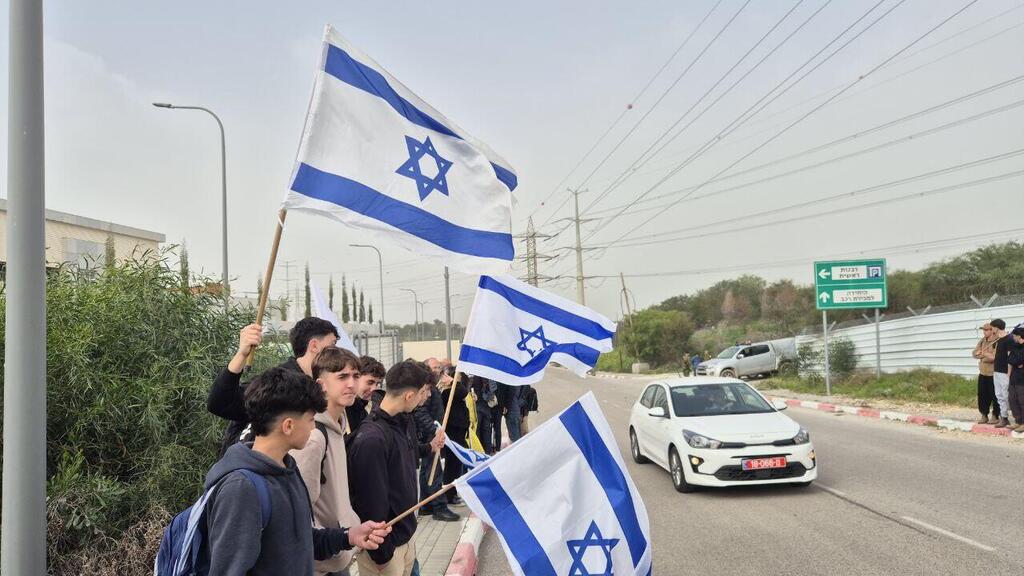
(Photo: Shilo Fried)
Gvili’s aunt, Harel Plahchinski, told ynet that the family’s emotions are mixed. “On one hand, you’re relieved we’ve finally reached the end of this journey, and on the other, today we are burying Rani,” she said. “For us it’s very hard. Rani is the heart of the family. We’re overwhelmed by the scale of the funeral, the arrangements, the security, the loss of intimacy.”
She said Gvili has become a public figure. “He’s known everywhere, but in the end, Rani is ours. That duality is difficult. I feel like I’m living in a movie, and it’s not a good one.”
Gvili served as a fighter in the Yassam Negev unit in the Southern District. On October 7, he went into battle despite being injured with a broken shoulder following a motorcycle accident and was due to undergo surgery. He managed to save dozens of people from the music festival near Re’im before he was killed and his body was taken hostage near Kibbutz Alumim. He became known as “Rani, the defender of Alumim.”
On Monday, 843 days after the October 7 attack, Gvili’s remains were located in a Palestinian cemetery in eastern Gaza City. The recovery operation, dubbed “Brave Heart,” was complex and involved multiple forces conducting searches and identification. During the operation, the bodies of 250 Palestinians were examined until Gvili was identified by the police uniform he was wearing and the shoes he had on the day he was killed.
First published: 10:36, 01.28.26