

On Wednesday afternoon, senior officials gathered at the headquarters of the U.S. Energy Department in central Washington for an event more than two decades in the making: the signing of a civil nuclear cooperation agreement between the United States and Saudi Arabia.
American and Saudi flags were placed on the stage and on the table where Energy Secretary Chris Wright sat, while a large screen connected him live with his Saudi counterpart in Riyadh. After months of delays, the agreement was finally signed, with the Saudis securing a significant portion of their demands.
Gallery
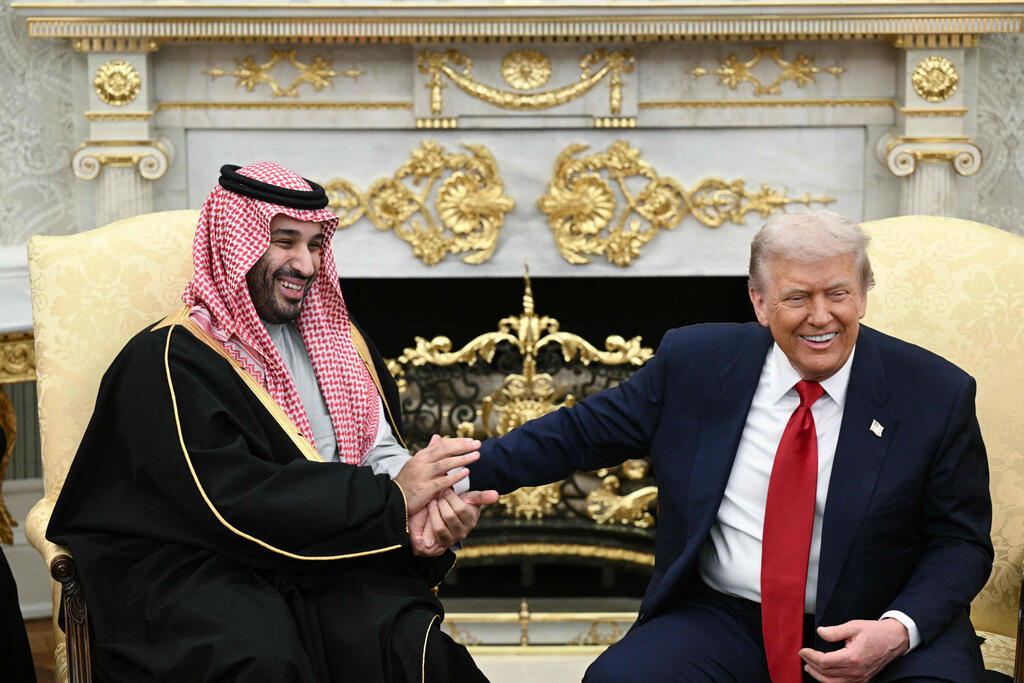
The signing of a civil nuclear cooperation agreement between the United States and Saudi Arabia
(Photo: Brendan SMIALOWSKI / AFP)
But almost immediately after the announcement, it appeared that the agreement was unraveling. On Thursday morning, President Donald Trump wrote on social media that the agreement was subject to a new condition: Saudi Arabia would have to join the Abraham Accords — the initiative from his first term that led to the establishment of diplomatic relations between several Arab countries and Israel.
Trump also denied that the agreement would allow Saudi Arabia to enrich uranium.
According to a source familiar with the details, Trump was already angry over the announcement itself because Wright had not informed him in advance of the intention to unveil the deal. Later, sources told CNN that Trump’s frustration grew following criticism from experts and conservative media outlets.
Among other things, critical reports appeared on Fox News — his preferred channel — as well as in a Wall Street Journal editorial that questioned why the agreement had been signed without normalization between Saudi Arabia and Israel. Both outlets explicitly noted that this was a condition former President Joe Biden had sought to advance.
The new condition, which the White House said had always been one of Trump’s goals and therefore should not have surprised anyone, caught off guard the American negotiating team that worked on the nuclear agreement. Two sources briefed on the matter told CNN that linking the agreement to joining the Abraham Accords was not something they had expected.
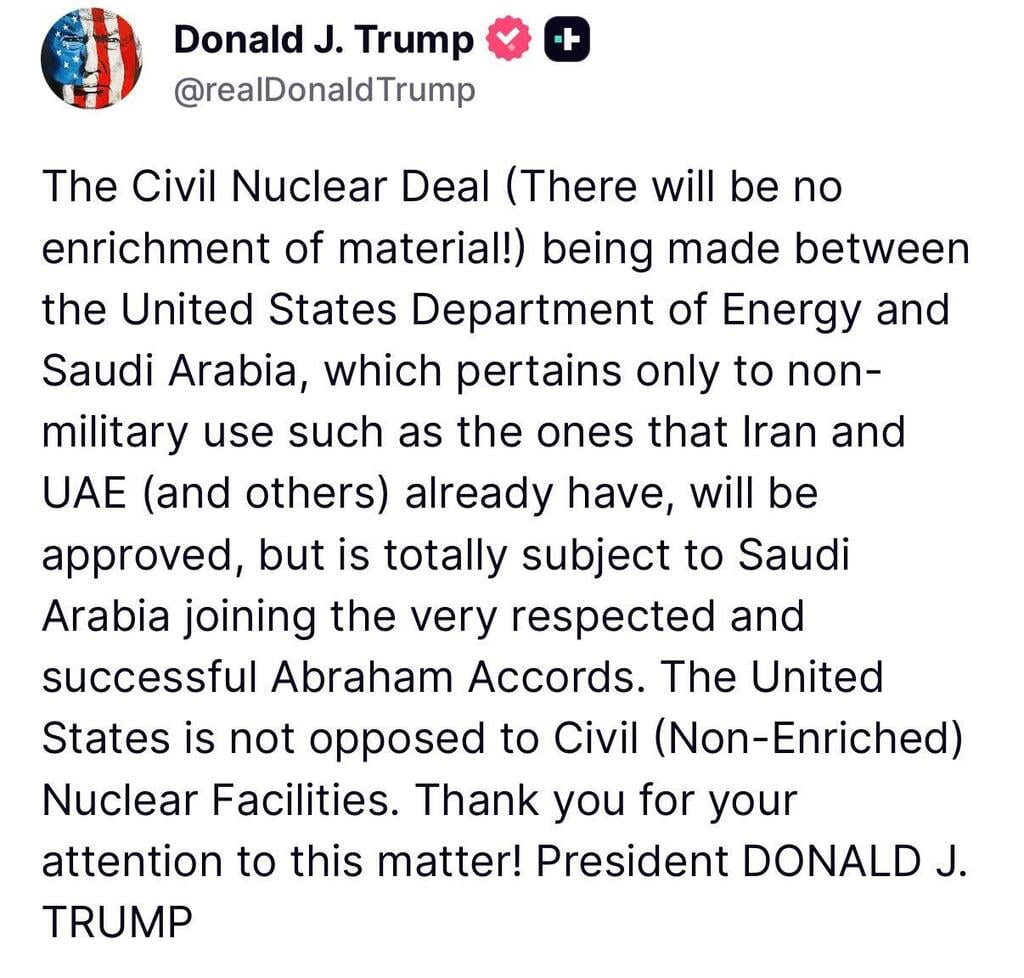
Trump's post stating that the agreement would be conditional on Saudi Arabia joining the Abraham Accords
As confusion grew, White House officials pointed the finger at their colleagues at the Energy Department. According to one source, the White House had asked the department not to launch the agreement on Wednesday, but Wright — who White House officials said had previously tended to act beyond what had been agreed — moved ahead anyway and even gave interviews on the issue to Fox Business.
Some of Trump’s advisers believed the agreement had not actually been finalized because the required letters to Congress had not yet been sent. According to that source, the president and many senior members of his team were furious over the decision to publish the agreement at that stage.
White House spokeswoman Taylor Rogers said in a statement: “The Trump administration’s energy team was fully aligned and always has been: a civil nuclear deal between the United States and Saudi Arabia depends on Saudi joining the Abraham Accords, which would bring real peace to the Middle East.”
The Energy Department, however, emphasized that it had worked in full coordination with the White House.
“This is fake news. The Department of Energy has closely coordinated negotiations and announcements of these deals with the White House and the State Department. Any other claims are false,” department spokesman Ben Dietderich said, adding that the agreement and the Abraham Accords were designed to achieve a shared goal: “to bring lasting peace through commerce, not through conflict.”
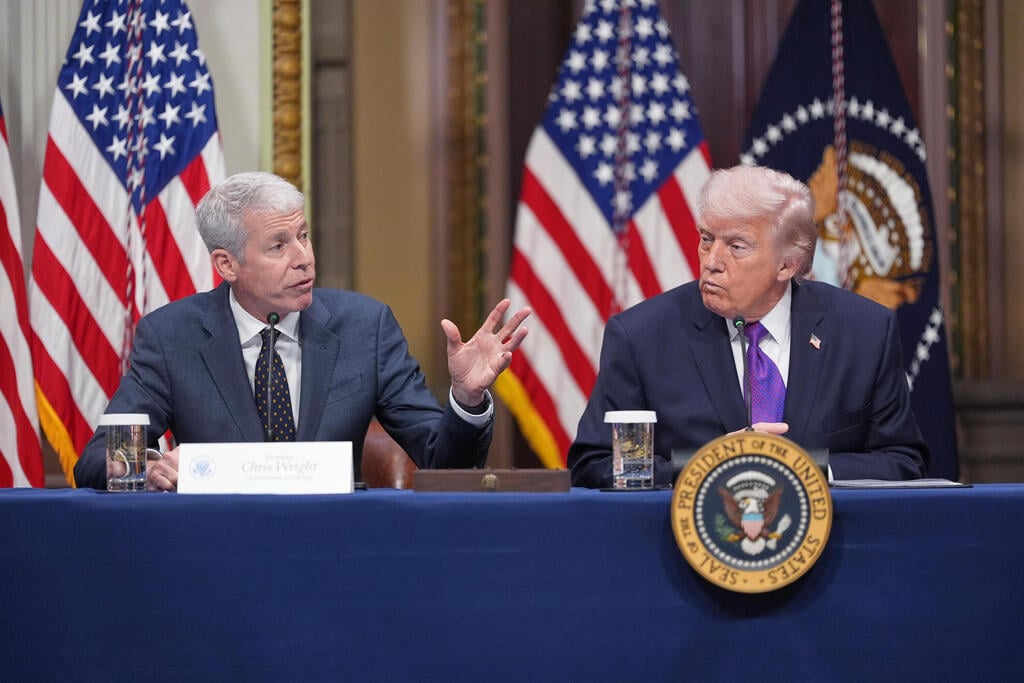
The president was not briefed on the agreement’s announcement. Trump with Energy Secretary Chris Wright
(Photo: AP Photo/Jacquelyn Martin)
White House anger grew further when Thursday’s press briefing was largely devoted to questions about the agreement. White House spokeswoman Karoline Leavitt responded to a question about why the new condition was not mentioned in Wednesday’s announcement by saying Trump was “the last deal-seller.”
The Saudis’ surprise
Trump’s post on Truth Social Thursday morning also caught the Saudis by surprise. From their perspective, the nuclear agreement — which did not include a demand for normalization with Israel — was a significant achievement.
The agreement was supposed to allow Saudi Arabia to enrich uranium on its territory after meeting certain conditions, while also limiting the authority of the International Atomic Energy Agency’s inspectors at suspected nuclear sites.
The dramatic development was a last-minute twist in a diplomatic effort that had lasted years and brought with it mainly negative reactions. Nearly two decades after the United States and Saudi Arabia first announced their intention to cooperate in the nuclear energy sector, the two countries reached a preliminary agreement last October, when Energy Secretary Chris Wright and his Saudi counterpart issued a joint statement.
Shortly afterward, the Trump administration submitted a request to Congress for a special waiver because the agreement did not require Saudi Arabia to sign the International Atomic Energy Agency’s stricter inspection protocol, known as the “Additional Protocol.”
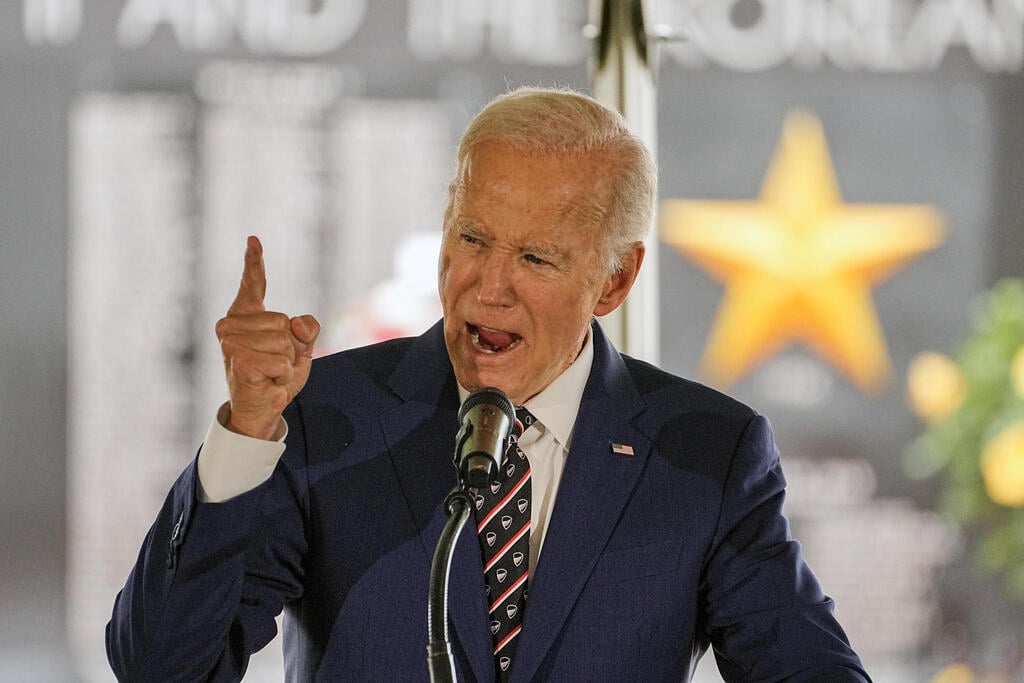
Critics argued the normalization condition had already been promoted under the Biden administration. Former President Joe Biden
(Photo: REUTERS/Ken Cedeno)
However, after the waiver request was submitted to Congress, the agreement remained stalled for months without Trump’s approval to move forward. Sources attributed the delay to concerns over the war with Iran and fears that Congress would reject the agreement.
According to a source familiar with the matter, officials at the Energy Department believed they had received Trump’s approval to proceed late last weekend and therefore moved forward with a long-planned announcement. Another source, however, said that even if Trump had given the green light to a preliminary agreement, it was not approval to finalize it or announce it publicly.
Claims of Israeli intervention
The initial reactions from experts to the terms of the agreement were largely negative. Nuclear nonproliferation specialists expressed concern over the possibility that Saudi Arabia would be allowed to enrich uranium, as well as the fact that the agreement did not require Riyadh to adopt the stricter safeguards of the “Additional Protocol.”
Supporters of the agreement, meanwhile, highlighted its commercial and strategic benefits. They argued that Saudi Arabia is determined to advance a nuclear program under its own terms regardless, and therefore it is preferable for the United States to be involved in the process and influence safety standards and oversight mechanisms rather than allowing China or Russia to fill the gap.
At first, the criticism did not deter the administration, which argued that the agreement and the accompanying bilateral oversight arrangements “meet the highest standards of nuclear safety and nonproliferation.” Accordingly, the Energy Department continued with the official signing ceremony on Wednesday.
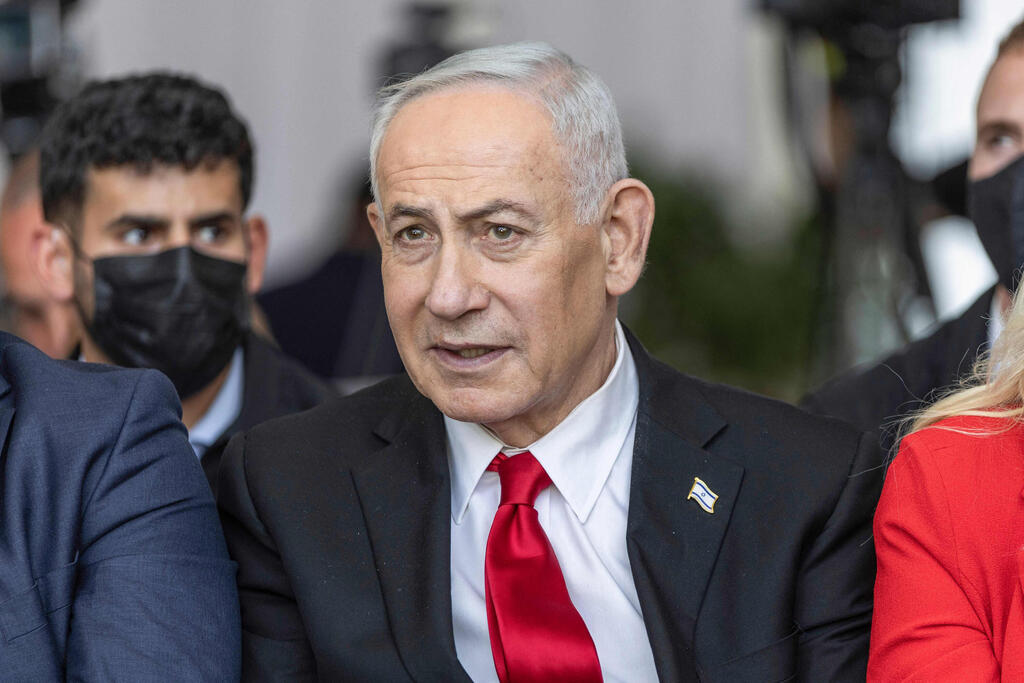
According to sources, the prime minister hoped to influence the agreement. Israeli Prime Minister Benjamin Netanyahu
(Photo: ilia YEFIMOVICH / AFP)
However, after the situation changed the following day, many people close to the administration immediately assumed that Israeli Prime Minister Benjamin Netanyahu had intervened at the last moment.
Netanyahu’s concerns about a Saudi nuclear program are well known, and Israel opposes any arrangement that could allow an Arab country to develop a nuclear weapon.
Two Israeli sources told CNN that Netanyahu hoped to influence the agreement, with one of them adding that the prime minister intended to pressure Trump to include normalization with Saudi Arabia as part of the deal — or at least significant progress toward it.
However, the White House later said that Trump and Netanyahu had not discussed the issue at all.
“Not to my knowledge,” Karoline Leavitt replied when reporters asked whether the two leaders had spoken about it. She added that Trump was simply reiterating a position he has held for a long time: that Saudi Arabia should establish diplomatic relations with Israel.
The Influence of conservative media
According to sources familiar with the matter, critical coverage in conservative media influenced Trump’s decision to halt the agreement in its current form.
“This deal’s origins are in the Biden Administration, which held out nuclear cooperation as a reward if the Saudis were to join the Abraham Accords,” the Wall Street Journal editorial board wrote, in a publication that has often criticized Trump. “Riyadh has resisted pressure to do so, but its reward now arrives from the Trump Administration anyway. One has to hope the Saudis have offered something more.”
Similar criticism was heard on Fox News. At the start of the 7 a.m. broadcast, host Brian Kilmeade said the agreement was “a bit of a surprise” and noted that a similar idea had already been raised during the Biden administration.
Trump changed his mind minutes after commentators on the channel discussed the agreement. Fox News headquarters in New York
(Photo: Maria Sbytova, shutterstock)
“During the Biden years, they said we’ll think about it. But before we do that, we need you to sign on to the Abraham Accords,” Kilmeade said, expressing surprise that Crown Prince Mohammed bin Salman had apparently received what he wanted without that condition.
Kayleigh McEnany, who served as White House press secretary during Trump’s first term and is now a Fox News host, also questioned why the normalization issue had been left out.
“When I was leaving the first Trump administration, I was told we were pretty close to a normalization of relations between Israel and Saudi Arabia,” she said.
Indeed, senior Biden administration officials worked to advance normalization between Israel and Saudi Arabia and held intensive talks with Saudi officials over a framework for a civil nuclear agreement that was supposed to accompany an announcement establishing relations.
However, Hamas’ October 7, 2023, terror attack halted the progress.
Israel’s response, which was viewed in the Arab world as disproportionate, led the Biden administration’s negotiating team to seek a more limited “less for less” framework, but such an agreement was never reached.
Since then, Crown Prince Mohammed bin Salman has made clear that he cannot agree to establishing diplomatic relations with Israel without a credible and achievable pathway toward the creation of a Palestinian state.
Despite this, Trump brought the condition back to the table when he published a post on Truth Social at 7:52 a.m. — only minutes after a Fox News panel had discussed precisely this issue.
Later that morning, Karoline Leavitt said Trump had not spoken with the crown prince — Saudi Arabia’s de facto ruler — in the hours before or after he unexpectedly announced the new conditions.
According to her, the conditions should not have surprised anyone.
“The president has spoken directly with the Saudis about this issue in many conversations in the past, and the administration will continue to have those conversations with them,” she said.