

Saudi newspapers celebrated what they called a “historic” nuclear agreement with the United States on Thursday, presenting it as the foundation of a decades-long partnership that would allow the kingdom to develop a civilian nuclear program and potentially enrich uranium on its own territory.
The agreement has caused deep concern in Israel, particularly because Washington did not condition it on Saudi normalization with Jerusalem. Critics also warn that it could weaken longstanding efforts to prevent the spread of sensitive nuclear technology across the Middle East.
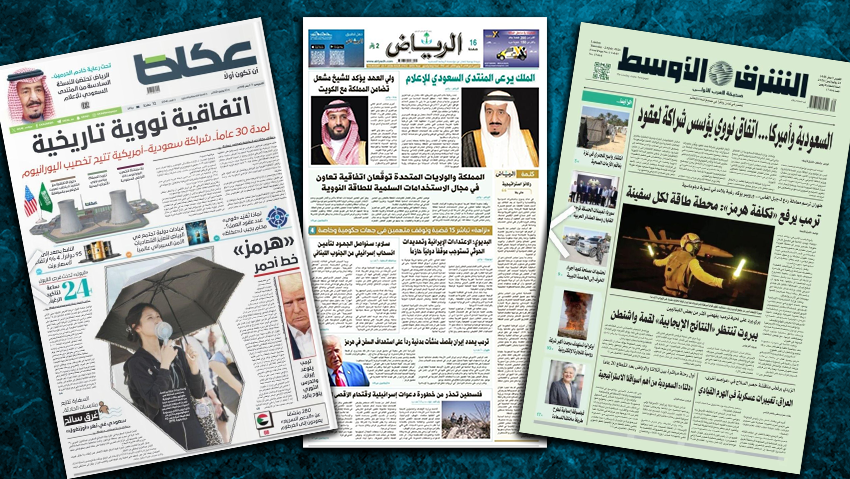
The Saudi newspaper Okaz declared: “Historic nuclear agreement. For 30 years, a Saudi-American partnership enables uranium enrichment.” The London-based Arabic newspaper Asharq Al-Awsat said the agreement established “a partnership for decades,” while Al Riyadh reported that “the kingdom and the United States signed an agreement for peaceful cooperation in nuclear energy.”
Nuclear program without the ‘gold standard’
Before the agreement was announced, The New York Times reported that former senior Israeli security officials believed that, in the best-case scenario, the deal would erode the possibility of normalization between Israel and Saudi Arabia. In the worst case, they warned, it could trigger a regional nuclear arms race as additional countries seek programs of their own.
The agreement will remain in force for 30 years and does not include the so-called “gold standard,” which imposes strict limits intended to prevent a civilian nuclear program from being used to develop weapons in the future. According to The Wall Street Journal, the agreement is worth tens of billions of dollars and is intended to give American companies a central role in building Saudi Arabia’s nuclear infrastructure while keeping foreign competitors at a distance. A key provision could allow American companies to construct a uranium enrichment facility in Saudi Arabia if a joint US-Saudi review concludes that such a step is justified.
The agreement had been under discussion for years. Under the Biden administration, nuclear cooperation was viewed as part of a broader package that would also include Saudi recognition of Israel. Following the October 7 attack, that possibility grew increasingly remote, and President Donald Trump ultimately separated U.S.-Saudi nuclear cooperation from any demand that Riyadh normalize relations with Jerusalem.
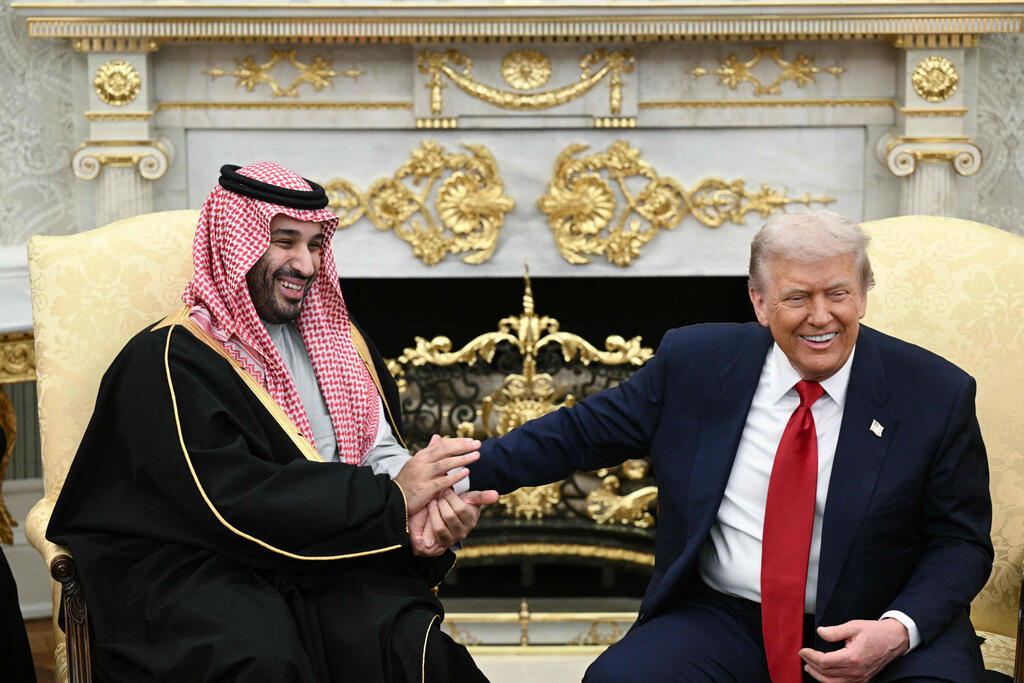
Saudi Crown Prince Mohammed bin Salman and US President Donald Trump
(Photo: Brendan SMIALOWSKI / AFP)
Avner Vilan, a former senior security official and nuclear expert, warned that the deal could establish a dangerous precedent. “For the first time, a major Arab country in the Middle East may receive, under American sponsorship, not only nuclear reactors but also an opening toward control of uranium enrichment technology,” he said.
“Once a country controls the fuel cycle and enrichment technology, the distance between a civilian program and a military threshold capability becomes much shorter. There is no fundamental difference between military and civilian enrichment capability. The question will not only be what Saudi Arabia intends to do today, but what kind of regime will be there and what the situation in the region will look like in 10 or 20 years.”
Vilan said the agreement marked a historic change in American nonproliferation policy in the Middle East. “The agreement with the United Arab Emirates was based on what was called the ‘gold standard,’ an explicit renunciation of enrichment and the reprocessing of nuclear fuel,” he said.
“Here, the United States is prepared to leave the door open to Saudi enrichment, without normalization with Israel and without significant regional guarantees having been presented so far in return. This is not only a concession to the Saudis, but a change in the American threshold for the entire region.”
‘Legitimacy for a nuclear threshold capability’
Vilan said enrichment is inherently dual-use technology. “The same centrifuges can produce low-enriched fuel for a reactor and later, following a configuration change and a political decision, produce material at weapons grade,” he said.
“This does not mean Saudi Arabia will develop a bomb tomorrow, but it means it could acquire the knowledge, personnel, infrastructure and supply chain needed to obtain fissile material for a weapon much more quickly in the future.”
“The main concern is not that Saudi Arabia will become a nuclear enemy tomorrow, but that a new legitimacy is being created in the Middle East for nuclear threshold capabilities,” he added. “Although there is currently some overlap among Saudi, American and Israeli interests, nuclear policy cannot be built solely around relations with the present leader. Enrichment capability remains for decades, while regimes, alliances and interests change.”
Vilan also warned that the Saudi precedent could undermine international efforts to force Iran to abandon enrichment. “It will be very difficult to demand zero enrichment from Iran if the United States grants Saudi Arabia a legitimate path to the same technology,” he said.
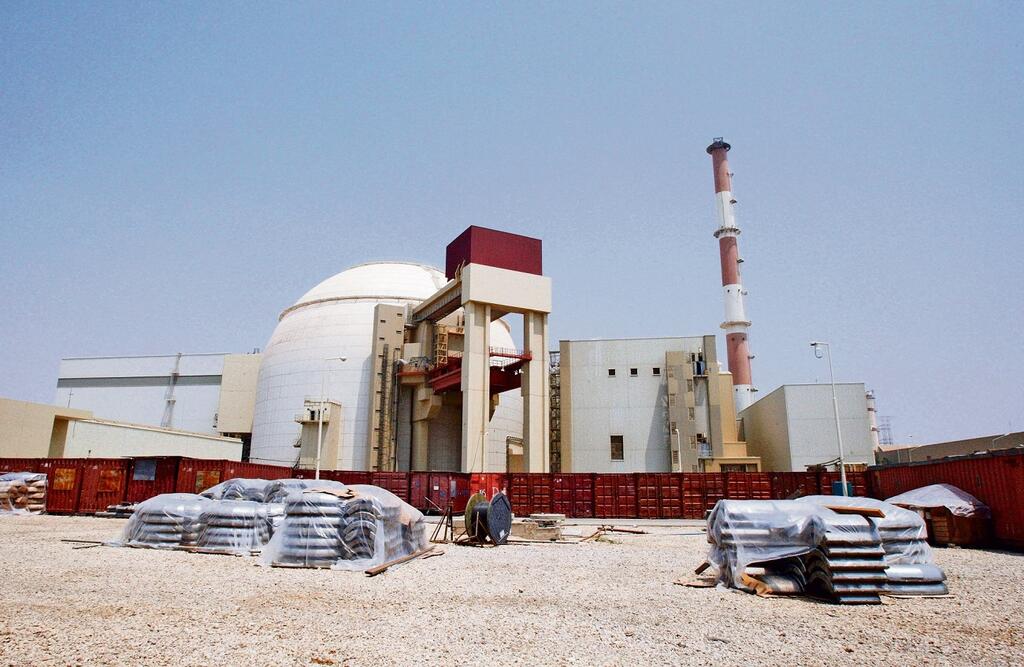
Iran's Bushehr nuclear power plant
(Photo: AP)
“The Iranians will argue, with a considerable degree of justification, that enrichment cannot be presented as a legitimate right for Riyadh and an existential danger when it is located in Tehran.”
Vilan said Israel should demand at least three safeguards: full adoption of the International Atomic Energy Agency’s Additional Protocol, continuous and intrusive monitoring of the entire nuclear fuel cycle, and a U.S. mechanism preventing Saudi Arabia from gaining independent and irreversible control over enrichment technology.
“It would also be preferable for enriched fuel to be produced outside Saudi Arabia, or at the very least for the operation of any enrichment facility to remain permanently dependent on American equipment, personnel and control systems,” he said. “But it must be said honestly: Oversight can provide warning and create obstacles, but it cannot erase accumulated knowledge. Once a country possesses the infrastructure and experts, the clock cannot be turned back.”
Deeper Saudi dependence on Washington
According to Vilan, the agreement strengthens Saudi Arabia against Iran in the short term, particularly on a declarative level, while deepening Riyadh’s dependence on Washington. In the longer term, however, it could transform the region from one in which only Iran seeks threshold-state status into one in which several countries possess or demand comparable capabilities.
“The next stage could be Turkey,” he said. “Ankara will find it difficult to accept a situation in which Iran possesses enrichment knowledge and infrastructure, Saudi Arabia receives American legitimacy to develop its own capability, and Turkey is expected to remain outside. This is precisely how a regional nuclear arms race begins, even if none of the countries initially decides to build a bomb.”
Vilan said the agreement could bring Israel and Saudi Arabia closer at the security and operational levels against Iran while simultaneously creating a profound strategic dispute. “Israel and Saudi Arabia share interests concerning Iran, missiles, drones and efforts to destabilize the regional order,” he said.
“But cooperation against a common enemy is not a reason to abandon basic nonproliferation principles. The problem is that the nuclear agreement has been disconnected both from normalization with Israel and from Israeli involvement in shaping the security mechanisms. Israel may find itself being asked to support a dramatic strategic strengthening of Saudi Arabia without receiving a diplomatic agreement in return and without sufficient influence over the nuclear conditions.”
Vilan warned that the immediate danger was an ambiguous agreement in which the practical arrangements governing enrichment, supervision and technological control are postponed and later shaped without Israeli involvement.
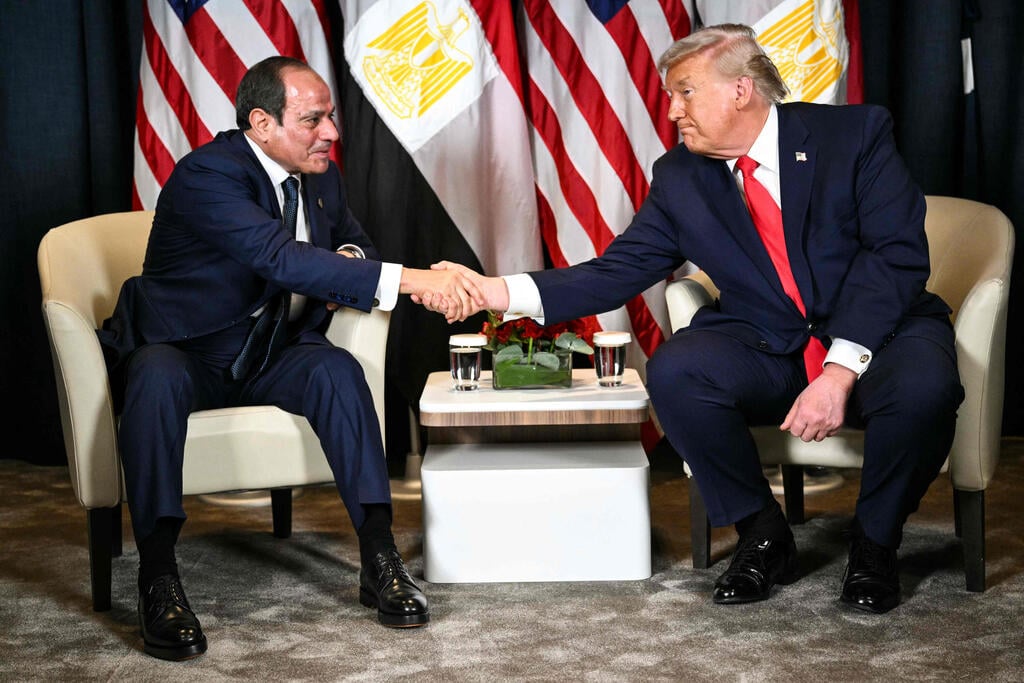
Donald Trump meets Egyptian President Abdel Fattah el-Sisi at the World Economic Forum in Davos, Switzerland
(Photo: Mandel NGAN / AFP)
“In the medium term, the concern is that Iran will use the Saudi precedent to reject any demand that it halt enrichment and that additional countries, particularly Turkey, will demand equal treatment,” he said.
“In the long term, the dangerous scenario is a Middle East containing several nuclear threshold states: Iran, Saudi Arabia and perhaps Turkey and Egypt, each capable of moving from a civilian program to a military capability in a short period following a crisis, a regime change or the collapse of regional alliances.
“The debate is therefore not for or against Saudi Arabia. The question is whether it is right to introduce another enrichment capability into the Middle East without a clear strategic return, without sufficient Israeli involvement and without mechanisms ensuring that the capability does not become the basis for a nuclear weapon in the future.”
‘The civilian program will end in nuclear weapons’
Israeli opposition leaders sharply criticized the government over the agreement. Former prime minister Naftali Bennett called it “a grave strategic failure” that endangers Israel’s security.
“The nuclear agreement reached with Saudi Arabia over Israel’s head is a grave strategic failure that endangers our security,” Bennett said. “Enriching nuclear material on Saudi soil could lead to a regional nuclear race and a dangerous loss of control. There is no real way to predict what the Middle East will look like in a decade or two, and therefore what is needed is fewer centrifuges in the Middle East, not more.”
Yisrael Beitenu Chairman Avigdor Liberman said the civilian program would ultimately lead to nuclear weapons. “We must all understand that Saudi Arabia’s civilian nuclear program will end in nuclear weapons and lead to a mad arms race throughout the entire Middle East,” he wrote.
“The State of Israel must make it unequivocally clear that we will oppose this with all our strength. The Israeli government must act decisively with the U.S. Congress to stop the move.”
Democrats Chairman Yair Golan accused Prime Minister Benjamin Netanyahu of leaving Israel unable to influence decisions affecting its security. “Under Netanyahu, Israel has completely lost the ability to influence its own fate,” Golan wrote.
“Once, decisions like these would not have been made without Israel being a central partner in shaping them. Today, our security interests are being trampled. We saw it with Iran, we saw it in the talks concerning Gaza and Hamas, we saw it in Lebanon, and now we are seeing it with Saudi Arabia as well.”