

Jared Kushner, President Donald Trump’s son-in-law and one of his key Middle East envoys, held the largest stake in Phoenix Holdings through his private investment firm, Affinity Partners, according to an extensive CNN investigation. Phoenix also invests in businesses tied to Israel’s military campaigns.
According to the investigation, Kushner avoided deeper scrutiny of the potential conflict of interest because he was serving as an unpaid envoy rather than in an official government role that would have required him to disclose his financial assets. The arrangement, CNN reported, created an unprecedented dual role in the Trump administration, combining profitable business interests with high-stakes diplomacy against the backdrop of a devastating war. Kushner has described Phoenix as Affinity’s “best investment.”
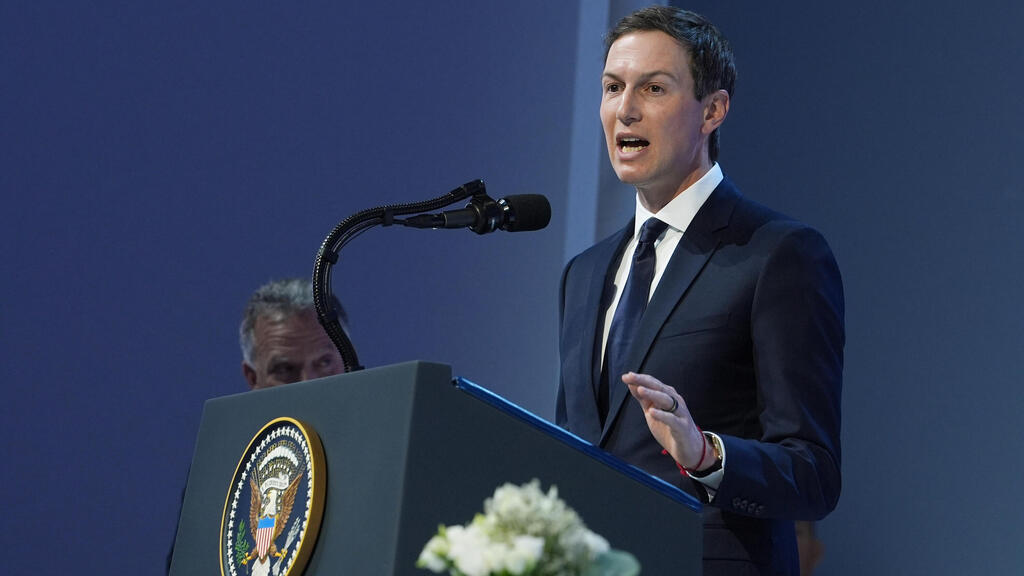
Records covering only a small portion of Phoenix’s holdings show that the company invested hundreds of millions of dollars in Elbit Systems, Israel’s largest defense contractor. Phoenix also holds stakes in at least eight other companies that supply equipment to the IDF, ranging from drones to warships and demolition equipment.
All nine companies identified by CNN saw their share prices rise last year, with many noting that the war in Gaza had increased demand for their businesses. Affinity does not directly hold stakes in the nine companies, but benefits financially when Phoenix profits.
A key architect of the Gaza ceasefire
Since spring 2025, Kushner has served as a leading voice in the administration on Middle East policy, advising Trump and traveling around the world to negotiate with leaders, including Prime Minister Benjamin Netanyahu. He also has unveiled plans to rebuild the Gaza Strip and transform it into a global tourism hub.
Kushner was a key architect of the Gaza ceasefire agreement reached between Israel and Hamas last October, although Israel has continued striking the Strip almost daily despite the agreement.

Phoenix Holdings headquarters
CNN found no sign that Kushner’s diplomatic activity directly influenced the investments it examined. His firm, however, recorded significant gains from its investment in Phoenix, selling a quarter of its stake in July for more than $340 million — a return of five times its initial investment.
Affinity, which is wholly owned by Kushner, remained Phoenix’s largest shareholder with a 7.4% stake worth more than $1 billion as of July.
Kushner has spoken publicly about both his Phoenix investment and his role as a peace broker, arguing that economic profit is the best path to lasting peace.
“When you get an Arab and Israeli together and they start talking about a business opportunity, they forget about everything else and then they realize that there’s a lot of similarities,” Kushner told the “No Priors” podcast last September.
“My investors from the Middle East are now looking at Israel, and they’re saying, ‘Wait a minute, maybe there’s a benefit to having these wars done.’”
His critics, however, are raising questions about whether he is acting in the interests of U.S. taxpayers or his own financial interests.
“There are always people who profit from war or government policies. The difference is that the people profiting should not be the people making the decisions to make that policy. And that is what is happening here,” according to Cynthia Brown, chief ethics counsel at Citizens for Responsibility and Ethics in Washington.
An attorney for Kushner told CNN that Kushner “never participated in or directed Phoenix’s decisions,” adding that he had “no involvement in the decision to purchase, hold or sell any of the nine companies” identified by CNN, and that he had never served on Phoenix’s board.
Kushner himself, however, told Forbes last September that he maintained a “very active dialogue” with Phoenix Group and met with its management every few weeks.
His attorney confirmed to CNN that the statement was accurate at the time, and that Kushner “regularly spoke with Phoenix management about the company, broader market trends and potential strategic opportunities.” The attorney added that the frequency of those conversations had declined significantly since Kushner became “substantially more engaged in volunteer public-service and diplomatic efforts.”
Some of Phoenix’s holdings in companies linked to the Israeli military predated Affinity becoming its largest shareholder. Others came afterward, including a company that manufactures electronic fuses for shells used in Gaza and another that produces parts for Israeli tanks.
According to the investigation, Phoenix declined to address apparent inconsistencies in how some of its public reports were labeled. However, two Israeli accountants independently reviewed the records and concluded that despite the discrepancies, the documents analyzed by CNN did reflect Phoenix’s holdings.
White House: 'A tired narrative Democrats have been pushing'
The largest holding among the companies identified, worth at least $265 million, is in Elbit Systems. Over the past year, Elbit has won contracts worth hundreds of millions of dollars from Israel’s Defense Ministry, including about $200 million for advanced aerial munitions, $48 million for thousands of 155 mm artillery shells and $210 million to upgrade army tanks.
Israel was Elbit’s largest market in 2025, accounting for 32% of its total revenue. Elbit’s share price has risen by more than 165% since the war began, according to Tel Aviv Stock Exchange data.
Phoenix’s other holdings include about $68 million in NextVision, which manufactures cameras for military drones and sells them to contractors including Elbit and Israel Aerospace Industries; at least $40 million in Reshef Technologies, which manufactures electronic fuses for artillery shells and has received Defense Ministry orders worth $165 million since the war began; a smaller stake, worth $524,524, in Israel Shipyards, which builds fast attack craft for the navy; and a stake of more than 10% in Ashot Ashkelon, which sells gearboxes and propulsion systems for IDF tanks and armored vehicles.
Phoenix also held smaller investments in two giant U.S. corporations: $4 million in Boeing, whose products include fighter jets, helicopters and kits for converting bombs into precision-guided weapons, and $2.5 million in Caterpillar, whose bulldozers have been used, according to the United Nations, to demolish neighborhoods in Lebanon and Gaza.
Boeing declined to comment, as did Caterpillar. The other companies in which Phoenix invested did not respond to CNN’s requests for comment.
The White House dismissed concerns about a conflict of interest. White House spokeswoman Anna Kelly called them “a tired narrative Democrats have been pushing against President Trump, his family and his administration for a decade,” adding that “Kushner’s private business activities have nothing to do with his diplomatic involvement, which he carries out on a volunteer basis at the president’s request.”
Democrats, for their part, have called for new investigations into the matter, efforts that could intensify if they regain control of the House of Representatives in the midterm elections.