


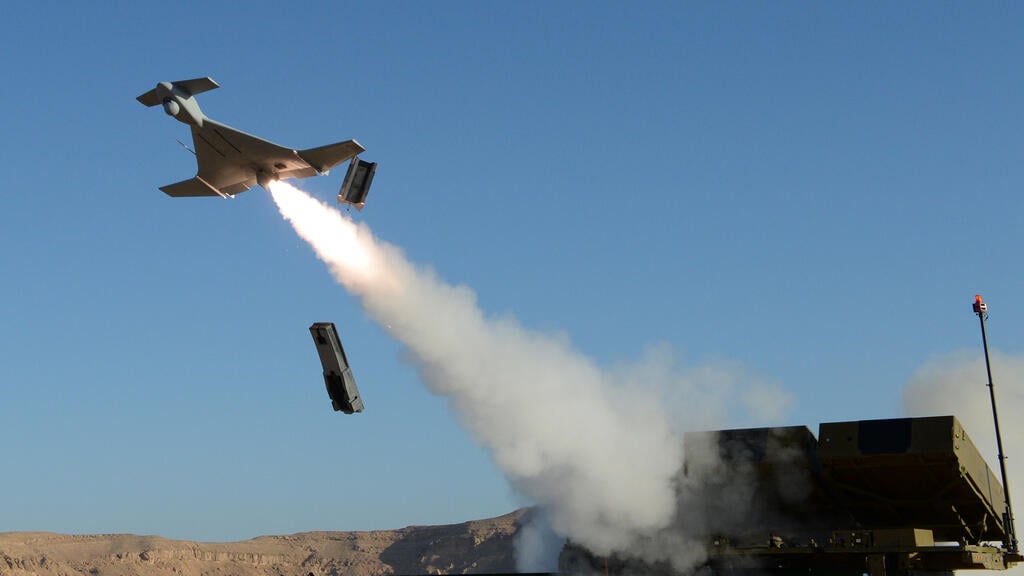
Israel supports India’s right to self-defense and New Delhi knows it can rely on Jerusalem, Israeli Ambassador to India Reuven Azar said in recent interviews—while Pakistan has accused India of using Israeli-made “suicide drones.” According to a spokesperson for Pakistan’s military, the country intercepted 12 Harop drones, manufactured by Israel Aerospace Industries, which it claims were launched by India. Debris was reportedly found near major cities including Karachi and Lahore. “We are neutralizing them one by one,” the spokesperson said.
The Harop drone, technically classified as a loitering munition, is launched from outside the battlefield and has a maximum flight range of 200 kilometers. It can hover over hostile territory, identify targets and crash into them. In addition to Israel, the drone has been sold to India, Germany and Azerbaijan, the latter having used it in fighting against Armenia.
Indian army releases footage of missile launch from warship
(Photo India's military)


Speaking to Indian media outlets, including CNN News18, and in official social media posts, Azar articulated Israel’s unequivocal support for India’s sovereignty and the protection of its citizens. He expressed solidarity with India in its conflict with Pakistan, saying that “Israel supports India’s right to self-defense. Terrorists should know there is nowhere to hide from the crimes they’ve committed against innocent people.”
Indian interviewers, noting that Israel was among the first countries to express support for India following Operation Sindoor, drew parallels between the October 7 Hamas massacre and the recent attack in Pahalgam, and asked Azar what lessons India could draw from Israel’s counterterrorism experience.
Operation Sindoor targeted terrorist infrastructure in the Pakistan-controlled region of Kashmir and was seen as a strategic response to attacks by groups based there. “The Pahalgam attack is a watershed moment due to its brutality, resembling the characteristics of October 7,” said Azar. “Democracies have no choice but to act against such severe threats to their security. India exercised its right to self-defense, and we are confident it is doing so responsibly to protect its citizens.”
Get the Ynetnews app on your smartphone: Google Play: https://bit.ly/4eJ37pE | Apple App Store: https://bit.ly/3ZL7iNv
Azar also highlighted shared values between Israel and India, including innovation, advanced agriculture, health and military technology. “The partnership between Israel and India is grounded in deep values of democracy, security and innovation,” he said, adding that the two countries are working to strengthen cooperation in agricultural tech, water solutions, and disaster management.
His comments also contained an implicit reference to common threats posed by hostile states. Without naming any countries, Azar said that “fighting terrorism transcends borders and requires close coordination between nations with shared values.”
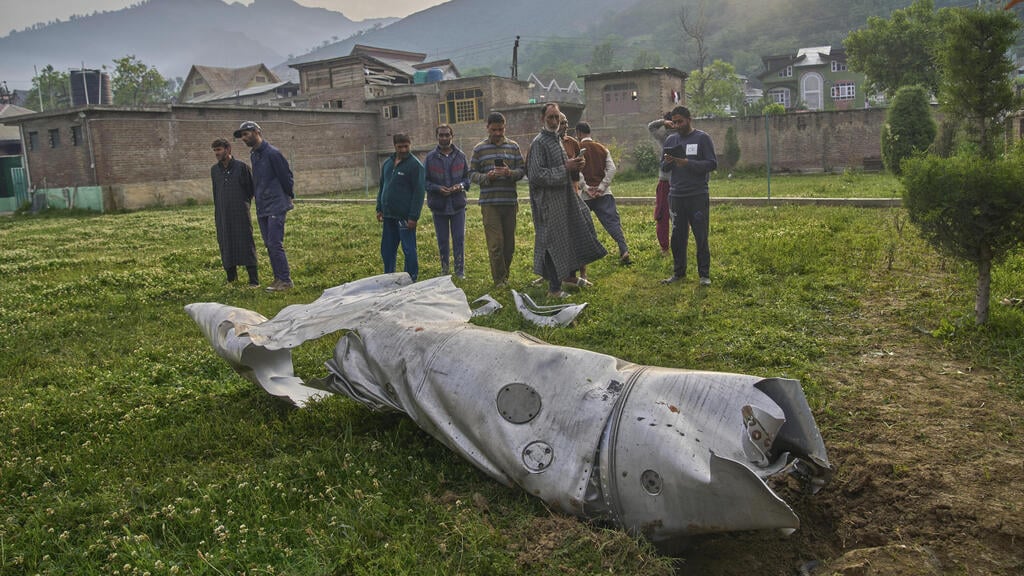
Parts of a missile that fell in Pakistan
(Photo: Dar Yasin/AP)
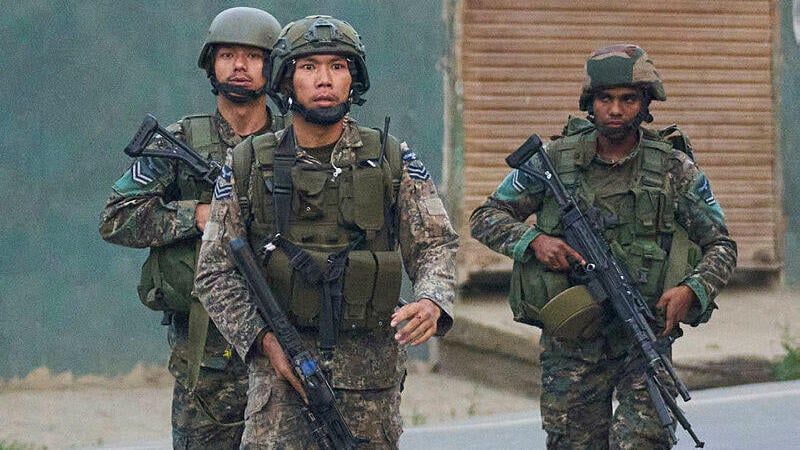
Indian soldiers in the city of Pampore
(Photo: Dar Yasin/AP)
In a world seeing rising violence and organized terrorism, Azar emphasized the importance of standing together against aggression. He stressed the need for deeper international cooperation to prevent the spread of radical ideologies and to punish both terrorists and those who support them.
“Terrorism breaks all rules and presents democracies with difficult dilemmas,” Azar said. “We are fighting this war with one hand tied behind our backs, and I do not envy the Indian government or its decision-makers as they weigh how to act based on intelligence in order to achieve effective results and prevent another such attack.”
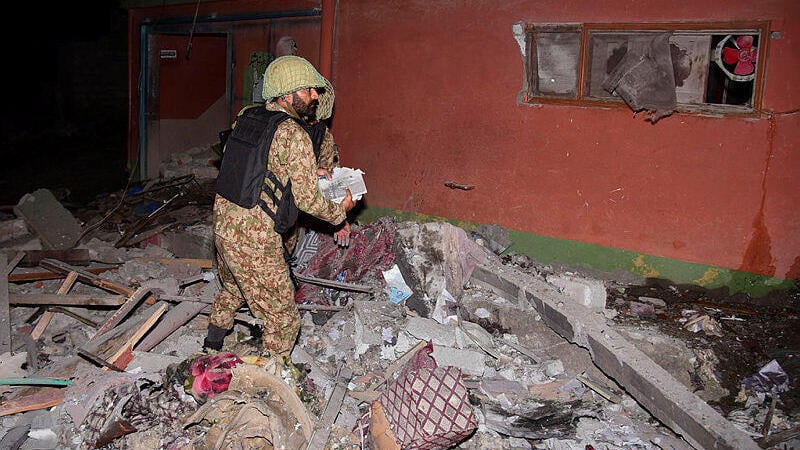
Pakistan Army in the ruins of the Indian attack in Muzaffarabad
(Photo: M.D. Mughal/ AP)
Azar was careful to stress that Israel is not involved in India’s conflict, and he refrained from giving advice or passing judgment. He said the international community must not only condemn terrorism but also act against it—by arresting perpetrators, curbing the spread of dangerous weapons, and fighting radical content online, among other measures.
Footage from one of India's attacks in Pakistan
While expressing clear support for India in his interviews, Azar avoided directly naming Pakistan—a significant diplomatic choice, especially given that Turkish President Recep Tayyip Erdoğan, a vocal critic of Israel since October 7, has publicly supported Pakistan.
Tensions between India and Pakistan, two nuclear powers with a decades-long rivalry, have sharply escalated. India has accused Pakistan of backing the terrorists behind the deadly April 22 attack in the disputed Kashmir region, and the two countries have since exchanged fire and launched strikes against each other in the area.