

Pakistan has asked the United States to provide a $10 billion exchange stabilization facility that could offer a major financial lifeline to the cash-strapped country, a source briefed on the matter told Reuters.
The request follows Pakistan’s role in brokering talks over the war with Iran, which raised Islamabad’s diplomatic profile and fueled hopes that it could turn its renewed influence in Washington into economic support.
Gallery
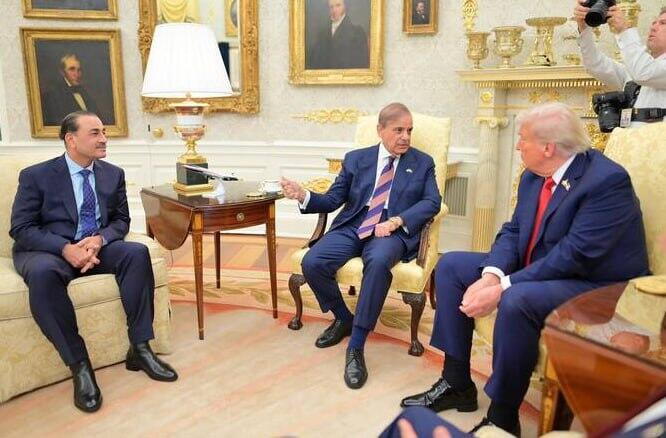
Pakistan Army Chief Field Marshal Asim Munir, left, with US President Donald Trump and Pakistani Prime Minister Shehbaz Sharif at the White House in September 2025
Pakistan asked U.S. Treasury Secretary Scott Bessent to establish a bilateral exchange stabilization support facility worth $10 billion, with a maturity of up to five years, according to Reuters.
If approved, the arrangement could bolster Pakistan’s foreign currency reserves, ease pressure on the rupee and reduce its dependence on emergency multilateral financing. Islamabad is currently pursuing strict fiscal and monetary policies under a $7 billion International Monetary Fund program.
The U.S. Treasury declined to comment on the reported request. Pakistan’s Finance Ministry did not immediately respond to Reuters outside Asian business hours.
Pakistani Finance Minister Muhammad Aurangzeb met Bessent in Washington on Tuesday and raised the country’s vulnerability to regional geopolitical developments, the ministry said in a statement that did not mention the proposed facility.
Aurangzeb sought greater U.S. support for Pakistan’s return to international capital markets, higher foreign exchange reserves and improved sovereign credit ratings, the ministry said. Both sides also pledged to deepen economic cooperation, encourage American investment and advance strategic projects.
Exchange stabilization facilities are rare Treasury Department backstops, generally provided through the Exchange Stabilization Fund. They can supply dollars, currency swaps or guarantees to stabilize reserves and exchange rates.
They differ from the permanent dollar swap lines maintained by the U.S. Federal Reserve with several major central banks. The Treasury facilities are temporary interventions intended to protect financial stability during periods of acute pressure.
A package approved for Argentina in 2025 was the first new exchange stabilization operation for a foreign government since Uruguay received support in 2002, aside from the long-standing U.S. swap arrangement with Mexico, which dates to the 1940s and is currently worth $9 billion.
Pakistan narrowly avoided default in 2023 after securing a $3 billion IMF standby agreement. It later obtained a $7 billion Extended Fund Facility and a separate $1.3 billion loan aimed at strengthening resilience to climate change and natural disasters.
Despite those arrangements, Pakistan’s reserves remain heavily dependent on official loans, debt rollovers and deposits from China and Saudi Arabia. That leaves the country vulnerable to delays in IMF payments and changes in support from its regional partners.
The scale of that vulnerability became clear in April, when Pakistan repaid about $3.5 billion to the United Arab Emirates, equivalent to roughly one-fifth of its reserves. Saudi Arabia then provided $3 billion in fresh assistance.
Pakistan’s central bank said in January that reserves could rise to $20 billion by the end of 2026, approaching the record level recorded in 2021.
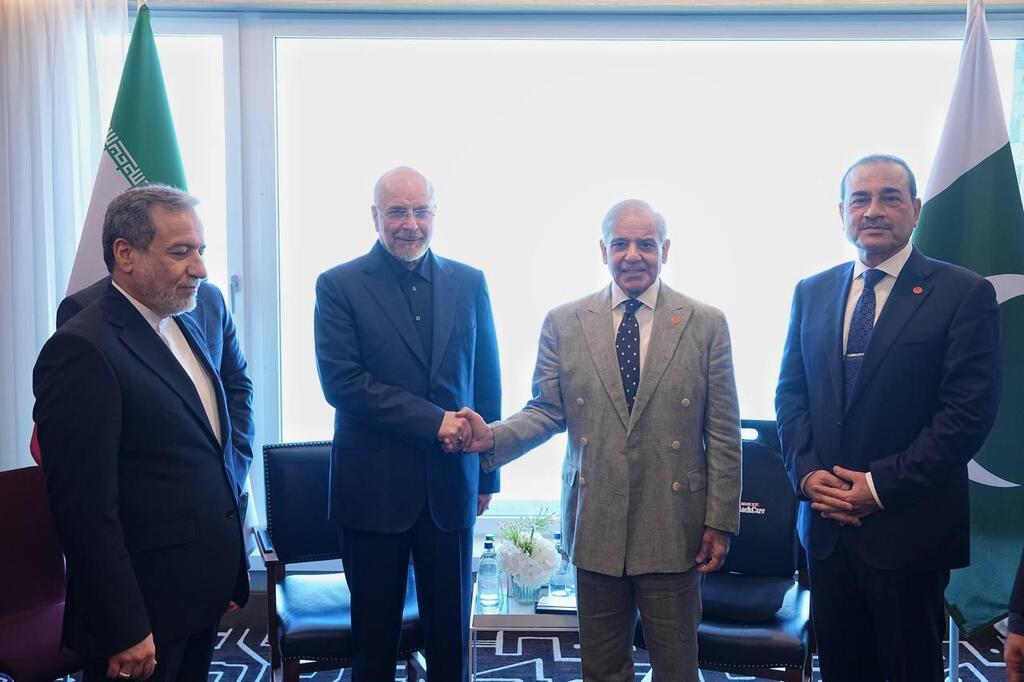
Iranian Foreign Minister Abbas Araghchi and Parliament Speaker Mohammad Bagher Ghalibaf with Pakistani Prime Minister Shehbaz Sharif and Army Chief Field Marshal Asim Munir during talks in Switzerland
A U.S. exchange stabilization facility would carry significance both as a financial backstop and as a political signal of closer ties between Islamabad and Washington. It could ease pressure on the rupee while reducing Pakistan’s reliance on IMF tranches and improvised rescue packages from friendly governments.
IMF-backed reforms have helped stabilize the economy but have imposed a heavy political cost, including higher taxes, spending cuts and limited room for development and welfare programs.
Fitch Ratings said in April that Pakistan’s adherence to its IMF program had strengthened its access to financing, while rebuilt foreign currency buffers offered protection against economic shocks from the Middle East conflict.
The ratings agency also warned that higher energy costs and supply disruptions could rapidly erode those reserves.
Pakistan continues to struggle to attract foreign investment because of recurring balance-of-payments crises, policy uncertainty, security risks, previous restrictions on the repatriation of profits and a narrow export base. Its credit rating remains deep in speculative-grade territory, keeping borrowing costs high and limiting access to global markets.
Islamabad has sought to use its improving relationship with the Trump administration to address some of those weaknesses. Recent cooperation has included cryptocurrency, property development and mining.
Pakistan signed an agreement on stablecoin-based cross-border payments with an affiliate of World Liberty Financial, the main cryptocurrency company associated with President Donald Trump’s family.
It has also pursued a memorandum of understanding with the U.S. government to redevelop the shuttered Roosevelt Hotel in New York, which is owned by Pakistan International Airlines.
In the mining sector, Islamabad has courted American investment in the Reko Diq copper and gold project, for which the U.S. Export-Import Bank has announced $1.25 billion in financing.
Approval of the proposed $10 billion facility would represent one of the strongest signs yet that Pakistan’s diplomatic role in the Iran crisis has translated into tangible economic gains.