


Israel’s Foreign Ministry, working alongside the Mossad and Military Intelligence Directorate, has spent years persuading the European Union and other countries to designate Iran’s Islamic Revolutionary Guard Corps as a terrorist organization. “An enormous amount of diplomatic sweat has been spilled here over many years,” a senior Israeli official said Thursday, after EU foreign ministers agreed to define the central military arm of the Islamic Republic as a terrorist group.
The official said the effort began long before the current wave of protests in Iran. “For several years, Israel has been pushing the Europeans to include the Revolutionary Guards on the list. Today they are repressing their own people, but they are also exporting terrorism and are responsible for instability in Europe and the Middle East. This is a force that has operated abroad to promote attacks against Jews, Israelis and opposition figures.”
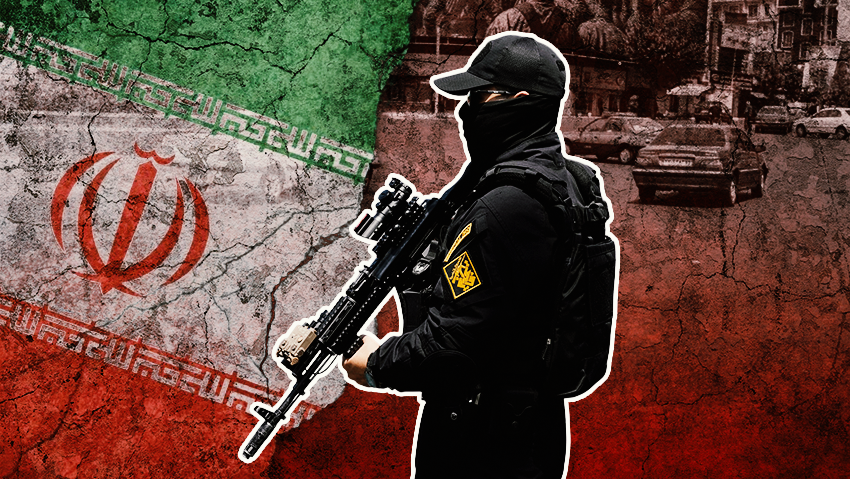
In Europe, countries such as Germany recognized early on the need to advance the designation and helped lead the effort. Others opposed it. France, Italy and Spain served as the main obstacles. Israel therefore focused its diplomatic pressure on those capitals, with Foreign Minister Gideon Saar holding repeated phone calls with his counterparts in an effort to dismantle the opposition.
A senior official said that without the unrest in Iran and the role played by the Revolutionary Guards in the killing of thousands of civilians, the European designation would not have occurred. “But it also would not have happened based only on their role in crushing the protests. The combination of Israel’s campaign, which included intelligence on the Guards’ role in exporting terrorism and instability, together with their actions inside Iran, tipped the scale.”
“You cannot cut off all channels”
The official added that intensive efforts were made to move more countries to the side of Germany, the Netherlands and Denmark, which supported the move. “In the end, a number of countries remained opposed, including France, Italy and Spain. Only last week, the Italian foreign minister announced he would support it.” He said the opposing countries argued that communication channels with Iran must be preserved and that not all ties could be severed. “Because this is such an influential body, they claimed they needed to keep talking to them.”
“For years, the Iranians warned that this would have major consequences, since the Revolutionary Guards are deeply embedded in the state, the economy, politics and military power,” the official said. “This was a marathon that lasted years, but because of the protests it turned into a sprint.” He described sustained behind the scenes work by the Foreign Ministry and other agencies to bring intelligence material forward and place the issue firmly on the European agenda. “For us it seems obvious why the Revolutionary Guards should be blacklisted, but for many others it was not.”
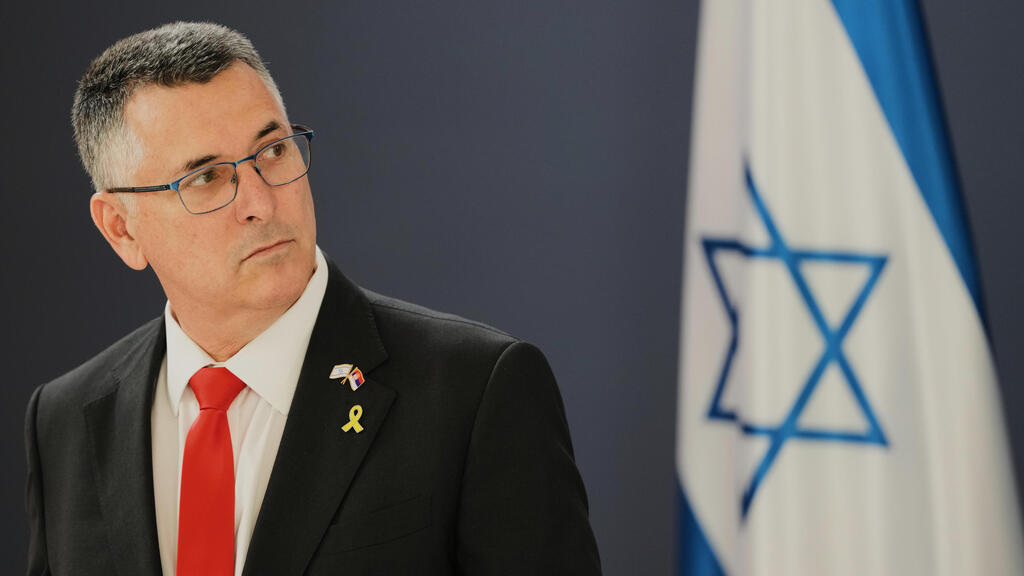
Foreign Minister Saar held repeated talks with counterparts
(Photo: Darko Vojinovic/AP Photo)
The effort included dispatching Israeli ambassadors to meetings at the Elysee Palace in Paris and the German chancellor’s office in Berlin, as well as sending briefers from Military Intelligence and the Mossad. Saar identified the protests in Iran as the decisive moment. “Now it was possible to persuade the last remaining opponents,” the official said. “Germany was the engine, and France was the brake. Saar marked France as the central target and held a very long conversation with the French foreign minister. Saar told him, ‘You cannot stand aside. This is the minimum you must do for the brave Iranians being killed there.’”
Italy announced its support earlier. The breakthrough came Wednesday when France said it would lift its opposition. Spain was the last to do so, paving the way for consensus within the EU. The senior official said the problem was never a lack of intelligence. “The countries knew the Revolutionary Guards are a very problematic body. The issue was how to translate that into a political decision, how to close the circle. Intelligence alone is not enough. You have to work with the political echelon.”
Designating the Revolutionary Guards as a terrorist organization will significantly restrict the movement of its members in Europe. The group numbers an estimated 150,000 personnel and controls between 30% and 50% of Iran’s economy. It is involved in numerous economic sectors, including oil sales. “The significance of the designation will be felt on three levels,” the official said. “Operationally, if you are identified as connected to the Revolutionary Guards in Europe, you become a criminal and can end up in prison. That was not the case before. It is a major shift in enforcement.”