

Iran’s Supreme Leader Ayatollah Ali Khamenei has prepared an emergency plan to leave the country if mounting unrest overwhelms security forces and threatens his grip on power, according to intelligence findings reported by The Times.
The plan envisions Khamenei, 86, departing Tehran alongside a small group of close relatives and senior aides — fewer than two dozen people — including his son Mojtaba, who is widely viewed as a potential successor. The move would be triggered if Iran’s military or internal security units were seen as unwilling or unable to enforce orders, the report said.
Unrest in Iran
(Video: Iran International)


An intelligence source cited by The Times said the leadership has already mapped out escape routes and logistical arrangements should conditions deteriorate rapidly. Former Israeli intelligence officer Beni Sabti told the newspaper that Russia would likely serve as Khamenei’s destination, saying Moscow remains the only country willing and able to provide him protection.
Sabti said Khamenei has long viewed Russian President Vladimir Putin favorably and considers Russia a cultural and political ally closer to Iran than Western states.
According to the report, the contingency planning reflects lessons drawn from the collapse of Syria’s former president Bashar al-Assad, a close Iranian ally who fled Damascus for Moscow in December 2024 as opposition forces closed in on the capital.
Preparations reportedly include securing access to cash, overseas properties and other assets to enable a swift departure. Khamenei controls extensive holdings through a network of foundations, including Setad, a powerful quasi-state organization. A Reuters investigation in 2013 estimated the value of assets under his control at roughly $95 billion.
Many senior figures in Khamenei’s inner circle already have family members living outside Iran, including in North America and the Gulf, according to The Times.
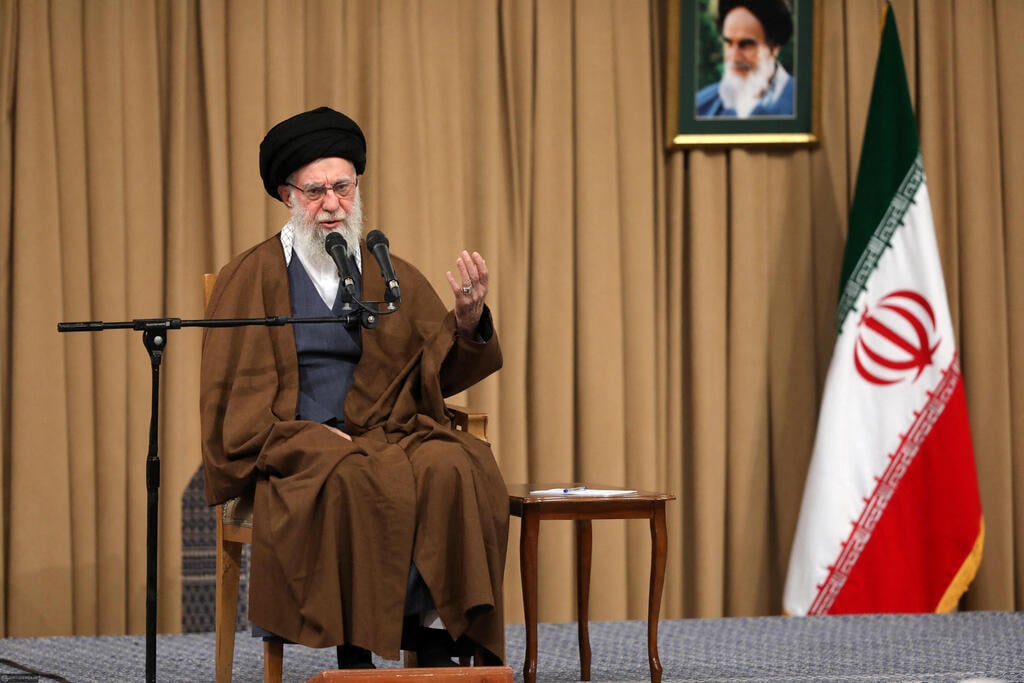
(Photo: KHAMENEI.IR / AFP, West Asia News Agency/Handout via REUTERS)
The report comes as protests fueled by economic hardship have spread across Iran in recent days, reaching major cities and religious centers such as Qom. Demonstrators accuse security forces — including the Islamic Revolutionary Guard Corps, the Basij militia, police and army units — of using live ammunition, tear gas and water cannons to suppress unrest.
All security forces ultimately report to Khamenei, who exercises sweeping authority over Iran’s military, judiciary and state institutions and relies heavily on the IRGC as the cornerstone of regime control.
An intelligence assessment reviewed by The Times said Khamenei has taken extensive measures to deter defections, tightly controlling appointments and rewarding loyalists. Still, the assessment described him as increasingly frail and psychologically strained following last year’s 12-day war with Israel.
Khamenei has kept a low public profile in recent weeks and has not addressed the latest protests. During the war, he reportedly spent much of the fighting in a fortified bunker as senior IRGC commanders were killed, reinforcing what the assessment described as a deep preoccupation with personal survival.