


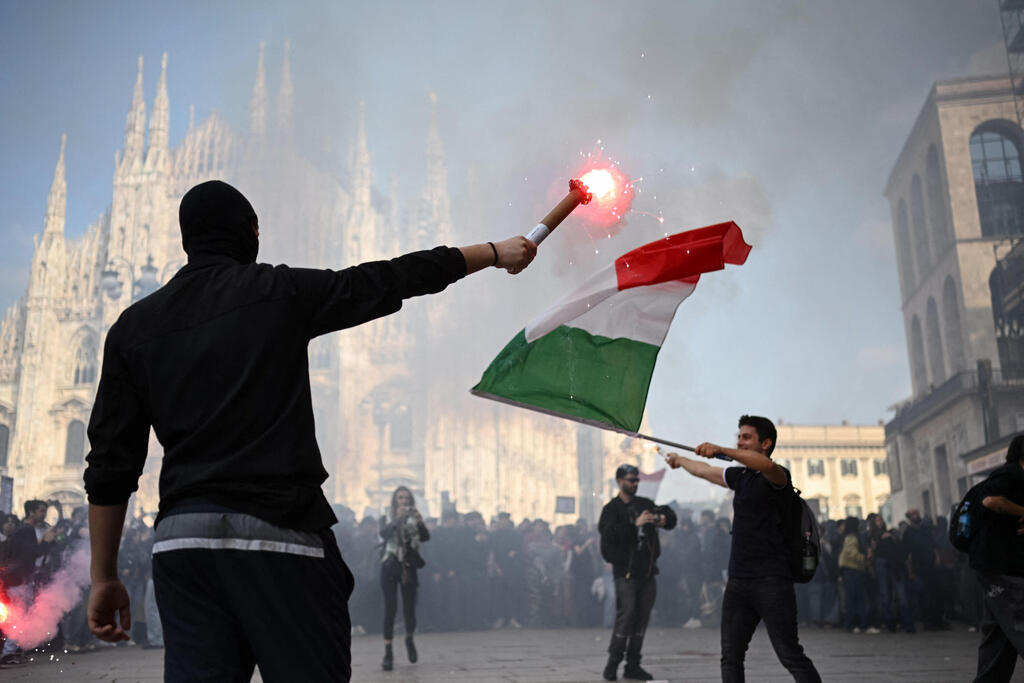
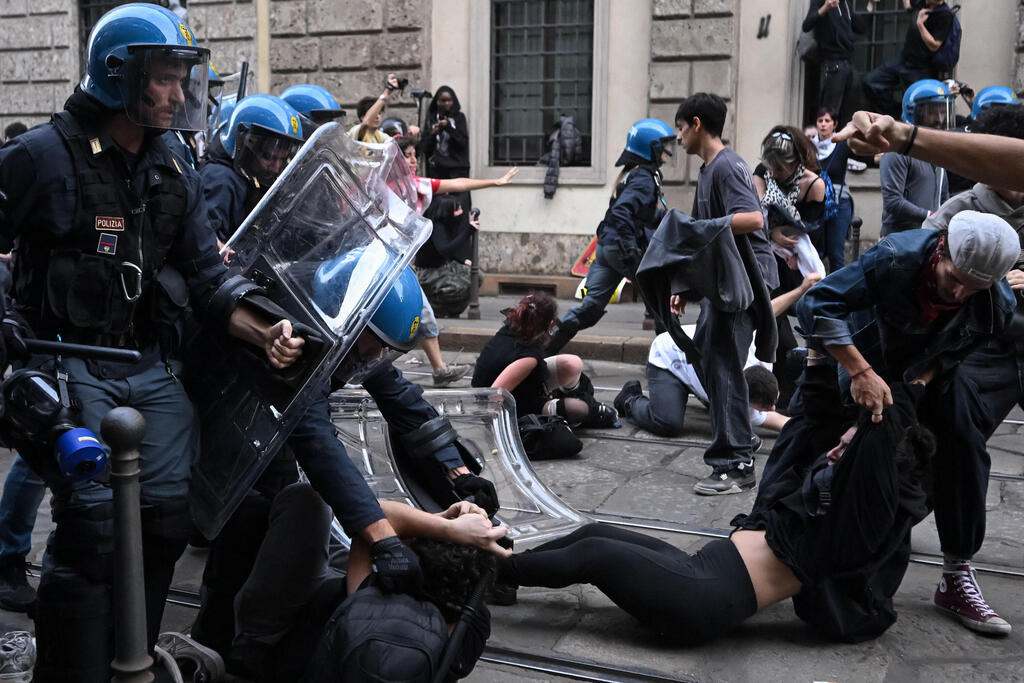
The disturbing images from France and the shock over the scale of violence there have, over the past 24 hours, diverted some attention from equally disturbing scenes in another major European city: Milan. On Saturday and Sunday, thousands of young people rioted in the city center, clashing violently with police officers who were vastly outnumbered, hurling concrete blocks and stones, vandalizing property, and looting and destroying numerous luxury stores in the heart of the city.
Italy was left in shock Sunday by the scenes of destruction and, above all, the extreme violence and rampaging of the rioters. Police were forced to fire tear gas and deploy water cannons in an attempt to regain control as they confronted hundreds of masked demonstrators. Among the well-known stores completely looted were Decathlon's flagship store, a Vodafone mobile phone store and one of the country's best-known bookstores, Feltrinelli.
Gallery
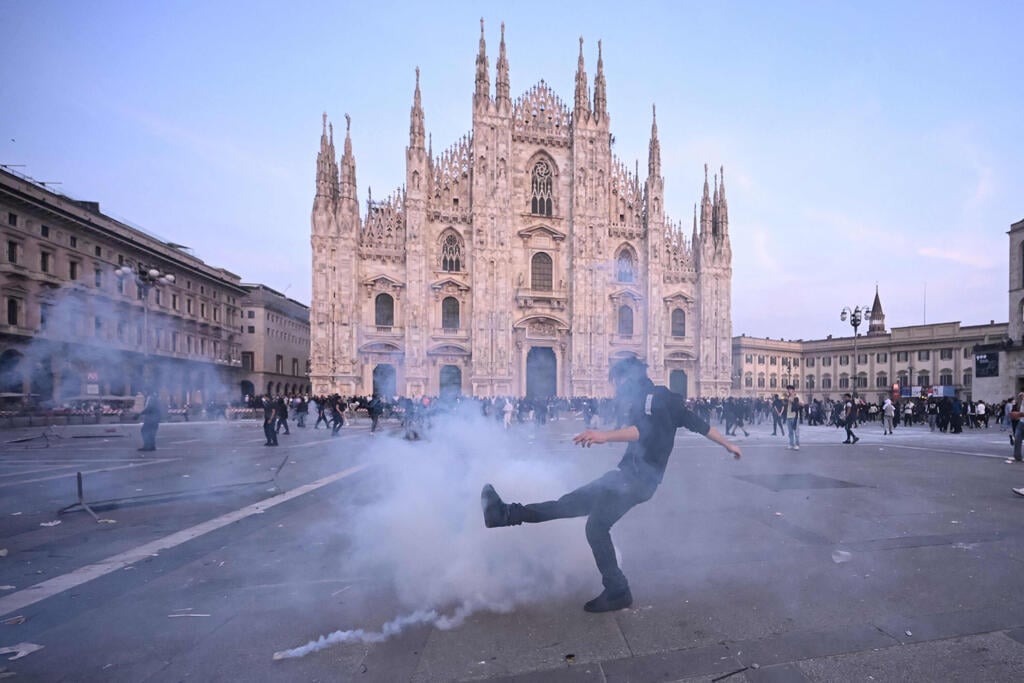
Riots Saturday outside Milan Cathedral, where luxury stores were also looted
(Photo: Piero CRUCIATTI / AFP)
(Photo: Piero CRUCIATTI / AFP)
(Photo: Piero CRUCIATTI / AFP)
Italian police announced Monday that they had arrested 271 young people involved in Sunday's unrest. Dozens of police officers were injured. Clashes similar to those in Milan also took place in Bologna, Brescia, Bergamo and Turin, all in northern Italy, resulting in dozens of arrests. But it was the scenes in Milan that left many Italians angry, outraged and, above all, bewildered, as the level of violence stunned both the authorities and the political establishment.
An extraordinarily high proportion of those arrested, nearly 80%, were minors, according to Italian media reports. Of the 32 suspects brought before a court for detention hearings, 23 were minors and 13 were foreign nationals. According to Corriere della Sera, an astonishing number of those detained were children as young as 11 to 14. Reports and police accounts indicated that radical left-wing activists and students also participated in the riots, including the looting and clashes with police. However, many managed to escape as the violence escalated. Those who were caught were predominantly children who had traveled into the city from Milan's suburbs. A large proportion came from immigrant backgrounds, including families originating in North Africa, Eastern Europe and elsewhere. Some were born in Italy to immigrant families that had lived in the country for decades.
Immigrant parents who built lives in Italy: 'I'm ashamed'
Corriere della Sera described remarkable scenes Monday outside Milan's central police station, where distraught and embarrassed parents stood waiting for their detained sons to be released. Some had lived in Italy for many years and were well integrated into society, while others barely spoke the language. Many waited in tears, visibly ashamed.
"If my child took part in these riots, I will punish him severely," one father was quoted as saying.
"I break my back every day to earn a living, and I'm ashamed. If my son did what they're saying, he'll pay dearly for it. I'm deeply disappointed in him," said another father of Tunisian origin.
"Where were you? What did you do? I'll tear you apart!" another father reportedly shouted after arriving to collect his arrested son.
"I wish someone had smashed your head in! I'll smash your head in!" one father, tears in his eyes, reportedly shouted at his son after he was released from custody.
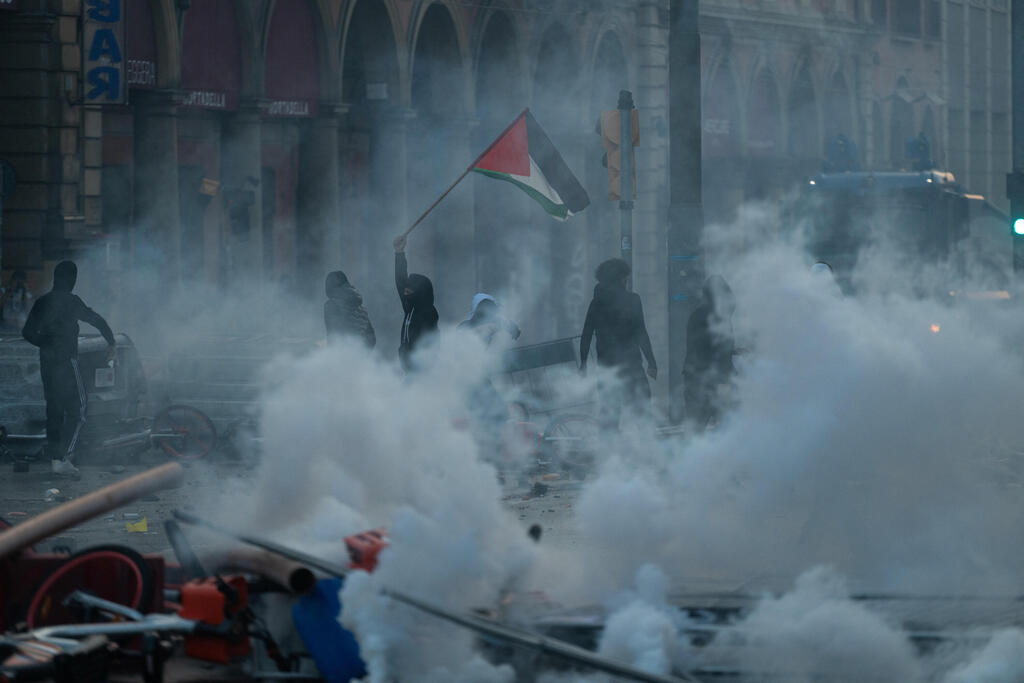
A Palestinian flag was also raised during the riots
(Photo: REUTERS/Michele Lapini)
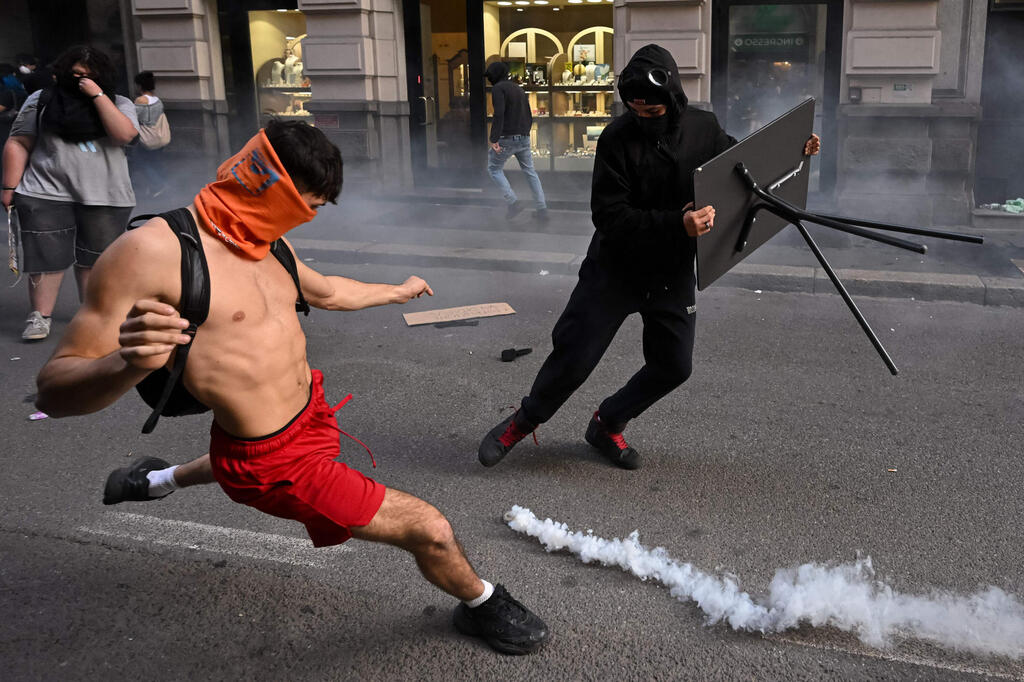
(Photo: Piero CRUCIATTI / AFP)
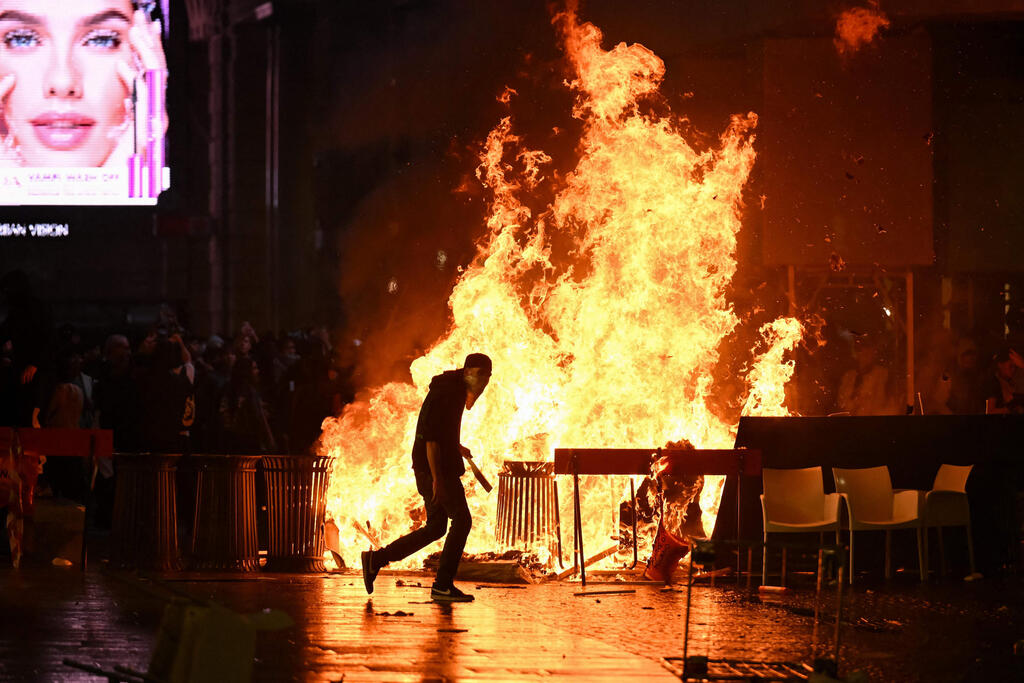
(Photo: Piero CRUCIATTI / AFP)
Italian media reported that many of the teenagers had flocked to central Milan after seeing the demonstrations begin on Saturday. The protests had originally been planned around the rising cost of living, but as images spread on Instagram and TikTok, young people began traveling into Milan from surrounding towns and cities.
Many of these teenagers, or children, belonged to groups known as "Maranza." The term, Italian slang for groups of children and teenagers who move around together, often dressed in fashionable clothing but displaying aggressive, anti-establishment attitudes, has become increasingly familiar across Italy in recent years, particularly in the Milan area. These groups have become a significant part of the city's problem with violence and crime, fueling racist sentiment because many of their members are second- or third-generation immigrants, often from Arab or Eastern European backgrounds.
Masked 10-year-olds with clubs and stolen scooters
Many of the children arrested Saturday and Sunday were reportedly associated with these groups. Italian media outlets spoke with some of them, who said they had decided to join the "party" and film everything for TikTok. Some openly boasted about the looting and clashes with police.
Many parents of those arrested said they learned their children had traveled to Milan to participate in the riots only after they were detained. One couple said they initially heard their son had not arrived at school, only to discover later that he had been arrested. Other parents tracked their children's locations through an app and discovered they were at a police station.
The young age of the rioters has shocked many Italians. Journalists covering the unrest documented masked children as young as 10 and 11 riding electric bicycles or scooters, wearing stolen helmets and carrying clubs and metal objects. Some were seen leading groups of teenagers into confrontations with police or raids on stores, stopping along the way to upload footage of the incidents to social media.
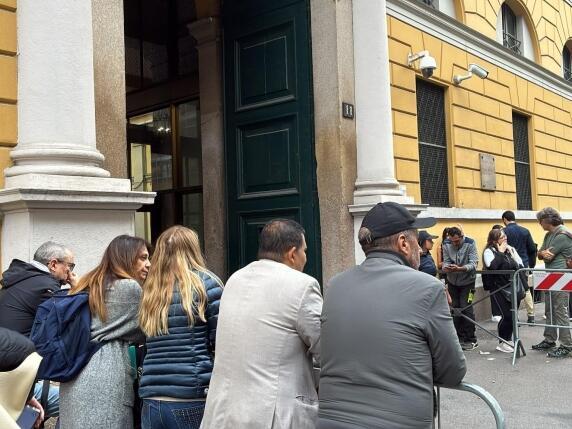
Parents of children arrested during the riots wait outside a Milan police station
(Photo: Corriere della Sera)
Italian media also reported Monday that police had identified members of the organized radical left, associated with Milan's social centers, among the demonstrators. However, many of these activists reportedly left when police began using force to disperse the crowds and restore order.
Authorities are still struggling to determine who was behind the riots, who organized the gatherings, if anyone, and whether the violence was coordinated at all.
One widely circulated hashtag, "Italy in the Squares," called on Italians to join the demonstrations, echoing events in France. But authorities have yet to identify any organization or individual responsible for orchestrating the unrest.
Investigators are also examining the possibility that a foreign organization was behind the incitement to violence and the mass gatherings, a suspicion frequently raised in Europe in recent years following outbreaks of anti-establishment unrest. So far, however, Italian authorities have found no evidence to substantiate such suspicions. The prevailing assessment is that many of the young people who rioted in Milan were driven simply by a desire to vent their frustrations, "break things" and "destroy things."
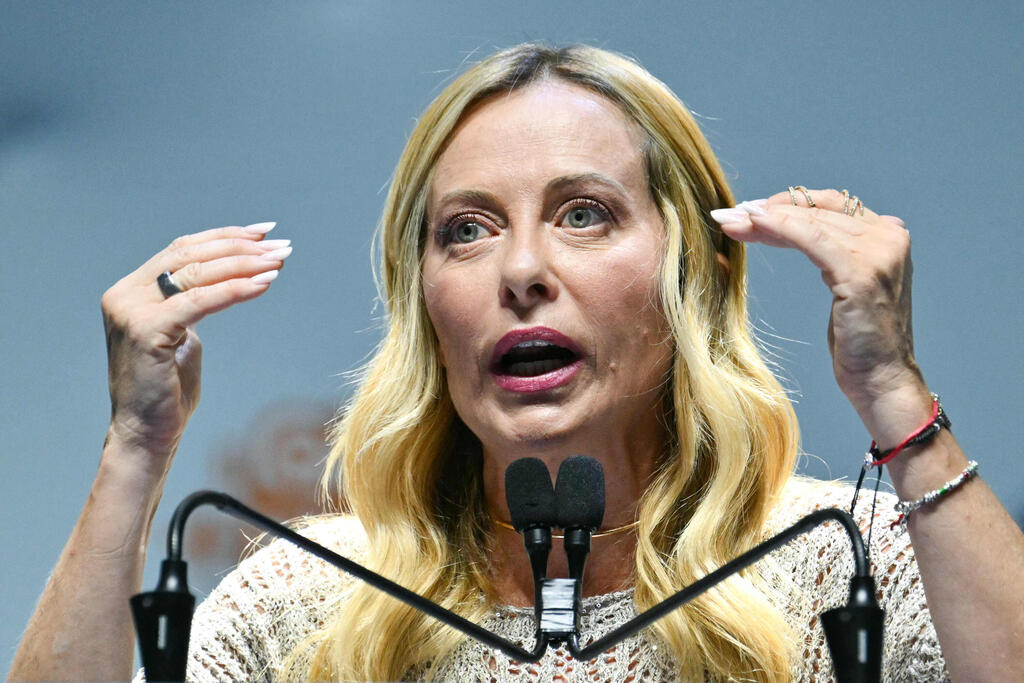
Italian Prime Minister Giorgia Meloni vows to crack down on the 'Maranza' gangs
(Photo: Alberto PIZZOLI / AFP)
By Monday evening, stores in central Milan were again closing amid fears that the riots could resume spontaneously. Large numbers of police officers were deployed throughout the city.
The Italian government, led by Prime Minister Giorgia Meloni, announced that it would convene Tuesday to advance emergency legislation aimed at preventing similar incidents. The proposed measures would authorize preventive detention of violent youths, ban gatherings by the youth groups known as Maranza and allow police to establish surprise checkpoints on roads outside cities and at the entrances to major urban centers, in an effort to prevent criminal elements seeking to create chaos from entering.