

The school year has begun in recent days across Arab countries and the Gulf, where it too is opening against a backdrop of tensions, challenges and continued fighting in some areas. Israel’s neighbors began the academic year on different dates, with Lebanon the last to open schools, on Tuesday, even as IDF operations against Hezbollah in the country’s south continue.
Lebanese newspaper An-Nahar wrote that “the new school year in southern Lebanon is facing uncertainty, with school administrations suspending registration, class scheduling, transportation arrangements and textbook sales for at least a week, pending further developments, against the backdrop of a significant Israeli escalation.”
Ya-Allah: School opens across the Arab world


The Hezbollah-affiliated Lebanese newspaper Al-Akhbar wrote Monday: “Officially, public schools will open tomorrow, marking the start of a new academic year. However, the situation does not point to a smooth start. The war has imposed a new reality, especially in areas where the demographic makeup has changed because of displacement. The Education Ministry has implemented different arrangements for the return to school, taking into account the security situation and each school’s ability to operate. While the ministry describes the start of the school year as flexible, school principals confirm that administrative and logistical issues remained unresolved on the eve of the new academic year.”
It added: “The effects of the war are being felt especially in the south, where some schools will reopen for in-person classes, while others will remain closed or adopt alternative methods.”
Lebanese Education Minister Rima Karami has made clear in recent weeks that the aim is for children to study in a safe environment — physically, educationally and emotionally — and that if conditions at schools in the south and the security situation do not allow for classes, a decision will be made to move to online learning.
A significant number of Lebanese schools have been completely destroyed or damaged in recent years during the fighting and remain out of service because of a lack of funding for reconstruction. According to An-Nahar, figures from southern Lebanon, particularly the Nabatieh area, show that 198 schools out of 267 have been damaged, including 30 that were completely destroyed. The newspaper added that 257 public schools serving 71,446 students and 117 private schools serving 53,761 students were damaged nationwide.
Many schools in Lebanon also have been converted into shelters for people displaced by the war. Al-Akhbar wrote over the weekend: “With the start of the school year, the suffering of those displaced from the south is getting worse. The public schools where they are staying want to open their doors to their students, which means displacement on top of displacement.”
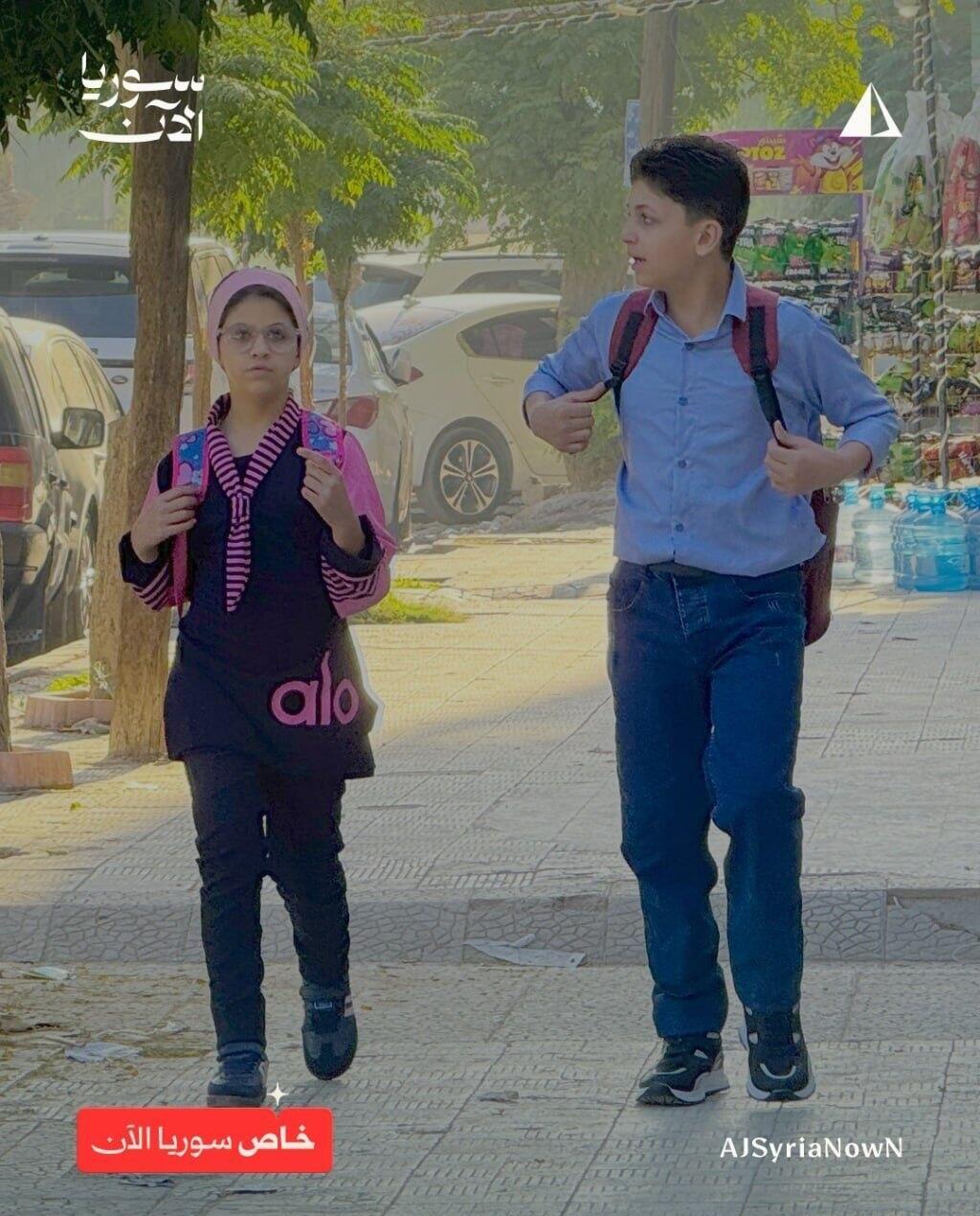
In another article published in recent days, the newspaper quoted Mohammad Fahs, principal of the Al-Mahdi school in the Nabatieh area of southern Lebanon, where strikes are still taking place. He said the start of in-person learning at the school depends on conditions on the ground and added that some parents had transferred their children to schools in areas considered safer.
In Syria, the school year began on September 6. According to reports in the country, more than 5.2 million students began classes across the various provinces. Syria’s state news agency SANA reported in recent days that a unified curriculum would be implemented this year across all Syrian provinces, a move that “will strengthen the unity of the educational process in the different regions.”
Various Syrian channels published images of back-to-school celebrations alongside reports on the high cost of school supplies relative to residents’ financial means. But not all students in Syria, which is still recovering from years of civil war, returned to classrooms suitable for learning. In Hasakah province, students were forced to sit on classroom floors in rooms without doors or a proper board.
According to the Syrian Education Ministry, 1,370 schools were rehabilitated in 2026, following the restoration and reopening of 2,017 schools in 2025. More than 6,000 schools across the country still require rehabilitation and maintenance.
The school year has also begun in Israel’s other neighboring countries. In Jordan, it started on August 23, while in Egypt it opened relatively late, only this past Saturday.
The academic year also has begun in Gulf states in recent days. In Qatar, a new system expected to give parents greater peace of mind has been introduced. Called “Hodoori,” or “My Attendance,” the system has been installed on school buses and in schools themselves. It allows students’ arrivals and departures to be recorded electronically through a simple, contactless process. Bringing a palm close to the screen is enough for identification and data entry.
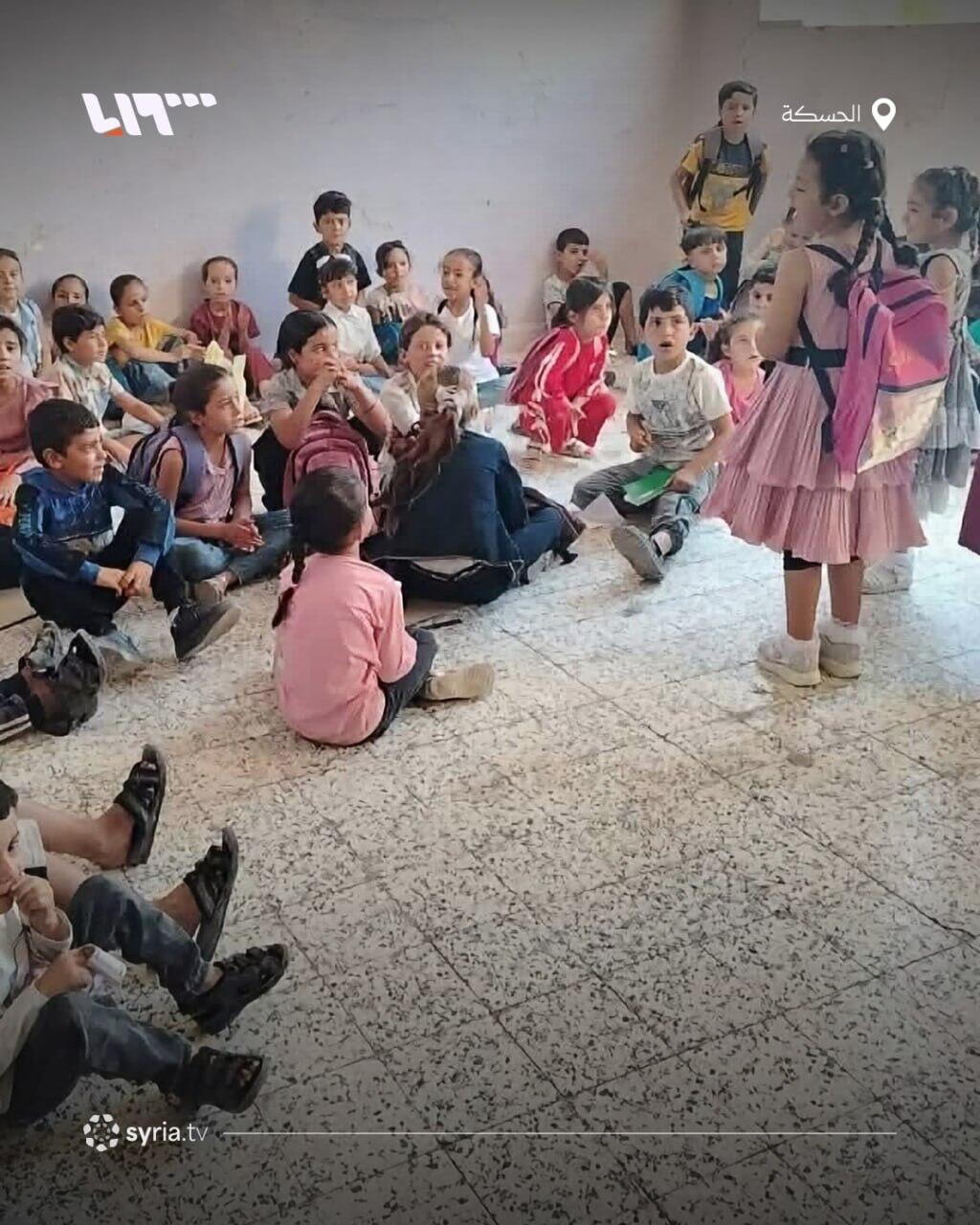
At school in Al-Hasakah province
According to Qatar’s Education Ministry, the system was introduced “as part of the Ministry of Education and Higher Education’s efforts to advance digital transformation and use modern technologies to develop the school environment.” The ministry said the system is intended to improve oversight of students’ arrivals and departures, to reduce the burden on school staff responsible for attendance and to provide accurate, up-to-date data to assist with monitoring and communication with parents. Officials say it is also expected to improve school discipline.
Qatar’s minister of education and higher education is Lolwah bint Rashid Al-Khater, who previously served as minister of state for international cooperation. She has a history of statements against Israel and expressions of support for the Gaza Strip and Hamas, including writing poems praising slain senior Hamas figures Mohammed Deif and Yahya Sinwar.
Al-Khater announced as early as February that the Hodoori system was expected to enter Qatari schools in September, saying it was a step aimed at strengthening students’ security and safety. Before it was rolled out to all public schools, the system was tested in six schools across the country.