


Despite Israel’s stated goal of eliminating Iran’s nuclear and ballistic missile programs, and despite a long list of promises made since Operation Roaring Lion began, not much has fundamentally changed.
The Israeli public has heard pledges about regime change in Tehran, cutting Iran off from its proxies and unprecedented coordination with the United States on both the diplomatic and military fronts. Yet despite extraordinary military achievements and the killing of many senior Iranian figures, the regime remains in place, Tehran still holds many missiles and Iran’s nuclear program remains on the table.
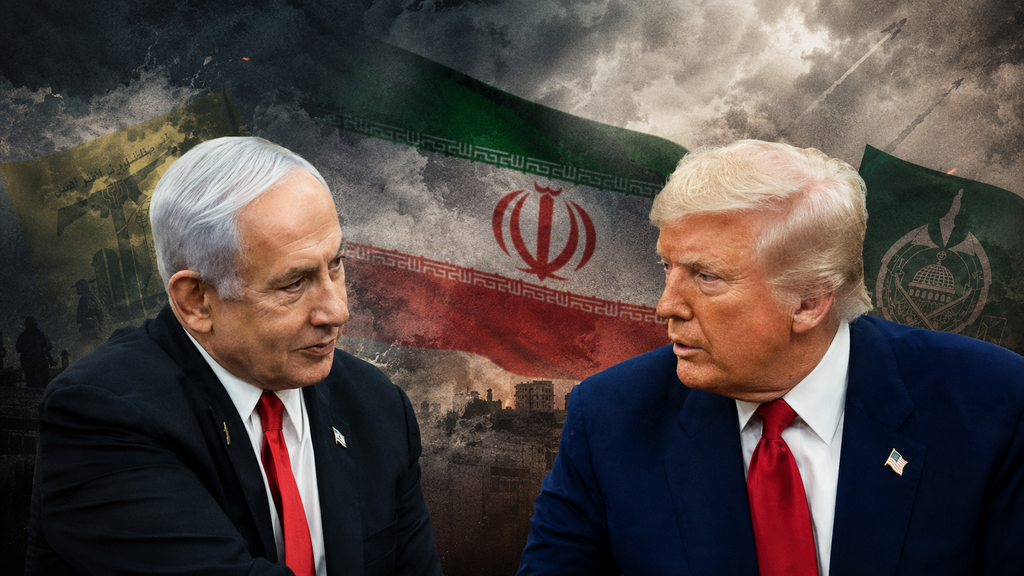
In terms of regime stability, the government in Tehran is still functioning efficiently and brutally, with no sign that it is losing control or that the public is about to topple it. Iran’s nuclear program was damaged in the war, but all of its enriched uranium remains in Iranian hands, and it is still unclear how long it will take to rebuild the processing and enrichment facilities. Current assessments speak of about two years.
Iran’s ballistic missile stockpile has been reduced, but it still has a large enough arsenal to threaten Israel and Gulf states with effective fire. Its production capacity was not shut down. On the contrary, its missile industry managed to increase production between Operation Rising Lion and Operation Roaring Lion, replenishing its warehouses enough to strike and damage Israeli and American facilities while also significantly depleting Israeli and U.S. interceptor stocks.
The proxies, too, are still standing and rebuilding. Hamas is regaining control over the population in Gaza and blocking the deployment of peace forces under Trump’s plan. Hezbollah is fighting the IDF and causing casualties among Israeli troops while damaging communities in the north. The Houthis fire whenever they choose.
Beyond that, Iran is strangling the global economy by closing the Strait of Hormuz, while the Houthis periodically disrupt the Bab el-Mandeb Strait. Tehran is negotiating slowly, as if there is no urgency, and is managing to extract concessions from Trump. Iranian officials do not appear impressed by the U.S. president’s threats. If anything, the opposite seems true.
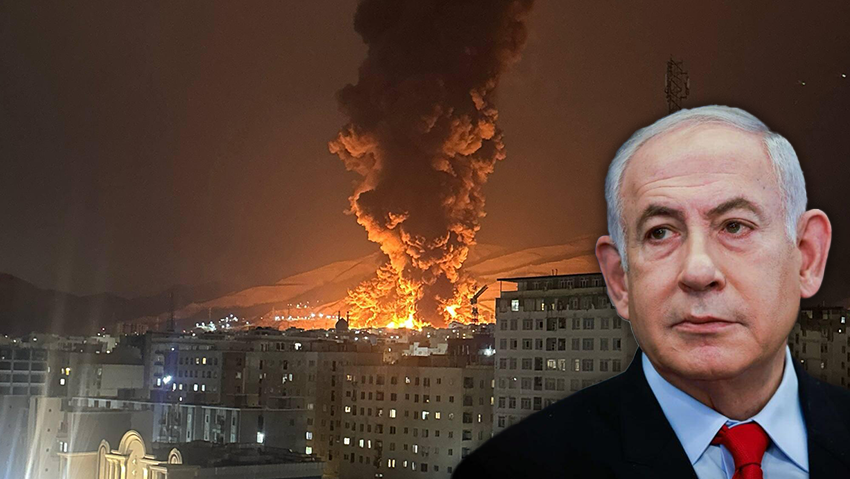
Prime Minister Benjamin Netanyahu is selling a narrative of victory
(Photo: Chaim Goldberg/ Flash90)
Israel sidelined from the talks
On the diplomatic front, the United States is excluding Israel from talks with Iran and is not taking its wishes into account. Israel’s interests are not being considered, and Jerusalem is not even receiving information about the details of the discussions, meeting schedules or signing dates.
At the same time, Israel’s public diplomacy has been almost entirely neglected. In global media and public opinion, Israel is increasingly seen as having dragged Trump into an unnecessary and incomprehensible war, causing destruction and death without justification, and continuing that pattern in Lebanon. Polls show Israel is now among the most disliked countries in the world, fueling boycotts and protests everywhere, on top of the wave of hostility and boycotts that followed the war in Gaza.
Against this dissonance, Prime Minister Benjamin Netanyahu is selling a narrative of victory. He says Israel is stronger than ever and Iran is weaker than ever, that Israel has changed the face of the Middle East, a decision he says he made already on October 7, and he lists Israel’s impressive string of assassinations.
In practice, Israel has long been operating on the principle that what cannot be achieved by force can be achieved with even greater force. But in the Middle East, force is not enough. A diplomatic leg is needed to bring wars to an end. For now, nothing has been closed on any front, and everything is dragging on while hatred toward Israel in the world only grows stronger. Netanyahu has convinced himself that public diplomacy is unnecessary and that, in the Middle East, only the strong are respected.
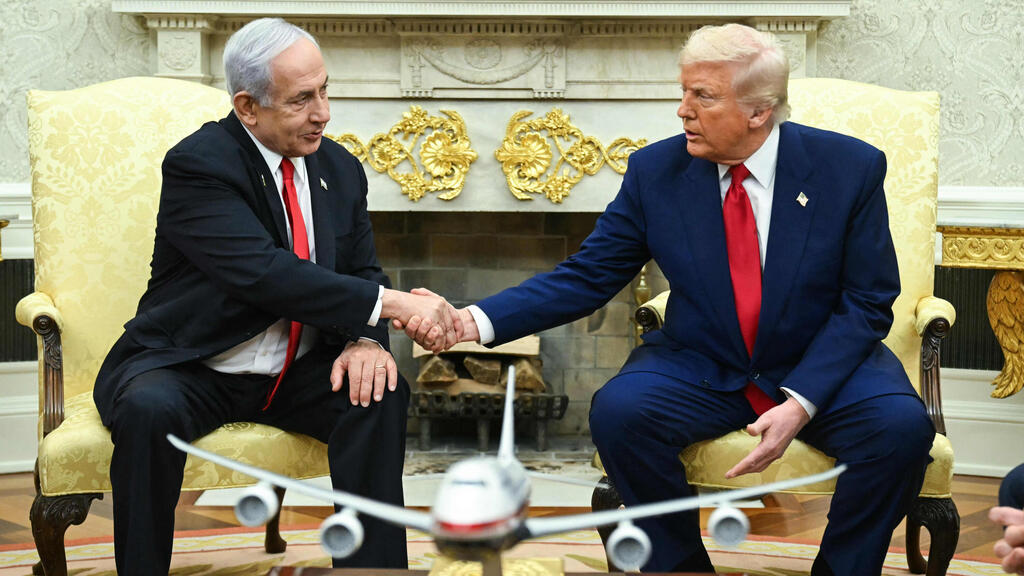
Benjamin Netanyahu and Donald Trump
(Photo: Saul Loeb/ AFP)
Netanyahu has effectively put all his chips on Trump. He gambled on him and placed his trust in him, and many Israelis were convinced Trump was the most pro-Israel president in history. Trump did make major and historic moves: relocating the U.S. Embassy to Jerusalem, recognizing Israeli sovereignty over the Golan Heights and helping secure the release of hostages.
But when a country cooperates with a superpower, it must take into account that the moment may come when its interests are no longer identical to America’s.
That is what is happening now. Trump’s interest is different from Israel’s: to stop the war and secure an agreement at almost any price, even if it is a bad agreement. Netanyahu’s associates argue that despite disappointment over the emerging deal, Israel’s military achievements against Iran are significant. Iran, they say, is no longer a nuclear-threshold state. Its nuclear project has been pushed back years. Iran cannot produce tens of thousands of missiles as it had planned. It has only what remains.
But Netanyahu is now in a difficult position. Last week, he said “no” to Trump twice, first with the strike in Dahieh and then with the strike in Iran. At the same time, Trump has already hit the brakes several times and exposed Netanyahu’s weakness, saying in effect: Without me, you would already be sitting in prison. Without me, Israel would already have been destroyed.
Israel may be stronger than ever, but it has become a kind of U.S. protectorate, dependent on Washington for better or worse. And while Trump attacks President Isaac Herzog and insults him for not granting Netanyahu a pardon, Herzog has been lavish in his birthday praise for Trump.
“Your remarkable journey to the White House represents the breadth of the American dream and the strength of your own determination,” Herzog said in a message marking Trump’s 80th birthday. “The people of Israel thank you for your leadership in the confrontation with Iran’s empire of evil and for your unwavering commitment to Israel’s security.”
“We will never forget your tireless efforts to secure the release of our beloved hostages,” Herzog added. “May you lead the Middle East and the world toward peace and security and continue to strengthen the unique partnership between the United States and Israel. In Jewish tradition, it is said that at 80 one is granted unique strength. May you enjoy your beautiful family and many more years of happiness, blessing and joy.”
The next major test is Lebanon. Israel must prepare for the possibility that Trump will put the brakes on there as well and order it to stop firing. Israel would still be able to act against emerging threats, but it is possible that this time the Iranians will restrain Hezbollah and even instruct it to move north of the Litani River in order to deny Israel a pretext for continued strikes. That would allow Hezbollah to begin rebuilding and start the countdown to the next round in Lebanon.
For now, Israel struck Dahieh after a series of Hezbollah attacks inside Israeli territory. On the surface, Israel is preserving the equation and allowing itself to strike on the day the memorandum of understanding is supposed to be signed. The Americans understood that Netanyahu had to do something or risk serious political damage at home. The question now is what the Iranians will do.